
First deposit bonuses at UK-licensed casinos: what the offer actually costs
8 November 2026 — pricing and licence status verified against the Gambling Commission’s public register.

A first deposit bonus looks like a gift, but it is closer to a contract: the operator matches a slice of what you put in, then sets conditions on how that money can be turned back into withdrawable cash. In the UK those conditions are no longer whatever the operator fancies. Since 19 December 2025 the Gambling Commission has capped wagering requirements at ten times the bonus, banned mixed-product offers that hand out casino spins for placing a sports bet, and tightened the rules around what an online casino has to do before it takes your first pound. That changes the maths, and it changes who the offer suits.
This page is built around the cost. Every bonus is a price the player pays in turnover, in time, in locked funds, and in the constraints that come with the licence that authorises the brand in the first place. Ten operators sit on the register as active holders of a remote casino licence. Each one is named below with its licence number, its account on the register, and a verdict that comes from comparing those facts rather than from marketing.
Table of Contents
- How a first deposit bonus works in the UK
- Who regulates first deposit bonuses in the UK
- The protections every UK-licensed bonus sits inside
- Crypto first deposit bonuses: the same rules, the same checks
- Paying in and getting paid out at UK-licensed casinos
- The 10x wagering cap and what it does to the maths
- Top 10 first deposit bonus casinos in the UK for 2026
- The verdict on a first deposit bonus in the UK
- Frequently asked questions about first deposit bonuses in the UK
How a first deposit bonus works in the UK
A first deposit bonus is credit the operator adds to a new account once the first payment clears. The most common shape is a percentage match — deposit £100 and the casino adds £50, £100 or £200 depending on the headline — and the bonus is paid as bonus funds rather than real cash. Bonus funds cannot be withdrawn directly. They have to be played through a stated number of times before any winnings left at the end become withdrawable.
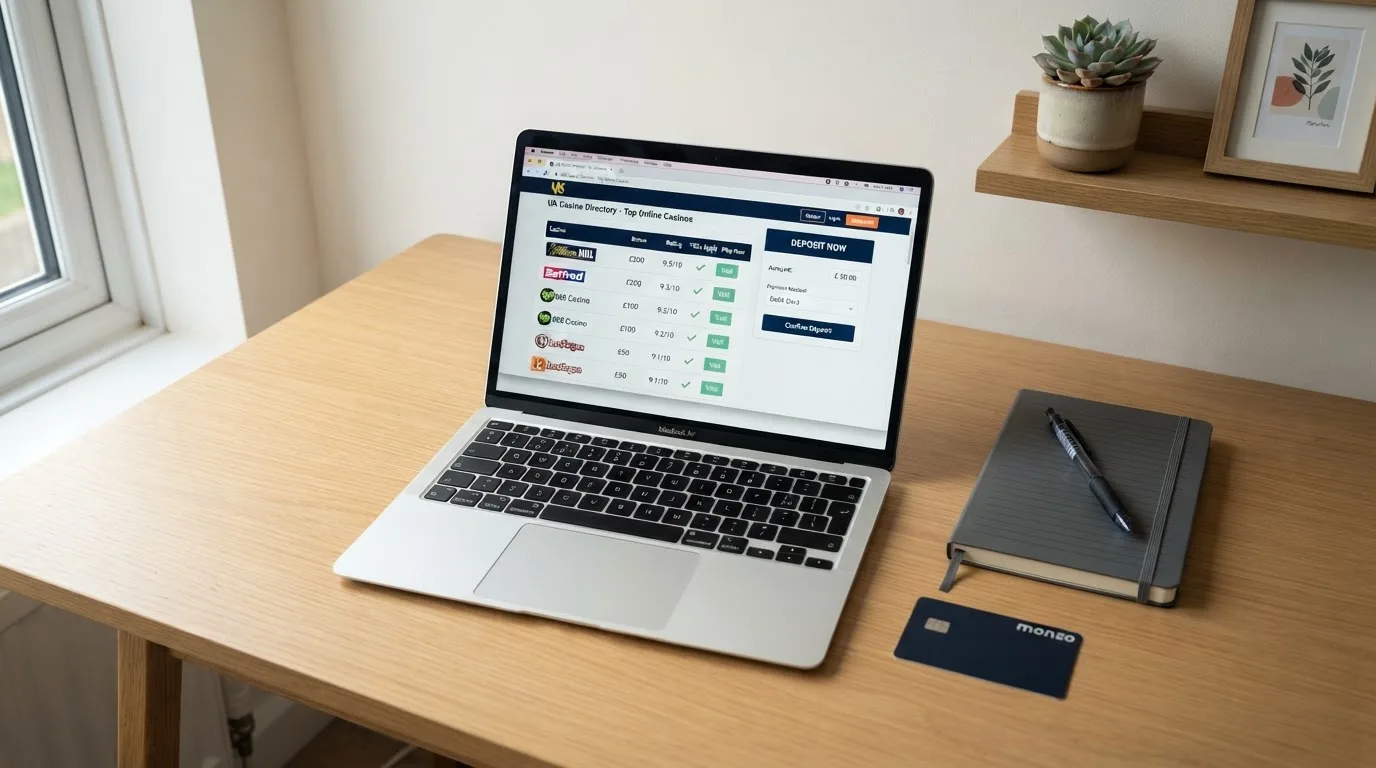
That “stated number of times” is the wagering requirement, and it is where the offer’s true price hides. A 100% match up to £200 with a 35x wagering multiple means the player must turn over £200 in bonus funds 35 times before any winnings clear — £7,000 of play, on a deposit that started at £200. The 10x cap now in force has pushed that figure down across the UK market, but the structure is unchanged: a higher match percentage costs more in playthrough, and a longer expiry window does nothing to shrink it.
Three other mechanics usually travel with the headline:
- Game weighting. Slots almost always contribute 100% of every £1 staked to wagering. Table games and live casino often contribute a fraction of that, sometimes nothing at all, which lengthens the effective playthrough for anyone who would rather play blackjack.
- Maximum bet while a bonus is active. A £5 ceiling per spin or hand is standard on UK sites — this is now the statutory ceiling for over-25s, and £2 for 18-24s — but operators can set their own bonus-level cap below that figure.
- Maximum cashout from bonus winnings. Some offers cap how much of the bonus balance can ever be withdrawn, even after the wagering is complete. Where this exists it sits in the small print, not in the headline.
None of this is unique to the British market, but the regulatory floor in the UK is unusually firm. The 10x cap sits on top of every offer a licensed operator can write, which means the worst excesses of pre-2025 bonus design — 50x and 65x wagering on matched deposit offers — are no longer available at a brand that wants to keep its licence.
Who regulates first deposit bonuses in the UK
Every online casino that takes a deposit from a player in Great Britain needs a remote operating licence from the Gambling Commission, the regulator sponsored by the Department for Culture, Media and Sport under the Gambling Act 2005. Northern Ireland is covered by separate legislation, and a licence from Malta, Curaçao, the Isle of Man or Gibraltar does not authorise play from a British address. Since the Gambling (Licensing and Advertising) Act 2014, the test of whether an operator can lawfully take a UK customer is whether the Gambling Commission has issued a licence, regardless of where the operator is incorporated.
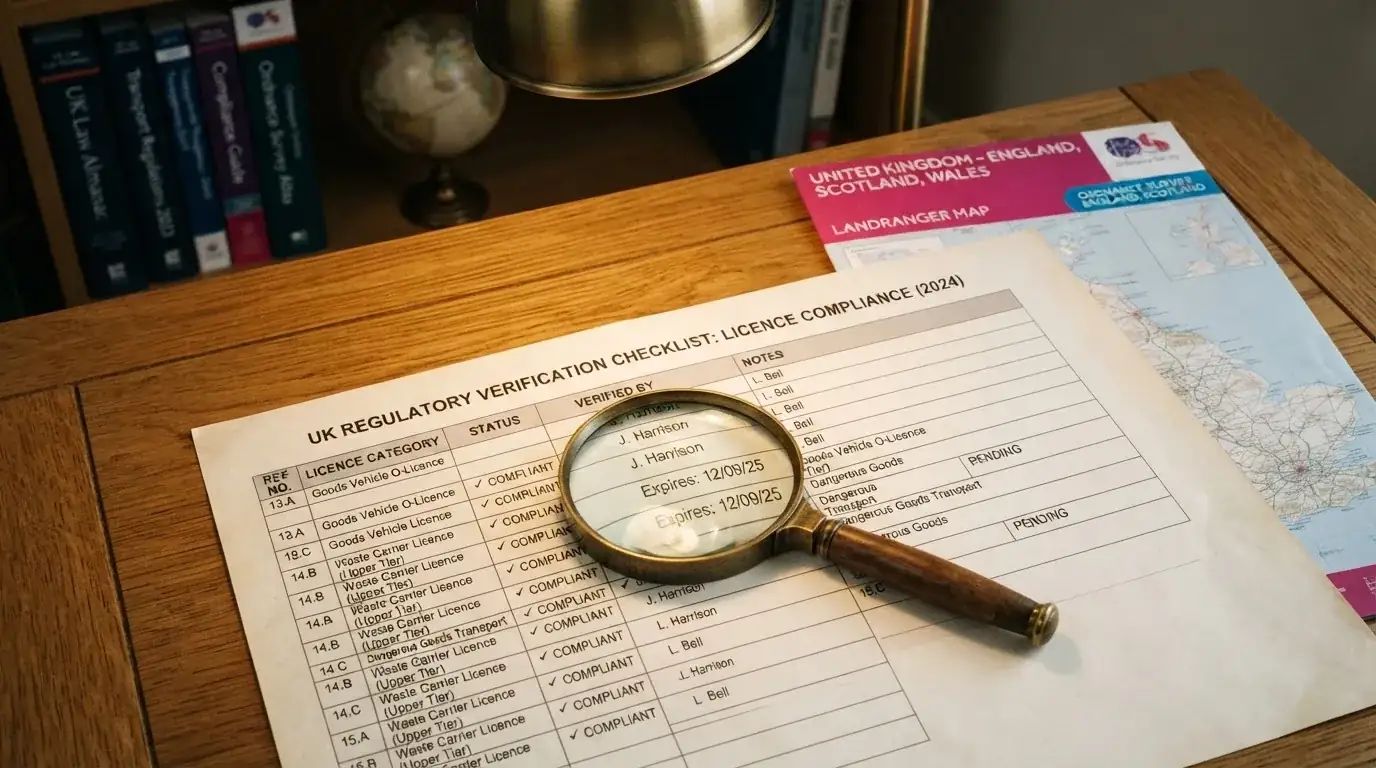
The public register is the test of that. As of 18 September 2026 the Commission listed 139 businesses holding an active remote casino operating licence, and a separate domain list of 1,065 active and 361 white-label websites running against those licences. A white-label site trades under another company’s licence — useful to know because several well-known consumer brands share a single licensee. Ladbrokes, Coral and Gala Bingo, for instance, all sit under LC International Limited, which means a complaint about one of them and a complaint about another land on the same accountable body.
A remote casino licence number follows the format account number-R-licence number-suffix, where the leading six digits are the licence holder’s account number and the R marks the licence as remote (online). So 054743-R-330863-014 reads as licence account 54743, R for remote, suffix 014. Every operator in this page is verifiable against that format on the Commission’s register, which is the only document that matters when an offer lands in dispute.
The legal frame does the heavy lifting. The licence decides who may run the offer, the Gambling Act decides who may be sold it, and the Commission’s social responsibility code decides what must happen before any money changes hands. The bonus is downstream of all three.
The protections every UK-licensed bonus sits inside
A first deposit bonus in the UK cannot be claimed in a vacuum. The licence that authorises the operator also binds it to a set of player-protection rules that change what the offer looks like in practice.
Identity verification is the first of these. Since 7 May 2019 every online operator has had to verify a customer’s name, address and date of birth before accepting a first deposit or allowing any play. The check runs against public data and, where that is inconclusive, against document uploads. Cryptocurrency does not change this. A UK-licensed casino accepting Bitcoin, Ethereum or any other token still has to know who it is paying out to, and the verification happens before the bonus is credited, not after.
GAMSTOP self-exclusion is the second. Since 31 March 2020 every online operator in Great Britain has had to enrol with GAMSTOP, the national self-exclusion register. A customer who has signed up to GAMSTOP cannot open an account, claim a bonus, or deposit at any participating site for the chosen period — six months, one year or five years — and the exclusion cannot be reversed early. No bonus structure gets around it; no deposit method unblocks it.
Deposit limits are the third. There is no state-set ceiling on what a customer can deposit, but the operator must prompt every new account to set a financial limit before the first deposit clears. The prompt is not a suggestion; it is a condition of the licence. A customer can decline, but the prompt itself is recorded. On top of that, light-touch financial vulnerability checks kick in once a customer has deposited a net £150 in a rolling 30-day window, again using public data only.
Age limits apply throughout. The minimum age is 18. Online slots additionally carry a per-spin stake cap that depends on the player’s age band: £5 for those aged 25 and over, in force since 9 April 2025, and £2 for 18 to 24-year-olds, in force since 21 May 2025. A bonus that credits bonus funds to be wagered on slots must respect those ceilings while the bonus is active.
Auto-play is banned and a single spin may not resolve faster than 2.5 seconds. The result is that even a high-volatility bonus offer takes a measurable amount of real time to clear, not the artificial fifteen minutes that would be possible under the previous rules.
This is the cage around the bonus. A first deposit offer at a UK-licensed site is sold into a framework that protects the player before, during and after the bonus is claimed. That framework is what the player is paying for with the wagering — and it is what is missing entirely from any operator that runs without a Commission licence.
Crypto first deposit bonuses: the same rules, the same checks
The marketing for crypto-funded bonuses leans hard on anonymity. The reality in the UK is different. A Gambling Commission licensee that accepts Bitcoin, Ethereum or any other cryptocurrency still has to verify the customer before the first deposit, still has to enrol with GAMSTOP, and still has to apply the same financial vulnerability checks. The licence, not the payment method, sets the rules.
What crypto does change is the rails. A deposit in Bitcoin or Ethereum moves on the relevant blockchain, settles into the casino’s wallet, and is converted into sterling (or whatever account currency the customer chose) before it is credited to the balance. The bonus is then calculated against that converted figure. Conversion happens at the operator’s stated rate, often with a margin baked into the exchange, and that margin is a cost the customer carries without ever seeing it line-itemed.
There is no anonymity dividend at a licensed site. The operator knows who is paying, who is playing, and who is being paid out, and the Commission’s anti-money-laundering rules require it. The address that ends up holding the crypto is, by design, traceable on the blockchain. Crypto at an unlicensed site removes the Commission’s oversight entirely — and with it the GAMSTOP enrolment, the dispute route, the vulnerability checks, and the approved alternative dispute resolution that a licensed brand has to provide. The price of bypassing the framework is the framework.
Players who want crypto as a funding method because the bank blocks gambling transactions, or because the rails settle faster, will still find licensed operators that accept it. Players who want it because the bonus terms are looser at an unlicensed site will not — and will lose the protection that the 10x wagering cap and the rest of the social responsibility code give them.
Paying in and getting paid out at UK-licensed casinos
The payment options a UK-licensed casino can offer are narrower than the marketing suggests. Credit cards have been banned for gambling since 14 April 2020 — a ban that extends to credit-card-funded e-wallet deposits. What remains is debit cards, bank transfers, a handful of e-wallets, prepaid vouchers where the operator accepts them, and, at an increasing number of sites, cryptocurrency.
Debit cards through Visa or Mastercard are the default. Deposits clear instantly and there is no fee on the operator’s side. Withdrawals go back to the same card by default, which is what the Commission’s anti-money-laundering rules require — funds leave by the same route they came in.
Bank transfers run through the Faster Payments Service, which has been live since 2008 and operates 24 hours a day, seven days a week. Most payments arrive within minutes, though the system allows up to two hours for the occasional slow transfer. The Faster Payments scheme permits single transactions up to £1,000,000, but individual banks set their own customer-level limits well below that. For most players this is invisible; for anyone moving large balances, the bank’s own ceiling is the binding figure.
E-wallets vary. PayPal, Skrill, Neteller and a handful of others are accepted by some operators and not by others. The catch is that a deposit made through an e-wallet is sometimes excluded from the welcome bonus, because bonus abuse across multiple accounts is easier to run through a payment method that does not tie back to a specific bank account. Apple Pay is supported by a growing number of UK-licensed brands and behaves like a debit card at the cashier — the underlying funding instrument is the card on file, and the credit card ban still bites if the card on file is a credit card. AstroPay operates as an e-money institution under the FCA in the UK, and behaves similarly.
Payout speed is what most players actually time. The pattern is the same across operators: once identity verification and any source-of-funds checks are complete, e-wallet withdrawals are usually processed inside twenty-four hours, debit card withdrawals inside one to three working days, and bank transfers the same day if Faster Payments is supported. None of those windows include the verification stage. A first-time withdrawal almost always triggers a full document check, which can add a working day or two on top of whatever the operator’s stated processing time is. That delay is not the operator being slow; it is the licence being enforced.
The Faster Payments ceiling on a single transfer — £1,000,000 — is not what a casino withdrawal looks like. A bank imposing its own per-transaction or per-day limit on the customer’s account will see a withdrawal queue at the casino’s end rather than at the operator’s end. The bottleneck is rarely the operator.
The 10x wagering cap and what it does to the maths
Since 19 December 2025 a UK-licensed operator cannot attach a wagering requirement higher than 10x to a bonus. That is a hard ceiling, set by the Commission’s social responsibility code, and it has compressed the spread of welcome offers across the market.
What the cap changes, in practice, is the relationship between the bonus headline and the playthrough the player has to clear. A £100 bonus at 10x wagering requires £1,000 of qualifying play before any winnings become withdrawable — turn the bonus over ten times, and what is left converts to cash. Pre-cap, the same £100 bonus at 35x required £3,500 of play. That is a 71% reduction in the turnover the player has to generate, and it changes which offers are worth claiming at all.
The cap does not flatten the offers. A 10x bonus that is also restricted to slots, capped at a £2 maximum bet per spin, with a seven-day expiry window, costs more in real terms than a 10x bonus that covers all games, takes a £5 maximum bet, and runs for thirty days. The turnover figure is the same; the time and the constraint are not.
A worked example: a £200 deposit with a 100% match credits £200 in bonus funds. At the 10x cap the player must turn over £200 × 10 = £2,000 before any winnings convert. Playing slots at £1 per spin, that is 2,000 spins. At a minimum 2.5-second spin duration, that is 5,000 seconds of play — about 83 minutes of continuous spinning, with no breaks for reality checks, no account verification prompts, and no withdrawal of winnings along the way. A £5 maximum bet compresses the same playthrough into 400 spins, around seventeen minutes of pure spin time, but each spin carries five times the stake. The turnover is identical; the volatility is not.
That is the band the cap produces. A £100 bonus at 10x is £1,000 of turnover; a £500 bonus at 10x is £5,000. The headline figure can move, but the multiplier is fixed, and the time and the risk move with the headline. The cap does not change the fact that the player is paying for the bonus in turnover; it changes only how much turnover the player is paying.
This is the calculation the page wants to leave on the table: any offer at a UK-licensed site costs between roughly 1,000 and 5,000 units of qualifying turnover per £100 of bonus, depending on the bonus size, with slot weighting assumed. The time cost scales with the stake per spin and the spin duration; the financial cost scales with the slot’s house edge and the variance of the game chosen. None of that is hidden by the cap — but the cap does stop an operator from pricing the bonus so high that the time cost becomes absurd.
Top 10 first deposit bonus casinos in the UK for 2026
The table below sets out the ten operators featured in this comparison, each drawn from the Gambling Commission’s public register. Every brand is listed against its licence account, its remote casino operating licence number, and the status of its primary domain on the register. None of the brands has its bonus terms carried in research; the verdict for each comes from the licence facts the register makes public.
| Brand | Licence holder and GB remote casino licence | Domain status on the register | Subject support |
|---|---|---|---|
| Unibet | Platinum Gaming Limited — 045322-R-324275-019 | Active (unibet.co.uk) | — |
| Betfair | PPB Games Limited — 039411-R-319335-010 | Active (Betfair.com) | — |
| Sky Vegas | Bonne Terre Gaming Limited — 065519-R-339675-002 | Active (Sky Vegas) | — |
| MrQ | Tek Fox Ltd — 060629-R-337532-004 | Active (Mrq.com) | — |
| Betway | Betway Limited — 039372-R-319367-029 | Active (Betway.com) | — |
| PokerStars | Stars Interactive Limited — 039108-R-319334-026 | Active (Pokerstars.uk) | — |
| Paddy Power | PPB Games Limited — 039411-R-319335-010 | Active (Paddy Power) | — |
| Ladbrokes | LC International Limited — 054743-R-330863-014 | Active (Ladbrokes.com) | — |
| BetVictor | BV Gaming Limited — 039576-R-319370-028 | Active (Betvictor.com) | — |
| Betfred | Petfre (Gibraltar) Limited — 039544-R-319290-010 | Active (Betfred.com) | — |
Three structural facts fall out of the table. Betfair and Paddy Power share a licence account at PPB Games Limited, which means the same accountable body answers for both brands. Ladbrokes shares its LC International licence with Coral and Gala Bingo, which is why the same account number sits on three well-known consumer brands. No two of the ten are licensed under the same licence number on every row; the licensing landscape is thinner than the brand count suggests.
Unibet (unibet.co.uk)
Unibet runs under Platinum Gaming Limited, a long-established Kindred Group subsidiary that has held a UK remote casino licence for years. The domain unibet.co.uk is listed on the Commission’s register as active, against account 45322, with the full licence number 045322-R-324275-019 visible to anyone who searches the register. That makes it straightforward to verify the brand’s right to take a deposit from a British address, and to file a complaint with the Commission or an approved ADR if the welcome bonus does not behave as advertised.
What the licence tells a player comparing offers is that Unibet sits inside the same regulatory cage as the other nine brands on this list. The 10x wagering cap applies, GAMSTOP enrolment is mandatory, identity verification runs before the first deposit, and the age-banded slot stake ceilings are in force. The brand’s own bonus terms — match percentage, expiry, game weighting — are not carried in research, which means the only honest comparison here is on the licence facts and on the framework the licence enforces.
For a player who wants a recognisable European brand on a UK-licensed site, Unibet is a credible choice. For a player who is choosing on bonus headline alone, the framework is the same at every operator on this list, so the decision has to come from the brand’s own terms — which this page does not carry.
Betfair (Betfair.com)
Betfair runs under PPB Games Limited, the Flutter Entertainment subsidiary that also operates Paddy Power against the same licence. Account 39411 and licence 039411-R-319335-010 are visible on the register for both domains. The duplication matters because a complaint about one brand and a complaint about the other are processed by the same accountable body, with the same dispute resolution route.
Betfair’s casino product is a quieter line than its exchange, but the licence is the same. The brand benefits from a long-standing UK presence and a customer base that already knows the parent company’s identity checks. What it does not benefit from is any visible bonus advantage at the licence level — there is none, because no operator can lawfully differentiate on the wagering cap, on the identity check, or on the GAMSTOP enrolment that all licensed sites share.
For a player who already holds a Betfair account, claiming the casino welcome bonus is a low-friction option. Given Betfair and Paddy Power share an accountable body, the licensing situation is identical for both.
Sky Vegas
Sky Vegas sits on Bonne Terre Gaming Limited, with the domain Sky Vegas listed as active against account 65519 and the licence 065519-R-339675-002 visible on the register. Sky’s broader UK presence as a broadcaster gives the brand visibility that pure-play casino operators do not have, but the licence is the same as everyone else’s on this list — the same 10x cap, the same identity check, the same GAMSTOP enrolment.
The bonus decision comes down to the brand’s own terms: the match percentage, the maximum bonus, the expiry window, the game weighting. Those details are not in research, so the comparison has to be made by the player on the operator’s site, with the register used as the verification step. The licence is not the differentiator.
For a player who already has a Sky account and trusts the parent brand, Sky Vegas is a solid candidate. Its regulatory position provides no advantage or disadvantage over other licensed sites, making the decision purely a matter of preference.
MrQ (Mrq.com)
MrQ runs under Tek Fox Ltd, with the domain Mrq.com listed as active against account 60629 and the licence 060629-R-337532-004 visible on the register. MrQ is a smaller brand than most on this list, but the licence gives it exactly the same standing as the larger operators — same cap, same checks, same enrolment. There is no small-brand discount on the regulatory floor.
The brand has built its reputation on transparency around bonus terms, and the framework it operates under supports that approach: a 10x cap is easier to publish prominently than a 35x cap was. That does not mean every MrQ offer is generous; it means the cap is the same ceiling MrQ faces that every other licensed operator faces.
For a player who prefers a smaller, bonus-focused brand, MrQ is a reasonable candidate. The register confirms it can lawfully take a UK deposit, and that is the floor every comparison on this page rests on.
Betway (Betway.com)
Betway runs under Betway Limited, with the domain Betway.com listed as active against account 39372 and the licence 039372-R-319367-029 visible on the register. Betway is one of the longer-established UK-facing casino brands, and the licence has been in place for years.
The standard regulatory floor applies: 10x cap, GAMSTOP enrolment, identity verification before the first deposit, age-banded slot stake limits. The brand’s own bonus terms are not in research, so the comparison here is on the licence and on the framework, not on the bonus headline.
For a player who already has a Betway account, the welcome bonus is a low-friction claim. Comparing Betway to other brands essentially comes down to the bonus terms themselves, as the underlying regulatory framework is uniform.
PokerStars (Pokerstars.uk)
PokerStars runs under Stars Interactive Limited, with the domain Pokerstars.uk listed as active against account 39108 and the licence 039108-R-319334-026 visible on the register. The brand’s primary reputation is in poker, and the casino product is a quieter line, but the licence covers both.
The framework here is standard across all UK-licensed sites, ensuring consistent player protection. The casino welcome bonus itself remains a commercial decision for the operator.
For a poker player who already holds a Stars account, the casino bonus is a logical extension. As with all operators here, the regulatory standards are identical, meaning the value lies entirely in the bonus terms.
Paddy Power
Paddy Power runs under PPB Games Limited — the same licence account as Betfair, with the same licence number 039411-R-319335-010 visible on the register. That is the most important fact about the brand for a player comparing welcome bonuses: Paddy Power and Betfair are not independent operators, and a complaint about one is a complaint about the other.
This operator adheres to the same standard regulatory protections required of all licensed sites. You should compare its bonus terms directly, as the licence is the same as any other brand listed.
For a player who already has a Paddy Power account, the casino welcome bonus is a low-friction claim. Since Paddy Power and Betfair are not independent operators, the choice between them should be driven entirely by the specific bonus offer.
Ladbrokes (Ladbrokes.com)
Ladbrokes runs under LC International Limited, with the domain Ladbrokes.com listed as active against account 54743 and the licence 054743-R-330863-014 visible on the register. LC International also licences Coral and Gala Bingo, which means the same accountable body answers for three of the most visible consumer brands in British gambling.
Like all operators on this list, this brand operates under the full suite of UK regulations. Your decision should be based on the specific bonus offer, as the licensing baseline is universal.
For a player who already has a Ladbrokes account, the casino welcome bonus is a low-friction claim. Choosing between Ladbrokes and a sibling brand like Coral is simply a choice of which interface you prefer, as the licence is the same.
BetVictor (Betvictor.com)
BetVictor runs under BV Gaming Limited, with the domain Betvictor.com listed as active against account 39576 and the licence 039576-R-319370-028 visible on the register. The brand has a long-standing UK presence and a reputation built around sports betting, with the casino product as a quieter line.
Consistent with all licensed sites, this operator maintains all mandatory protections. The welcome bonus remains the primary point of differentiation.
For a sports bettor who already has a BetVictor account, the casino welcome bonus is a logical extension. Since the underlying regulation is standard across all listed operators, the focus should remain on the specific offer.
Betfred (Betfred.com)
Betfred runs under Petfre (Gibraltar) Limited, with the domain Betfred.com listed as active against account 39544 and the licence 039544-R-319290-010 visible on the register. The Gibraltar incorporation does not change the regulatory position — a Commission licence is what authorises play from a British address, regardless of where the operator is incorporated.
This brand complies with all standard licensing requirements. When choosing, prioritize the offer details, as the regulatory environment is identical to every other operator mentioned.
For a player who already has a Betfred account, the casino welcome bonus is a low-friction claim. For a player choosing on licence alone, the framework is identical to every other operator on this list.
The verdict on a first deposit bonus in the UK
The 10x wagering cap is the headline change in the UK market, and it does what a cap is supposed to do: it removes the worst excesses at the top of the market and forces operators to compete on terms a player can actually clear. A £100 bonus at 10x is £1,000 of playthrough; a £500 bonus at 10x is £5,000. The figure is knowable in advance, the time cost scales with the stake and the spin duration, and the regulatory floor underneath is the same at every operator on the Gambling Commission’s register.
What the cap does not do is make every offer worth claiming. A bonus that runs for seven days, restricts play to a narrow slot list, and caps withdrawals from bonus winnings is still a bonus that costs more than its headline suggests. The 10x figure is the ceiling, not the floor, and the floor at many operators is set by expiry windows, game weighting, and maximum cashout terms that the small print carries but the welcome page does not.
For a player who wants to claim a first deposit bonus at a UK-licensed casino, the steps are unchanged: verify the operator on the Commission’s public register, read the bonus terms before depositing, set a financial limit when prompted, and understand that the £150 net deposit threshold will trigger a financial vulnerability check inside the first month. The bonus is a contract, the licence is the framework, and the cost is the turnover.
For a player considering an unlicensed site because the bonus headline is larger, the trade is sharper: no GAMSTOP, no vulnerability checks, no approved ADR, no Commission complaint route, and no recourse if the operator refuses to pay out. The “bigger bonus” at an unlicensed site is paid for with the protections a UK licence makes mandatory. The arithmetic still favours the licensed brand.
Frequently asked questions about first deposit bonuses in the UK
How is a first deposit bonus usually calculated?
A first deposit bonus is a percentage match on the first payment, paid as bonus funds rather than cash. A 100% match up to £200 credits £200 in bonus funds on a £200 deposit. The bonus then carries a wagering requirement — capped at 10x in the UK since 19 December 2025 — that determines how much qualifying play is needed before any winnings become withdrawable. The bigger the match, the bigger the playthrough.
Can a first deposit bonus be funded with cryptocurrency?
Yes, at UK-licensed operators that accept crypto. Bitcoin, Ethereum and other tokens can fund the first deposit, and the bonus is calculated against the sterling value of the deposit at the operator’s stated conversion rate. A Gambling Commission licence still requires identity verification before the first deposit, regardless of the payment method, so anonymity is not part of the offer at any licensed site.
Does a first deposit bonus require identity verification before it pays out?
Yes. Since 7 May 2019 every UK-licensed operator has had to verify a customer’s name, address and date of birth before accepting a first deposit or allowing play. The check runs against public data first, then document uploads if needed. A first withdrawal usually triggers a fuller source-of-funds check, and the bonus winnings cannot be withdrawn until that check completes.
What wagering usually applies to a first deposit bonus in the UK?
The maximum is 10x, in force since 19 December 2025 under the Commission’s social responsibility code. A £100 bonus at 10x requires £1,000 of qualifying play. Slots typically contribute 100% of every £1 staked; table games and live casino often contribute less, sometimes nothing. Maximum bets while a bonus is active are usually capped at £5 for over-25s and £2 for 18-24-year-olds, matching the statutory slot stake ceilings.
Is a first deposit bonus separate from a no-deposit bonus?
Yes. A first deposit bonus requires a deposit to trigger and is calculated against the deposit amount. A no-deposit bonus is credited on account opening without a deposit, usually as a small number of free spins or a small bonus fund balance, and carries its own wagering terms. No-deposit bonuses are still subject to the 10x cap and the same identity-verification rules at UK-licensed sites.
How long is a first deposit bonus usually valid for once credited?
Expiry windows vary by operator, typically between seven and thirty days from credit. The 10x cap does not extend the window; if the wagering is not cleared within the stated period, the bonus funds and any winnings from them are usually forfeited. The spin duration floor of 2.5 seconds means the time cost scales with the stake size: a £5 maximum bet clears £1,000 of turnover in 200 spins, while a £1 bet needs 1,000 spins over the same period.