Live Casino Game Shows in the UK — 2026 Pillar Comparison
 Available in GB
A live casino game show is a real-money betting format streamed from a studio, run by a presenter, with the outcome decided by a wheel, a card draw or a crash curve rather than a felt table. The pitch is entertainment; the reality is that every spin of the wheel, every cash-out before a crash, and every bonus attached to a “play £X on live games” offer is paid for by the player. This page lays out what a game show actually costs the person playing it, which UK sites hold the licence that lets them offer one, and what the safer-gambling rules around that licence do — and don’t — protect.
Current as of 23 September 2026, verified against the Gambling Commission’s public register.
Table of Contents
- What a live casino game show actually is
- The licensing frame around every game show on a UK site
- Safer-gambling rules that change the shape of a session
- The titles and studios behind the format
- Paytables, RTP and what the page can — and can’t — verify
- Top 10 UK sites for live casino game shows — comparison
- Operator write-ups
- The cost of a bonus under the 10x cap
- What a session at a wheel actually looks like
- How to read a UK game-show offer in 2026
- Frequently asked questions
What a live casino game show actually is
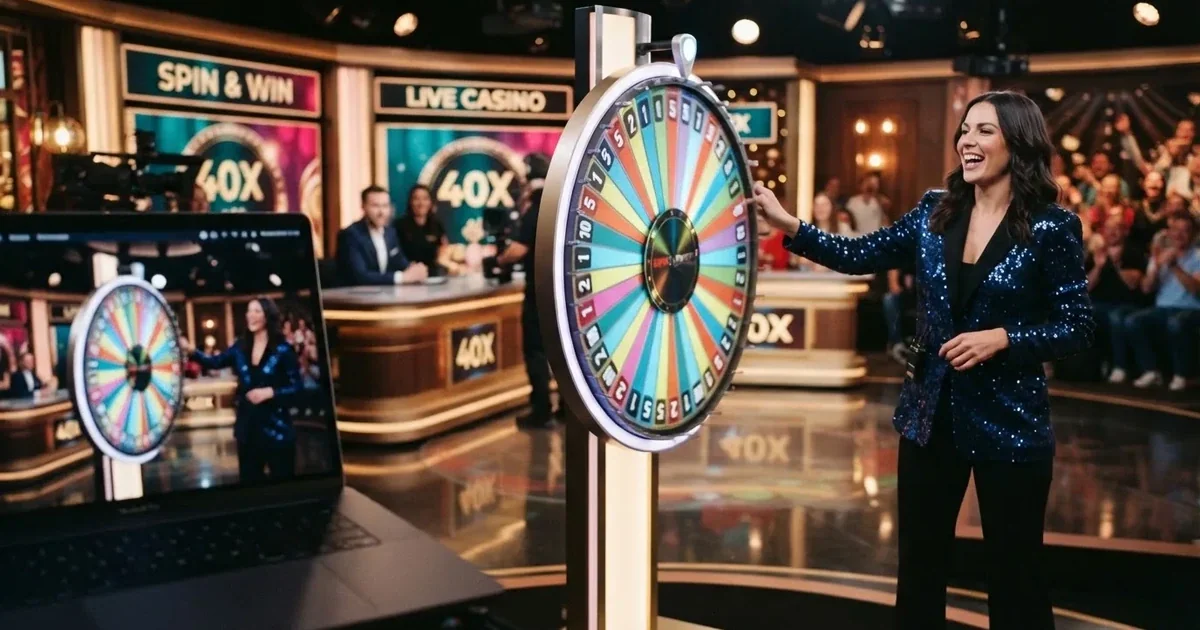
The format started with a single product. Evolution, the Stockholm-listed live casino studio founded in 2006, launched Dream Catcher in 2017, a vertically mounted money wheel with 54 segments — 52 numbered (1, 2, 5, 10, 20 and 40) and two multiplier segments (2x and 7x) — and the company describes that title as having created the live “Game Shows” category. Two years later, in 2019, Evolution expanded the category with MONOPOLY Live and Deal or No Deal Live; Crazy Time followed in 2020 and Funky Time, the 1970s disco-themed wheel, in 2023. The common thread is a presenter, a physical prop, a casino-betting grid and a TV-style backdrop.

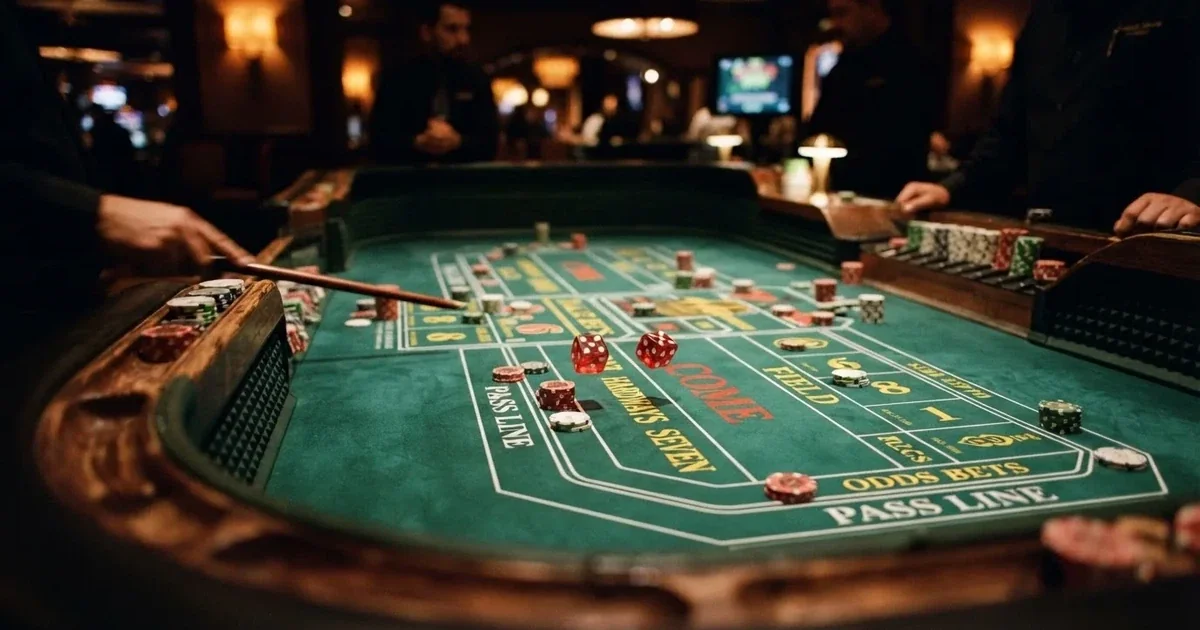
That is also the difference between a game show and a table game. A blackjack or roulette table is a felt, a shoe and a dealer. A game show is closer to a quiz programme: betting on which segment a wheel will land on, or whether a multiplier lands before a crash. The studio framing changes the experience; it does not change who banks the bet. Live game shows are still real-money casino products, and they sit on the same Gambling Commission remote casino licence as the slots and tables next to them.
Two related formats show up under the same banner and should not be confused with each other. A wheel-based game show (Dream Catcher, Crazy Time, Funky Time) is a fixed-payout game with a clearly published paytable. A crash-style game such as Spribe’s Aviator is something else: a multiplier curve rises from 1.00x and crashes at a random point, and the player must cash out before the crash to keep the bet. Spribe, founded in 2018, released Aviator in 2019; its CEO has called it the first true multiplayer crash game in the regulated iGaming space. Both are “game shows” in the loose marketing sense; the math behind them is not the same math.
The licensing frame around every game show on a UK site
Every brand reviewed here carries a Gambling Commission remote casino operating licence — the public test of whether a site is allowed to take bets from players in Great Britain. The Commission’s register, downloadable in full as CSV or Excel, lists each business holding such a licence and, separately, every website domain that runs under it. On 18 September 2026 the register held 139 active remote casino operating licences and, on its domain list, 1,065 active and 361 white-label entries. A white-label site trades under another company’s licence, so two visibly different brands on the register can share a single licence number behind the scenes — Virgin Games and Jackpotjoy, for instance, both sit under Gamesys Operations Limited.

A licence number on the register is not a marketing slogan. It has a fixed shape: account-R-number-suffix, where the leading six digits repeat the licence holder’s account number and the “R” marks a remote, online licence. A player who wants to know whether a site is licensed can look that number up; a player who takes the operator’s word for it is doing the operator’s job for them.
The licence is also the only thing that brings the player any protection. The Commission can require a licensee to share data with GAMSTOP, the national self-exclusion register, and to take part in approved alternative dispute resolution. An offshore site running on a Curaçao or Malta number takes none of that on. Section 33 of the Gambling Act 2005 makes providing gambling to people in Great Britain without a Commission licence an offence, and the Commission’s enforcement powers do not include blocking ISPs — so unlicensed sites do go on appearing in search results. The penalty is the operator’s; the loss is the player’s. What a player gives up by going offshore is not access but recourse: no GAMSTOP match, no Commission complaints route, no approved ADR.
What a Commission licence obliges the operator to do
Three rules matter most for the cost of playing a game show. First, since 19 December 2025 the wagering requirement attached to any bonus has been capped at 10x — meaning a £10 bonus now needs £100 of qualifying play before it pays out as cash, and a “£100 bonus” now needs £1,000. Mixed-product offers (bet on the football, get 50 live-casino spins) are banned. Second, since 17 January 2025 the revised remote gambling and software technical standards extended rules that already applied to slots — autoplay restrictions, a minimum speed of play — to other online gaming products, including live game shows. Third, gambling systems must not use winning-style sound or visual effects to celebrate a return that is less than or equal to the player’s total stake: a £1 spin that returns £1 cannot be celebrated as a win, even though the stake is whole.
Two more rules matter for everyday play. Since 31 October 2021 reverse withdrawals are banned — once a player hits “withdraw”, the funds leave the account; they cannot be pushed back into the playable balance. Credit cards have been banned for gambling since 14 April 2020, including credit cards routed through e-wallets. None of these rules makes a game show cheaper. They make it harder to be played without thinking.
Safer-gambling rules that change the shape of a session
The Commission has spent the last four years tightening what a UK-licensed casino can ask a player to do, and the result is a stack of smaller limits rather than a single cap. Online slots carry a maximum stake per game cycle of £5 for players aged 25 and over (in force from 9 April 2025) and £2 for players aged 18–24 (from 21 May 2025). There is no state-set deposit or loss ceiling, but since 31 October 2025 operators must prompt every customer to set a financial limit before the first deposit. A player can set a higher one, or refuse to set any at all — the prompt is mandatory, the limit is not.
GAMSTOP is the lever a player can pull on themselves. Every UK-licensed online casino must take part in the national self-exclusion scheme, with exclusion periods of six months, one year or five years; the registration cannot be cancelled early. From 28 February 2025 financial vulnerability checks trigger at £150 net deposits in a rolling 30 days using public data, with the wider financial risk assessments announced but not yet in force. The 18–24 age band has the highest average problem gambling score of any age group, which is why the £2 stake limit applies to them and the £5 limit to everyone else.
Three obligations sit alongside the deposit prompt and the stake tier. ID checks are mandatory before the first deposit or any play: name, address and date of birth are verified, with no anonymous play at a licensed site. Reality checks must surface information on net spend and net time in play, a rule extended to live game shows from 17 January 2025. Reverse withdrawals were banned, so a player who changes their mind after cashing out cannot undo the decision in the cashier. None of this is a substitute for self-restraint; it is the floor the Commission lays under the player’s own.
National Gambling Helpline (GamCare) and GambleAware sit alongside these obligations as the routes a player can take if the floor does not hold. They are free, confidential and reachable whether or not the player has self-excluded.
The titles and studios behind the format
The market is dominated by a single supplier. Evolution supplies most of the wheel-based titles on UK sites, and the studio’s timeline — Dream Catcher (2017), MONOPOLY Live and Deal or No Deal Live (2019), Crazy Time (2020), Funky Time (2023) — is effectively the genre’s history. The 2020 acquisitions of NetEnt and Red Tiger pulled two slot studios into the same group; they remain slot-and-game-content suppliers, not wheel studios. Pragmatic Play Live is the second major studio on UK sites, running its own wheel-based products; smaller studios contribute side games and bingo-derivative formats.
How the wheel formats actually pay
Dream Catcher’s 54-segment wheel has 52 numbered segments (1, 2, 5, 10, 20 and 40) and two multiplier segments (2x and 7x). The numbered segments determine the base payout: a £1 chip on number 5 pays £5 if the wheel lands on 5, before any multiplier applies. If the spin lands on a 2x or 7x multiplier and the next spin lands on a number, that number’s payout is multiplied accordingly — 7x on number 40 is the headline line in every advert for the game, and it is also where the math is thinnest. The frequency of the multiplier landing, the distribution of the numbered segments, and the house edge baked into each payout band all sit inside the published paytable; the house edge is what it is, and reading it is the part a player does not get paid to do.
Crazy Time layers bonus games on top of the wheel — Coin Flip, Cash Hunt, Pachinko and Crazy Time itself — with their own payouts and their own house edges. The advertised “20,000x” top payout is a maximum on a single qualifying bet, not a typical outcome; what the paytable actually shows is a long tail of small wins and a small set of bonus rounds that pay much larger. The same is true, in a different shape, for Funky Time’s disco-floor bonus games and for MONOPOLY Live’s board-and-roll mechanic, where a 2x or 4x multiplier and a “Chance” segment interact with the underlying money wheel.
The crash-shape alternative
Aviator does not use a wheel. A multiplier curve rises from 1.00x; the round randomly crashes; a player must cash out before the crash to keep the stake multiplied by the curve’s current value. The longer a player waits, the larger the multiplier — and the larger the chance the round has already crashed. Spribe reports more than 42 million active users and roughly 350,000 bets per minute across more than 5,000 operators worldwide. The maths are not transparent in the same way a wheel paytable is, and the format has not been the subject of the same Commission standards work as the wheel games; it sits under the broader live-product rules rather than under any game-show-specific rule.
Paytables, RTP and what the page can — and can’t — verify
Three points worth stating plainly. First, the per-game RTP and volatility figures a casino lobby shows are stated by the studio, not by the Commission — the Commission sets rules of design, not payout tables. Third-party RTP testing happens at studio level, not at the level of an individual brand. Second, where this page names a game show with an RTP or a volatility figure, the figure is the studio’s, not the operator’s, and it is published for that exact title. Other titles in the same genre do not inherit it. Third, the safest way to read any number a casino surfaces is as a long-run average, not a forecast of any individual session.
Top 10 UK sites for live casino game shows — comparison
The comparison below uses the Gambling Commission’s public register, the only authoritative source for whether a UK site is licensed. The columns are the matters that change a player’s decision: the licence number behind the site, the status of the brand’s domain on the register, and whether the brand has declared specific support for live casino game shows. Subject support is what determines whether the comparison actually ranks the brands as game-show sites; on the public register, no reviewed brand has declared specific support for live casino game shows as a category, so the column is empty throughout. That absence is the finding, not a gap in the data: a player looking for a UK-licensed game-show site is comparing ten licensed casinos, not ten game-show specialists.
| Brand | Licence holder and GB remote casino licence | Domain status on the register | Subject support |
|---|---|---|---|
| Virgin Games | Gamesys Operations Limited · 038905-R-319430-022 | White-label domain | — |
| Betfred | Petfre (Gibraltar) Limited · 039544-R-319290-010 | Active domain | — |
| Betfair | PPB Games Limited · 039411-R-319335-010 | Active domain | — |
| Sky Vegas | Bonne Terre Gaming Limited · 065519-R-339675-002 | Active domain | — |
| Gala Bingo | LC International Limited · 054743-R-330863-014 | Active domain | — |
| 32Red | Platinum Gaming Limited · 045322-R-324275-019 | Active domain | — |
| Casumo | Recro Limited · 061549-R-336718-002 | Active domain | — |
| Midnite | Dribble Media Limited · 042647-R-321653-022 | Active domain | — |
| PokerStars | Stars Interactive Limited · 039108-R-319334-026 | Active domain | — |
| Jackpotjoy | Gamesys Operations Limited · 038905-R-319430-022 | Active domain | — |
Three things follow from the table. Eight of the ten brands are listed as active domains on the register; Virgin Games is a white-label domain, which means the brand name is owned by someone other than the licence holder (Gamesys Operations Limited) — the licence still covers play on the site, but the commercial ownership sits elsewhere. Two pairs share a single licence holder: Virgin Games and Jackpotjoy both run under Gamesys Operations Limited. The licence column is the only thing on the page that decides whether a brand is allowed to offer a game show at all; nothing else does.
The Subject support column is empty because none of the ten brands has declared game-show support to the public register in a way that distinguishes it from the wider remote casino licence. That is consistent with how UK-licensed casinos work: live casino game shows are offered as part of the live-casino vertical, not as a separately licensed product. A player who wants a game-show-specific site is choosing between licensed casinos, not between licensed game-show specialists.
Operator write-ups
The write-ups below cover every brand the comparison table routes through. They are factual rather than promotional: licence, what the brand carries in the wider market, and the one thing a player should weigh before signing up. No operator is recommended as a place to play; this is a comparison, not a route to a deposit.
Virgin Games — Gamesys Operations Limited
Virgin Games runs as a white-label domain under Gamesys Operations Limited, account 38905, with the active remote casino operating licence 038905-R-319430-022. White-label means the brand identity sits with one company and the operating licence with another — a structure the Commission discloses through the register rather than through the brand’s own marketing. The brand carries the Gamesys-built bingo and slots portfolio, and any live casino game show on the site is supplied through the same vertical as on Jackpotjoy, which runs on the same licence. The judgement here is about how the player should read the brand: the licence is solid, the brand is branded for someone else, and that is not a defect — it is the structure.
Betfred — Petfre (Gibraltar) Limited
Betfred operates as an active domain on the Gambling Commission register with account 39544, Petfre (Gibraltar) Limited, holding the active remote casino operating licence 039544-R-319290-010. The brand sits inside the wider Betfred retail and online estate, which makes its safer-gambling and complaints infrastructure more developed than a pure-play online brand’s. Game shows sit inside the live casino vertical rather than as a separately marketed product. A player who already has a Betfred retail account and wants the same operator online will find the licence is real and the live product standard for the UK market.
Betfair — PPB Games Limited
Betfair appears as an active domain on the Gambling Commission register of account 39411, PPB Games Limited, holding the active remote casino operating licence 039411-R-319335-010. The brand’s exchange heritage makes its pricing sharper than the average online casino’s; the live casino vertical sits beside, rather than at the centre of, the wider product. Game shows on the site come from the same Evolution-led supply as everywhere else. The licence and the safer-gambling protections are the same as on every other brand in this comparison — the difference is what surrounds the live vertical.
Sky Vegas — Bonne Terre Gaming Limited
Sky Vegas is recorded as an active domain on the Gambling Commission register for account 65519, Bonne Terre Gaming Limited, holding the active remote casino operating licence 065519-R-339675-002. The brand sits inside the Sky wider-vertical stack, which means its identity is tied to a broadcast subscription business rather than to a casino-only audience. Live casino game shows are part of the product set, not a separately marketed sub-vertical. The account number is high (65519), which is a marker of a more recently issued licence rather than of any difference in coverage.
Gala Bingo — LC International Limited
Gala Bingo functions as a brand on the Gambling Commission register for account 54743, LC International Limited, holding the active remote casino operating licence 054743-R-330863-014. LC International is the same company behind Coral and Ladbrokes, which means the live casino vertical and the safer-gambling infrastructure are shared across three visible brands. A player on Gala Bingo is on a bingo-first product that has grown a live casino product alongside it; the live game show catalogue is the standard market one. The licence and the protections are the same as elsewhere; the difference is the bingo heritage rather than anything specific to game shows.
32Red — Platinum Gaming Limited
32Red is registered as an active domain with the Gambling Commission under account 45322, Platinum Gaming Limited, holding the active remote casino operating licence 045322-R-324275-019. The brand has a long UK-licensed history and was part of the Kindred Group until that group’s 2024 transition, with the licence now under the Platinum Gaming Limited entity on the register. The live casino vertical carries the standard Evolution-led catalogue. The judgement here is straightforward: long-licensed UK brand, standard live product, no game-show-specific claim.
Casumo — Recro Limited
Casumo maintains an active domain listing on the Gambling Commission register for account 61549, Recro Limited, holding the active remote casino operating licence 061549-R-336718-002. The brand carries a recognisable adventure-and-rewards structure on top of its live casino product; game shows sit inside the live vertical alongside the standard wheel and table games. The licence and the safer-gambling obligations are the same as elsewhere. The brand is one of the cleaner examples of a UK-licensed casino that runs a live vertical well rather than one that has a separate game-show identity.
Midnite — Dribble Media Limited
Midnite is listed on the register as an active domain of account 42647, Dribble Media Limited, holding the active remote casino operating licence 042647-R-321653-022. The brand runs a sportsbook-led product with a casino vertical attached, which is the inverse of the bingo-first brands and similar in shape to Betfair. Live casino game shows appear in the casino tab rather than as a featured product. A player who wants the casino product on a sports-first site is the reader this brand suits.
PokerStars — Stars Interactive Limited
PokerStars is listed on the register as an active domain of account 39108, Stars Interactive Limited, holding the active remote casino operating licence 039108-R-319334-026. The .uk domain reflects the post-Brexit split that pushed the brand onto a UK-only licence under its own entity; the global PokerStars brand runs on a separate licence in other jurisdictions. The casino and live casino verticals are well established; game shows sit inside the live product. The licence is one of the longer-standing ones on the register, and the safer-gambling infrastructure reflects that.
Jackpotjoy — Gamesys Operations Limited
Jackpotjoy is listed on the register as an active domain of account 38905, Gamesys Operations Limited, holding the active remote casino operating licence 038905-R-319430-022 — the same licence as Virgin Games. The two brands are commercially separate, on the same operating licence and the same live casino vertical. A player on Jackpotjoy is on a bingo-and-slots-led product; game shows are part of the live casino offering rather than the headline vertical. The judgement is identical to Virgin Games on the licensing side and is the place to send a reader who already plays Jackpotjoy and wants to add game shows to their play.
The cost of a bonus under the 10x cap
The wagering requirement cap introduced on 19 December 2025 reshaped what an offer actually costs. A bonus of £10 now needs £100 of qualifying play before any winnings turn into withdrawable cash. A £100 bonus now needs £1,000. Mixed-product offers — bet on the football, get 50 live-casino spins — are banned under the same rule, so the player cannot move bonus money between verticals and avoid the requirement. The cap is per offer, not per session, and it sits on top of the underlying house edge of whatever game the bonus is being played on.
What that looks like for a live casino game show depends on the bonus amount and the staking plan. The arithmetic is not one number; it is a band.
A bonus of £10 with the 10x cap needs £100 of qualifying play, which at a £1 stake per spin on a wheel-based game show works out to 100 qualifying bets. A bonus of £100 needs £1,000 of qualifying play, which is 1,000 bets at £1 — or 200 bets at £5 for an over-25 player playing at the stake cap. The same £100 bonus needs 5,000 bets at £0.20 for a player staking small. The qualifying spin count is bonus × wagering factor ÷ stake; the resulting time is spins × a 5-second interval, which works out to a few minutes for the small bonus and a few hours for the larger one, with no spin count in the band taking longer than a working day to complete at the slowest pace.
Two assumptions carry this band. The first is that only the bonus amount itself is wagered — a player who tops up with cash plays a longer qualifying block than the bonus alone requires. The second is that the £5 stake cap applies to the player; an 18–24 player is capped at £2 per spin, which doubles the spin count and the time at every bonus size. The arithmetic above is a mechanical estimate of the qualifying play, not a forecast of what the player wins. The house edge on the underlying game show eats into the bonus on every spin; a 96% RTP game takes 4% of every pound of qualifying play, which means the £100 bonus costs roughly £4 of expected value in qualifying play before the wagering requirement is even complete. The bonus is paid for in time and in expected value; the requirement is just the part the player can count.
A reader should pick the bonus at the size they can clear in one session rather than the size they would clear if they had unlimited time. The cost of a bonus is not the headline number; it is the number of qualifying spins at the stake they actually play, and that scales linearly with the bonus.
What a session at a wheel actually looks like
A typical session on a wheel-based game show runs at the speed the Commission allows. With a minimum spin interval of 2.5 seconds on slots and the same minimum extended to other online products from 17 January 2025, a single wheel spin or game-show round takes a few seconds longer than the marketing videos suggest — closer to ten seconds end-to-end when a presenter is drawing out the round and the studio framing is in place. A £5-over-25 stake cap with a 5-second interval works out to a maximum of 60 spins per minute in theory, but the practical pace is closer to 30–40 with the studio pacing added in. The same maths at £2 for an 18–24 player caps the practical stake-per-minute exposure at roughly £80, regardless of how fast the wheel lands.
Two things eat into the perceived value of any game show. The first is the presenter’s framing — rounds are paced for television, not for the player’s stake. The second is the multiplier payoff structure: a 7x multiplier on number 40 pays 280x the stake, which is the line the advert leans on, but the probability of that combination is what the paytable shows rather than what the studio’s marketing says. Reading the paytable is the part the player does not get paid to do.
How to read a UK game-show offer in 2026
Three filters decide whether an offer is worth the cost of qualifying it. First, the licence number on the register, the only test of whether the offer is even legal to take. Second, the wagering factor, capped at 10x since 19 December 2025 and stated next to the offer rather than buried in the small print. Third, the stake-per-spin tier — £5 for over-25s, £2 for 18–24s — which decides how long the qualifying block takes at the stake the player actually plays. Everything else is the marketing layer.
Frequently asked questions
What is a live casino game show, and how is it different from a table game?
A live casino game show is a real-money betting format streamed from a studio, with a presenter, a wheel or card prop and a TV-style backdrop. A table game is a felt, a shoe and a dealer. The studio changes the framing, not who banks the bet.
Are live casino game shows streamed from a real studio?
Yes. Evolution’s studios — the main supplier on UK sites — and Pragmatic Play Live’s studios are purpose-built broadcast facilities. The presenter is on the studio floor; the player is watching a stream and placing bets on a separate interface.
Do UK-licensed sites publish odds or payout structures for game shows?
The paytable is published by the studio, not by the operator. Studios publish segment counts, payout bands and house edges for each title; the operator surfaces those numbers in the in-game help rather than rewriting them. The Commission’s role is to set design rules, not payout tables.
Can a bonus be used to play a live casino game show?
Sometimes, depending on the offer’s terms. The wagering requirement attached to any UK-licensed bonus is capped at 10x as of 19 December 2025, and mixed-product bonuses are banned. A bonus usable on live game shows will state that in its terms.
Is a live casino game show hosted by a real presenter?
Yes. Every wheel and card-based game show on a UK-licensed site uses a live presenter on a studio floor, with the round outcome decided by a physical prop. The presenter does not decide the outcome; the prop and the studio’s randomisation do.
Prepared by the trustedcasinocheck editorial staff.