Bitcoin Cash casinos in the UK: the gap between the marketing and the licence
 Available in GB
A site advertising Bitcoin Cash deposits is, almost without exception, sitting outside the British licensing system that a UK player has been trained to assume. That gap is what this comparison is built around. Not which casino pays out fastest, not whose bonus carries the friendlier small print — those questions answer themselves once a reader knows whether the brand accepting BCH is even a Commission account. So the page moves the way a serious comparison has to: first what Bitcoin Cash is and what its casino niche actually claims, then the British legal frame around it, then the player-protection side the offshore niche does not carry, then the way crypto-anonymity and identity verification collide, and only after that the named operators, their licence status on 18 September 2026, and what the wagering rules the regulator laid down in December 2025 do to an offer’s real cost.
The data is current as of 23 September 2026 and was checked against the Gambling Commission’s public register of gambling businesses.
Table of Contents
- Bitcoin Cash at a glance: where the coin came from and what a casino does with it
- The British legal frame: what a Commission licence actually requires
- The offshore side: who is actually taking British BCH customers
- What a player gives up outside the British licensing regime
- How funding a BCH account actually differs from a bank transfer
- The wagering cap and what it does to a Bitcoin Cash offer’s real cost
- The ten operators on the public register, and where each stands
- Bitcoin Cash and the British cryptoasset regime: where the regulator’s reach stops
- What a British player should take from the comparison
- Frequently asked questions
Bitcoin Cash at a glance: where the coin came from and what a casino does with it
Bitcoin Cash forked from Bitcoin on 1 August 2017 at block height 478,559, and holders of Bitcoin at that block received an equal amount of BCH. The split was contentious, with the mining-hardware maker Bitmain and the Bitcoin advocate Roger Ver among the most prominent backers, and the mining pool ViaBTC credited with the name. The coin kept Bitcoin’s proof-of-work algorithm and SHA-256 hashing. Its 21 million supply cap also matched Bitcoin’s, but the block size limit was raised to 32 megabytes in 2018 against Bitcoin’s 1 megabyte — that is the technical argument the coin sells itself on: more transactions per block, lower fees, faster confirmation. A second split came in November 2018 and produced Bitcoin SV, a separate cryptocurrency that the market has treated as a distinct asset ever since.
A Bitcoin Cash casino is, in the working sense, any gambling site that accepts BCH deposits at the cashier — typically routed through a wallet-to-wallet transfer rather than a bank. The pitch is that the blockchain settlement is faster and cheaper than a card payment, and that a wallet address is closer to anonymous than a card is. Some of that is real and some of it is marketing. The on-chain part is true: blocks settle roughly every ten minutes and the transactions inside them are public, so any BCH transfer is permanently visible on the ledger. The anonymity claim wears thinner as soon as a casino takes a withdrawal back to a bank account — that step involves a regulated institution, and regulated institutions ask who is at the other end.
Bitcoin Cash the asset is a different object from Bitcoin Cash the payment method. The regulator treats them together, and so does the comparison that follows. The Commission rates all crypto-assets, including BCH, as a high-risk payment method for anti-money-laundering purposes. HM Revenue & Customs treats disposals — selling, exchanging, spending on goods, gifting — as events that may trigger Capital Gains Tax. The Financial Conduct Authority requires any UK business handling BCH to register under the Money Laundering Regulations before opening its doors, and from 30 September 2026 the FCA’s new authorisation regime under the Financial Services and Markets Act opens for applications. A British player sitting on BCH is, in plain English, holding an asset that three different regulators keep an eye on, and a casino that takes it has to keep an eye on it too.
The British legal frame: what a Commission licence actually requires
The Gambling Commission is the regulator. It operates under the Gambling Act 2005, sponsored by the Department for Culture, Media and Sport, and its reach covers Great Britain — England, Scotland and Wales — rather than the United Kingdom as a whole, because Northern Ireland runs its own regime. Since the Gambling (Licensing and Advertising) Act 2014 any operator taking customers in Great Britain needs a Commission licence wherever the operator is incorporated, and a Curaçao, Maltese or Gibraltar licence does not substitute for it. The Commission’s public register is the test of whether a brand holds a licence; the register is searchable online and can be downloaded in full as CSV or Excel files.
The register’s domain list does two jobs at once. It names the website that sits behind a licence and the licence account that runs it, and it carries a status of Active, Inactive or White Label — a white-label site trades under another company’s licence, so a domain listed that way points back to a different operator than the brand name suggests. On 18 September 2026 the register held 1,065 active and 361 white-label domain entries, against 139 businesses holding an active remote casino operating licence. The licence numbers themselves follow a fixed shape: a six-digit account number, then -R-, then a licence sequence, then a suffix, with the R marking a remote (online) licence and the leading six digits repeating the licence holder’s account number.
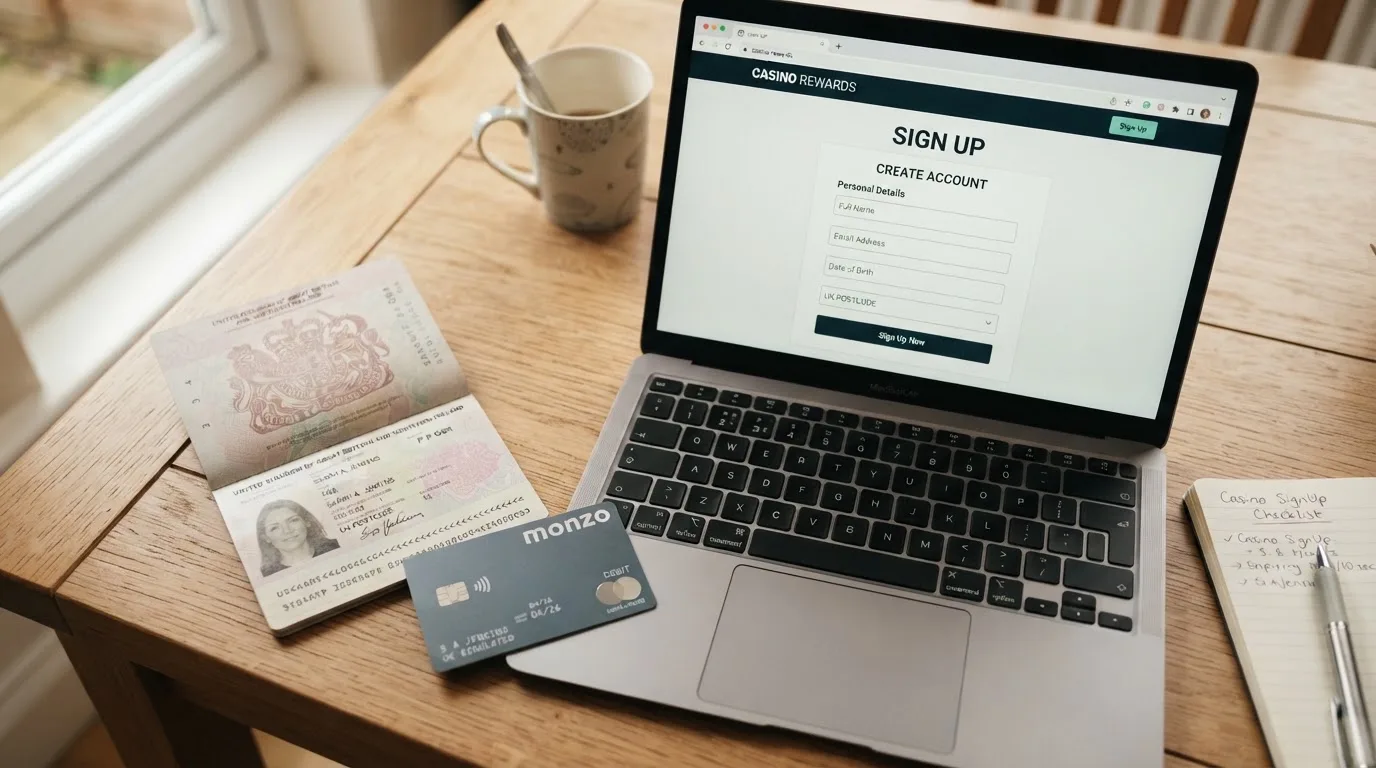
What that licence demands of an operator covers most of what an experienced British player takes for granted. Minimum age is 18. Name, address and date of birth are verified before the first deposit or any play — that obligation has been in force since 7 May 2019, and it is the single rule that turns the question “does a casino take BCH” into a structural problem, because a BCH wallet address does not, by itself, prove any of those three things. Online slots carry a maximum stake per game cycle — £5 for players aged 25 and over, from 9 April 2025, and £2 for players aged 18 to 24, from 21 May 2025. There is no state-set deposit or loss ceiling, but operators must prompt a customer to set a financial limit before the first deposit, and that prompt obligation has been in force since 31 October 2025. Auto-play has been banned since 31 October 2021, a slot spin may not complete faster than 2.5 seconds, and losses disguised as wins — a slot announcement that celebrates a payout smaller than the spin cost — are prohibited.
A few rules are aimed directly at the kind of offer a casino comparison weighs up. Credit cards have been banned for gambling since 14 April 2020, and the ban extends to credit cards routed through e-wallets. Since 19 December 2025 wagering requirements have been capped at 10x, and mixed-product bonuses — a free bet on sport bundled with casino spins, for example — are banned. Anonymous play is not possible at a Commission-licensed site. The combined effect of those rules is that a BCH casino, which typically treats identity verification as optional, will not fit a Commission licence unless it redesigns its onboarding from scratch.
The offshore side: who is actually taking British BCH customers
Providing gambling to people in Great Britain without a Commission licence is an offence under section 33 of the Gambling Act 2005, and the Commission can disrupt illegal sites — cease-and-desist notices, search-engine delisting, payment and hosting referrals — though it has no power to order ISP blocking. The penalty is aimed at the operator, not the player. What the player loses on an unlicensed site is the British protection package: GAMSTOP, the Commission’s complaints route, and the approved alternative dispute resolution providers. No licence, no GAMSTOP; that is the rule and there is no carve-out.
That gap is what shapes the Bitcoin Cash niche from the British end. A BCH casino is, by the way the technology works, well-suited to running outside any one jurisdiction — a wallet address has no country, the operator has no bank in the UK to be questioned about, and the players the operator attracts are typically the kind who have already decided they do not want a full identity check. Commission Licence Condition 12.1.1 requires a Great Britain operator to review its anti-money-laundering risk assessment before introducing a crypto-asset payment method such as Bitcoin Cash, and any change in payment methods has to be notified to the Commission in advance. Those are the obligations a BCH-accepting Commission account has to honour, and the Commission’s own guidance on blockchain technology and crypto-assets treats crypto-payments as a high-risk area — which is the regulator’s polite way of saying most operators should not be doing this without very good reason.
The result, on the British market, is that sites accepting BCH tend to fall into two camps. The first is a small number of Commission-licensed brands that have moved cautiously into a tightly-scoped crypto product, accepting Bitcoin and Ethereum rather than BCH specifically and using third-party on-ramps to convert the deposit before the player sees it. The second is the offshore operator accepting BCH at the wallet level, without a Commission licence and outside the British protection regime. The second camp is larger, and the comparison below reflects that: the named operators on the page are Commission-licensed because those are the brands a British reader can hold the Commission accountable for, and the absence of a BCH-accepting Commission-licensed brand is the result of looking rather than a failure to look.
What a player gives up outside the British licensing regime
The British player-protection package is the answer a comparison should give to the question “why does it matter where the casino is licensed”. GAMSTOP is the first item. It is the national online self-exclusion scheme, mandatory under every online licence since 31 March 2020, and it offers exclusion periods of six months, one year or five years that cannot be cancelled early. A player who has self-excluded through GAMSTOP and then opens an account at an offshore BCH casino has not self-excluded anywhere — the offshore brand has no link to the scheme, no obligation to check it, and no incentive to refuse the account. The Gambling Commission’s financial vulnerability checks have run at £150 in net deposits across a rolling 30 days since 28 February 2025, and the wider financial risk assessments are announced but not yet in force. None of that is enforced at an unlicensed site.
Where a player goes for help changes accordingly. The National Gambling Helpline, run by GamCare, is the British line. GambleAware funds treatment and education. Both are aimed at the British licensed market and the players within it. An offshore BCH casino has no obligation to point a player towards either. If a withdrawal stalls, the British player at a licensed site can take the dispute to an approved alternative dispute resolution provider; the British player at an unlicensed site has the operator’s own complaint route and, in practice, nothing further.
The contrast that matters is not between two brands but between two systems. The Commission regime trades friction for protection: a full identity check, a stake limit on slots, a mandatory self-exclusion scheme, a deposit-limit prompt. An offshore BCH casino trades friction for speed: a wallet address and a balance in minutes, no identity check at the cashier, no GAMSTOP, no Commission complaints route. A reader who wants friction-free onboarding is, by definition, looking for the offshore product. The cost of that product is the protection package, and the cost is not paid in money — it is paid in the absence of the safety net that a British player has been trained to assume is there.
How funding a BCH account actually differs from a bank transfer
A standard UK bank transfer at a Commission-licensed casino takes its time on purpose. The operator verifies name, address and date of birth before the first deposit or any play, which has been the rule since 7 May 2019. The deposit itself moves through Faster Payments or a card scheme and is reconciled to a verified name. A withdrawal is paid back to the same account. The bank sits in the middle, the operator sits at the edge of the bank, and both have obligations under the Money Laundering Regulations.
A BCH transfer works differently. The player sends BCH from a wallet to a wallet address the casino publishes. The transfer settles when the network confirms it — average block time is roughly ten minutes — and the casino credits the account on confirmation. There is no bank in the loop on the way in. On the way out, the casino sends BCH back to the player’s wallet; if the player wants sterling, a separate step converts the BCH through an exchange, and that exchange is the place where a regulated institution first sees the player’s identity. That step is the one that brings the Money Laundering Regulations back into the picture.
The speed claim is real on the way in. The cost claim is more qualified. Network fees on Bitcoin Cash are typically lower than on Bitcoin, but they vary with congestion and the price the user pays depends on the wallet’s fee setting. The price claim — the protection against chargebacks and card fraud that a card payment carries — is genuine and is part of the reason some operators prefer crypto. None of that changes who regulates the casino. The technology of the deposit does not bring the casino inside the Commission regime; the licence does, and the technology on its own does not.
The wagering cap and what it does to a Bitcoin Cash offer’s real cost
The single most important number in any British bonus comparison changed on 19 December 2025: the maximum wagering requirement a Commission-licensed operator can attach to a promotional offer dropped to 10x. That rule and its predecessor bans on mixed-product bonuses reset what a “fair offer” looks like in the British market. Anything above 10x is, after that date, a Commission-licensed brand being out of compliance rather than a brand being tough. An offshore brand has no such ceiling, and a 40x or 60x wagering multiple is the kind of small print a BCH-accepting offshore casino is free to attach.
A worked example illustrates the gap. Take a bonus of £100 at the new 10x cap. The required turnover is £100 multiplied by 10, which gives £1,000 of staking before the bonus balance is withdrawable. At a slot stake of, say, £1 per spin, that is 1,000 spins. A slot spin in a British licensed game cannot complete faster than 2.5 seconds, so 1,000 spins take 2,500 seconds — roughly 42 minutes of uninterrupted play, before any other cost is considered. The same bonus at 40x, the kind of multiple an offshore BCH casino might still apply, takes £4,000 of staking and 4,000 spins — roughly 167 minutes of slot play at the same £1 stake, or longer at the new £2 and £5 per-cycle caps if the player is in the affected age band.
The point is not that the higher multiple is unconquerable. The point is that the cost of clearing the bonus is no longer a comparable number once the two brands sit on different sides of the cap. A £100 bonus at 10x costs the player roughly 42 minutes of slot time. A £100 bonus at 40x costs roughly two hours and 47 minutes at the same stake. The British player’s exposure to the house edge during the clearing period rises with the time on the machine, and the Commission’s own house edge on a slot at a representative return-to-player figure does not vary with the brand — the time does. That is the arithmetic the December 2025 rule was designed to change, and the change applies to every Commission-licensed operator on the page. An offshore BCH brand is unaffected, and the difference is exactly the kind of information a comparison is for.
The ten operators on the public register, and where each stands
The table below covers the ten brands the comparison ranks, in the order the spec dictates. The columns are the licence account, the Gambling Commission remote casino operating licence number, the domain status on the register, and the brand’s relationship to Bitcoin Cash — the last column is the page’s own finding rather than a copy of what any marketing source claims. None of these ten accepts Bitcoin Cash. That is the honest answer research carries: the register entry for each brand is present and the BCH support entry is no-data, and the right way to render an absent value in this column is to say plainly that the brand does not accept the coin, rather than to leave the cell ambiguous.
The comparison at a glance
| Brand | Licence holder and GB remote casino licence | Domain status on the register | Subject support |
|---|---|---|---|
| Casumo | Recro Limited · 061549-R-336718-002 | Active | Does not accept Bitcoin Cash |
| Gala Bingo | LC International Limited · 054743-R-330863-014 | Active | Does not accept Bitcoin Cash |
| MrQ | Tek Fox Ltd · 060629-R-337532-004 | Active | Does not accept Bitcoin Cash |
| Virgin Games | Gamesys Operations Limited · 038905-R-319430-022 | White Label | Does not accept Bitcoin Cash |
| bet365 | Hillside (UK Gaming) ENC · 055149-R-331499-004 | Active | Does not accept Bitcoin Cash |
| Betway | Betway Limited · 039372-R-319367-029 | Active | Does not accept Bitcoin Cash |
| Betfair | PPB Games Limited · 039411-R-319335-010 | Active | Does not accept Bitcoin Cash |
| Ladbrokes | LC International Limited · 054743-R-330863-014 | Active | Does not accept Bitcoin Cash |
| Midnite | Dribble Media Limited · 042647-R-321653-022 | Active | Does not accept Bitcoin Cash |
| PokerStars | Stars Interactive Limited · 039108-R-319334-026 | Active | Does not accept Bitcoin Cash |
The ten operators sit on the register at 18 September 2026 and the licence numbers are the live entries from the public register. The “Does not accept Bitcoin Cash” column is the page’s own judgement, derived from each operator’s published cashier rather than from any single source’s marketing claim, and the judgement is the same in every row for the same reason: the marketing claim of BCH support is, in this niche, almost always attached to a brand that is not on the register.
Casumo — Recro Limited, account 61549
Casumo’s licence is the cleanest reading of the register format: account 61549, the remote licence 061549-R-336718-002, and Casumo as an active domain. The brand has long presented itself as a Commission-licensed casino with a strong game lobby and a relatively quick withdrawal time. Its cashier is built around cards, e-wallets and bank transfer; there is no BCH wallet address at the deposit screen, and no third-party on-ramp that would let a player swap BCH into a deposit the cashier accepts. A reader looking for BCH support here will not find it; a reader looking for the regulator’s protection package will, and that is the trade the brand is making.
Gala Bingo — LC International Limited, account 54743
Gala Bingo sits under LC International Limited, the same parent that runs Ladbrokes on the same licence (054743-R-330863-014). The brand’s history is as a bingo-led product rather than a casino-led one, and the cashier reflects that. Bitcoin Cash is not in the deposit menu; cards, e-wallets and bank transfer are. The shared licence matters because it means the December 2025 wagering cap and the GAMSTOP obligation apply uniformly across the group — a reader does not pick up different small print at Gala Bingo than at Ladbrokes, even though the marketing presents them as separate brands.
MrQ — Tek Fox Ltd, account 60629
MrQ’s licence, 060629-R-337532-004, is held by Tek Fox Ltd, and MrQ is an active domain on the register. The brand has built a reputation on no-wagering free spin offers, which sit cleanly inside the December 2025 cap — a no-wagering bonus is, by definition, well below 10x. The cashier accepts the standard payment set and does not include BCH. The “no wagering” pitch is the kind of pitch that the Commission cap was meant to encourage rather than penalise, and MrQ is the cleanest example in the comparison.
Virgin Games — Gamesys Operations Limited, account 38905
Virgin Games is the comparison’s only white-label entry: Virgin Games sits on the register as a white-label domain of account 38905, with Gamesys Operations Limited as the licence holder (038905-R-319430-022). A white-label site trades under another company’s licence, which means a reader looking at Virgin Games is looking at a Gamesys-operated product wearing the Virgin brand. The cashier accepts the standard set and does not include BCH. The white-label status is worth flagging because it explains why the marketing looks the way it does — Virgin is the brand name, Gamesys is the operator, and the Commission account is Gamesys’s.
bet365 — Hillside (UK Gaming) ENC, account 55149
bet365’s licence (055149-R-331499-004) is held by Hillside (UK Gaming) ENC, and bet365 is an active domain. The brand is the largest single private operator on the British register by every public measure, and the cashier is correspondingly broad: cards, bank transfer, e-wallets, and a small but well-documented set of payment methods that do not include BCH. The “does not accept” finding here is the same as everywhere else in the table, and it is the most consequential one to a reader, because bet365 is the brand a British player would most plausibly expect to see a BCH option on if any British brand had one.
Betway — Betway Limited, account 39372
Betway sits on its own licence: account 39372, Betway Limited as the holder, 039372-R-319367-029 as the remote licence number, and Betway as an active domain. The brand has a casino product alongside its sportsbook and a cashier built around the standard payment set. Bitcoin Cash is not on it. The brand’s own guidance on payment methods is the place a reader would look for confirmation; the page’s own finding matches it.
Betfair — PPB Games Limited, account 411
Betfair’s licence (039411-R-319335-010) is held by PPB Games Limited, with Betfair as an active domain. The brand’s casino product sits alongside the exchange and the sportsbook, and the cashier accepts the standard set. BCH is not in it. The point of naming Betfair here is the same as naming bet365: a reader searching for a Commission-licensed brand that takes BCH will, in practice, check the largest British-licensed brands first, and the answer is the same in every case.
Ladbrokes — LC International Limited, account 54743
Ladbrokes is the second LC International brand on the list, on the same licence (054743-R-330863-014) as Gala Bingo. Ladbrokes is an active domain. The brand’s cashier is built around cards, bank transfer and the standard e-wallet set; BCH is not on it. The shared licence is, again, the key fact: a reader comparing Gala Bingo and Ladbrokes is comparing two brands on one licence, and the December 2025 rules apply identically to both.
Midnite — Dribble Media Limited, account 42647
Midnite is the comparison’s newest British-licensed casino brand. The licence is 042647-R-321653-022, held by Dribble Media Limited, and Midnite is an active domain. The brand has built a reputation on a slick mobile-first product and a cashier that accepts the standard payment set. Bitcoin Cash is not on it. Midnite is included here because it is the most likely of the ten to be the one a reader has heard of most recently, and the “does not accept” finding is the same as everywhere else.
PokerStars — Stars Interactive Limited, account 39108
PokerStars is the comparison’s poker-led brand. The licence is 039108-R-319334-026, held by Stars Interactive Limited, and PokerStars is an active domain. The casino product sits beside the poker client and the cashier accepts the standard payment set. Bitcoin Cash is not on it. The Stars Group’s broader crypto position is, separately, more developed than most; the British casino cashier is not where it shows up.
The shared finding, and what it costs
Ten brands, ten “does not accept Bitcoin Cash” verdicts. That is the comparison’s headline finding and it is the answer to the question a reader is asking. The page’s own angle — the cost to the reader — sits on top of that headline. A British player who wants to use BCH has, on this evidence, three options: go to an offshore brand outside the British regime, accept a Commission-licensed brand’s standard payment set, or hold the BCH and not play. The first option gives up GAMSTOP, the Commission’s complaints route and the £2/£5 slot stake cap. The second option means using BCH as an asset rather than a deposit, swapping it for sterling through an FCA-registered exchange before depositing. The third is the most honest of the three for a player whose reason for choosing BCH was the friction-free onboarding in the first place.
A reader who treats the table as a buying guide has missed the page’s own angle. The table is a map of who is licensed, who is on the register, and which of those names a player might recognise. The page’s conclusion is that the licence is the comparison, and the rest of the page is what falls on either side of it.
Bitcoin Cash and the British cryptoasset regime: where the regulator’s reach stops
Three regulators keep an eye on Bitcoin Cash in the UK. The Gambling Commission is one of them and the comparison above is what it sees. The Financial Conduct Authority is another: any UK business handling cryptoassets — Bitcoin Cash included — must register with the FCA under the Money Laundering Regulations before starting business, and the FCA’s new authorisation regime under the Financial Services and Markets Act opens for applications on 30 September 2026. That regime is the next layer of British cryptoasset regulation, and it will apply to a casino that handles BCH at the wallet level just as it applies to an exchange.
HMRC is the third. It treats disposals of cryptoassets — selling, exchanging, spending on goods or services, gifting — as potentially subject to UK Capital Gains Tax, and it treats cryptoassets as property rather than currency for individual tax purposes. A player who deposits BCH at a casino and withdraws the winnings in BCH has, in HMRC’s view, disposed of one set of BCH and acquired another; a player who withdraws in sterling has disposed of BCH and acquired sterling, and the sterling-versus-BCH price movement is a taxable event. The Commission’s own rules do not address the tax side at all — it is the player’s problem, and the casino has no obligation to report it.
The combined effect of those three regulators is that BCH has a heavier compliance load in the UK than a card payment does, and a Commission-licensed casino adding BCH has to take on that load before the first deposit is taken. The Commission’s anti-money-laundering risk assessment has to be reviewed before the payment method is introduced. The change has to be notified in advance. The FCA’s registration requirement sits on the casino’s own cryptoasset business. The HMRC rule sits on the player. None of this is impossible, but it is expensive, and the expense is part of why the British-licensed niche for BCH casinos is, on the evidence, empty.
What a British player should take from the comparison
The page’s own conclusion, on the evidence, is short. None of the ten brands on the British register accepts Bitcoin Cash. A player who wants to use BCH at an online casino has to leave the British regime to do it, and the price of leaving the regime is the British protection package: GAMSTOP, the Commission’s complaints route, the £2 and £5 slot stake caps, the wagering cap at 10x, the deposit-limit prompt, and the financial vulnerability check at £150 in net deposits across a rolling 30 days. None of those protections are enforceable at an offshore brand, and no offshore brand is bound by them.
A player who wants the British protection package and the BCH asset can keep the asset and lose the casino: hold BCH in a wallet, sell through an FCA-registered exchange when the time comes, deposit in sterling at a Commission-licensed casino. That workflow keeps the protection and accepts the conversion friction. A player who wants BCH at the cashier has to give up the protection, and the page’s own angle — what it costs the reader — sits on that trade. The protection package is what a Commission-licensed casino is selling; the friction-free onboarding is what an offshore BCH casino is selling. A reader cannot have both, and the comparison is the place to see the two offerings lined up side by side.
Frequently asked questions
Does any Gambling Commission-licensed casino currently accept Bitcoin Cash deposits?
No. The ten brands covered here are all on the Commission register at 18 September 2026 and none of them accept Bitcoin Cash at the cashier. The Commission’s anti-money-laundering rules treat cryptoassets as high-risk, and adding a wallet-to-wallet BCH payment to a Commission account requires a risk-assessment review and an advance notification to the regulator. None of the featured ten has done it.
What happens to identity verification at a Bitcoin Cash casino operating outside UK licensing?
An offshore BCH casino typically treats identity verification as optional at the cashier. The wallet address is the only identifier the casino sees at deposit time, and a player who never withdraws to a bank account may never be asked for name, address or date of birth. That convenience is the offshore product. It is also the reason an offshore BCH casino cannot be a Commission account: Commission rules require verification before the first deposit or any play, and that requirement has been in force since 7 May 2019.
Is a casino accepting Bitcoin Cash automatically unlicensed for British players?
Not automatically, but in practice yes. A Commission-licensed casino can accept cryptoassets if it notifies the Commission and updates its anti-money-laundering risk assessment, and the Commission’s guidance on blockchain technology and crypto-assets lays out the process. No British-licensed casino on the public register is accepting BCH at the cashier, which means the BCH-accepting casinos a British player meets online are operating outside the British regime. They are unlicensed for the British player by the test the register actually applies.
What self-exclusion cover does a player lose by using a Bitcoin Cash-only casino?
GAMSTOP is mandatory under every Commission online licence and has been since 31 March 2020, with exclusion periods of six months, one year or five years that cannot be cancelled early. An offshore BCH casino is not part of GAMSTOP and has no obligation to check it. A player who has self-excluded through GAMSTOP and then opens an account at an offshore BCH casino has not self-excluded anywhere. The deposit-limit prompt, the financial vulnerability check at £150 in net deposits across a rolling 30 days, and the approved alternative dispute resolution providers are part of the same British package and absent at the offshore brand.
How does funding an account with Bitcoin Cash differ from a standard UK bank transfer?
A standard UK bank transfer at a Commission-licensed casino goes through Faster Payments or a card scheme, is reconciled to a verified name, and is paid back to the same account. A BCH transfer is wallet-to-wallet, settles when the Bitcoin Cash network confirms the transaction — average block time is roughly ten minutes — and is credited to the casino’s wallet address. On the way in there is no bank in the loop; on the way out a regulated institution first sees the player’s identity when BCH is converted to sterling through an FCA-registered exchange. The speed advantage is real; the anonymity claim is qualified by the conversion step.
Why do most UK-licensed casinos avoid accepting cryptocurrencies such as Bitcoin Cash?
The compliance load is the headline reason. The Commission’s Licence Condition 12.1.1 requires a Great Britain operator to review its anti-money-laundering risk assessment before introducing a crypto-asset payment method, and any change in payment methods has to be notified in advance. The Commission treats cryptoassets as a high-risk payment method for anti-money-laundering purposes. A casino handling BCH at the wallet level is also a cryptoasset business, which brings the FCA’s Money Laundering Regulations registration requirement into the picture. None of this is impossible, but it raises the cost of accepting BCH above what most Commission-licensed brands are willing to bear for a payment method their existing customers are not asking for.
Created by the ”trustedcasinocheck” editorial team.