
Best Online Casino Payment Methods UK 2026 — What Each Method Actually Costs
 Available in GB
A UK online casino account has to be funded somehow, and the choice is narrower than it looks. Credit cards are out. Anonymous play is out. Every licensed site demands full identity verification before a first deposit clears, and that ID step now sits between the player and every method on this page, card, e-wallet, pay-by-phone, bank transfer alike. What changes between methods is how the deposit lands, how the withdrawal comes back and what the player pays in time, in fees and in friction along the way. That is the comparison this page is built around: not which method is “best” in the abstract, but what each one costs the person using it.
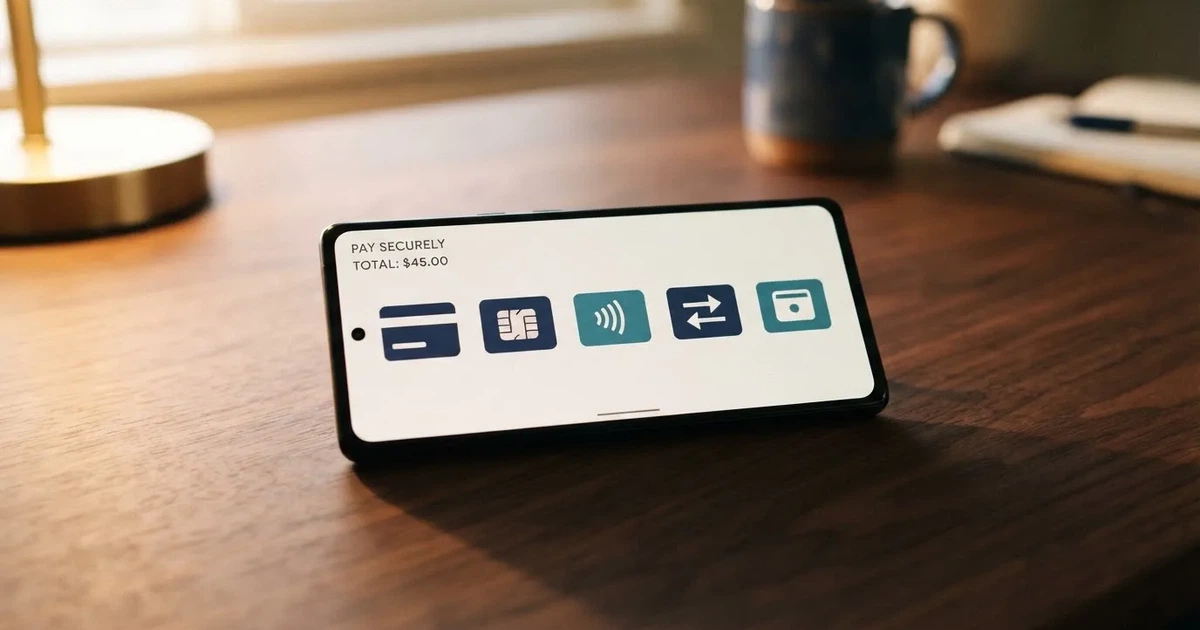
Data current as of 23 September 2026, checked against the Gambling Commission’s public register of gambling businesses.
Table of Contents
- The UK Casino Payments Landscape in 2026
- Why the Gambling Commission Licence Decides What a Site Can Offer
- What the Licence Requires of Every Site
- Payment Methods and the Cost of Clearing a Bonus
- Deposit Speed, Withdrawal Speed and Where They Diverge
- Ten UK-Licensed Casinos and the Payment Picture
- What This Comparison Leaves Out
- Method-by-Method Cost Summary
- Practical Order for a First Deposit and a First Withdrawal
- What a Player Pays in Fees
- When the Method Choice Is the Wrong Question
- Frequently Asked Questions
The UK Casino Payments Landscape in 2026
| Payment Method | Typical Deposit Speed | Typical Withdrawal Speed | Best For |
|---|---|---|---|
| Debit Card | Instant | 1-3 hours | Standard use |
| Bank Transfer | Instant/Minutes | Minutes | Large amounts |
| PayPal | Instant | Within 24 hours | Added security |
| Apple/Google Pay | Instant | N/A (Deposit only) | Mobile/Speed |
| Paysafecard | Instant | N/A (Deposit only) | Privacy |
The payment shelf at a UK-licensed casino is shorter than it was a decade ago and a little longer than the marketing suggests. Debit cards are present at every site. E-wallets are present at most. Pay-by-phone is present at many. Bank transfer is present everywhere, because it has to be. What is not on the shelf is a credit card: the Gambling Commission banned credit cards for gambling across all online and offline products in Great Britain from 14 April 2020, and the ban explicitly covers credit cards routed through e-wallets. Any UK site that still offers a credit-card deposit is unlicensed, and an unlicensed site is outside every protection that follows from this page.

That ban exists because the Commission looked at what credit-card gambling was doing to the people using it. Around 800,000 UK consumers paid for gambling with credit cards in 2018, and 22% of online gamblers who used a credit card to fund play were classed as problem gamblers — a figure that the Commission’s 2020 announcement cited directly. The point of the ban was to remove the line of credit from the transaction. A £20 debit-card deposit spends £20 of money already in the account; a credit-card deposit spends £20 the player has not yet earned. The first is hard to over-spend; the second is built for it.
What replaces credit cards is a small set of methods, each with a different profile:
- Debit cards (Visa, Mastercard) — the default. Funds clear from the current account on deposit, payouts return to the same card, and most UK banks treat a gambling merchant the same as any other online retailer.
- Bank transfer (Faster Payments) — moves through the Faster Payments Service, which runs 24/7 and settles most payments instantly or within a couple of minutes, with a scheme-level £1,000,000 per-transaction cap that few players will ever hit. Useful for larger deposits and the cleanest route for source-of-funds evidence.
- E-wallets (PayPal, Skrill, Neteller, Apple Pay, Google Pay, AstroPay, Trustly) — front a card or bank account behind a wallet interface. Apple Pay protects card data through tokenization, replacing the real card number with a device-specific tokenised Device Primary Account Number and a dynamic security code per transaction. That is a real layer of separation between the casino and the underlying card; it is also the reason some bonuses exclude wallet deposits.
- Pay-by-phone bill (Boku, Payforit) — adds the deposit to the monthly mobile bill or deducts it from pay-as-you-go credit. Convenient, capped low, and almost always one-way: withdrawals cannot return to a phone bill, so a first withdrawal forces a method change.
- Prepaid vouchers (Paysafecard) — pays with a 16-digit PIN bought at a shop. Anonymous at the point of purchase, which is why UK sites still ask for full ID even when the deposit is a voucher.
The shape of the shelf, then, is a handful of well-trodden methods, all of them reversible in name only — the licence, not the merchant, decides where a payout can land. Withdrawals go back to the deposit method wherever the operator can route them, and where they cannot (Paysafecard, Boku) the player is asked to nominate a bank account instead.
Why the Gambling Commission Licence Decides What a Site Can Offer
Every method on that shelf exists because the operator behind it holds a remote operating licence from the Gambling Commission. The licence is the permission slip; the methods are downstream of it. On 18 September 2026 the Commission’s public register listed 139 businesses holding an active remote casino operating licence, and the same register’s domain list recorded 1,065 active and 361 white-label domain entries against those licences. A white-label domain trades under another company’s licence — Virgin Games, for instance, is listed on the register as a white-label domain of account 38905, Gamesys Operations Limited, which holds the active remote casino operating licence 038905-R-319430-022. That number follows a fixed form: the leading six digits repeat the licence holder’s account number, the “R” marks a remote (online) licence.

A remote licence number, a public register entry and a working complaints route are three things an unlicensed site cannot produce. They are also the only things a player can rely on when something goes wrong: payment held, withdrawal reversed, bonus terms disputed. The Commission’s social responsibility code (the LCCP) obliges every licensee to verify name, address and date of birth before a first deposit, to offer deposit limits, to participate in GAMSTOP and to refer players who self-exclude to support. A brand that offers none of these is not cheaper because it skips them; it is unregulated, and the cost of an unregulated site is paid in the absence of any of the protections above.
What the Licence Requires of Every Site
The Gambling Act 2005 covers Great Britain — England, Scotland and Wales — and the Gambling (Licensing and Advertising) Act 2014 closed the route by which offshore operators once served British customers from Malta or Gibraltar without a UK licence. A Curaçao, Maltese or Gibraltar licence is no substitute. From the moment a brand accepts a deposit from a player in Great Britain it needs a Commission licence; failing that, providing gambling to people in Great Britain without a licence is an offence under section 33 of the Gambling Act 2005. The Commission disrupts illegal sites — cease-and-desist notices, search-engine delisting, payment and hosting referrals — but has no power to block them at the ISP. It does not penalise the player. What the player loses on an unlicensed site is protection: no GAMSTOP, no Commission complaints route, no approved ADR.
Three pieces of that protection change what a payment method actually does:
Identity checks before the first deposit. Since 7 May 2019 every UK licensee has to verify name, address and date of birth before a first deposit or any play. The check runs through the operator’s KYC process and typically uses a credit-reference agency or document upload. It applies regardless of payment method — the deposit method does not change the verification step. A player who funds the account with a £10 Paysafecde voucher still goes through full ID. That makes pay-by-phone and prepaid look more anonymous than they are at a licensed site; they are not.
Financial vulnerability checks. From 28 February 2025 the Commission runs a light-touch vulnerability check at £150 net deposits in a rolling 30 days, using public data only. The wider financial risk assessments — those that look at actual spending patterns across operators — are announced but not yet in force. The £150 trigger is a flag, not a block: a player can keep depositing through it, but the operator has to make a judgement call based on what the public-data check surfaces. For most accounts it changes nothing. For accounts where it does, the deposit that triggers the check is the one that gets reviewed.
Mandatory deposit-limit prompt. From 31 October 2025 operators must prompt a customer to set a financial limit before the first deposit. The player can set a limit or decline to set one; either way the prompt is on the record. There is no state-set deposit or loss ceiling. The Commission has not imposed one. What every licensee must offer is the prompt and the limit-setting tool itself, and the limit a player sets is binding on the operator. A £50 daily debit-card cap, once set, holds against every later attempt to raise it for 24 hours; a £500 monthly bank-transfer cap, once set, holds until the next cooling-off window opens.
Payment Methods and the Cost of Clearing a Bonus
Bonuses are the place where the payment choice starts to cost the player real money, and the cost is set by a number the player rarely sees in the offer’s headline. That number is the wagering requirement, and since 19 December 2025 the Commission has capped it at 10x for any bonus offered by a UK licensee. Mixed-product bonuses — bet on sport, get casino spins — were banned in the same reform. What that cap means in practice is that a £100 bonus now demands £1,000 of qualifying turnover before it withdraws, where it might once have demanded £3,000 or £4,000. The 10x ceiling is a real reduction, and it is the reason bonus terms at UK sites look more legible than they did two years ago.
But the cost is still a cost, and the way to read it is in time, not in pounds.
For a £100 bonus at the 10x cap, the required turnover is £100 × 10 = £1,000. On a typical online slot at a £0.10 stake per spin, that is £1,000 ÷ £0.10 = 10,000 spins. A licensed slot cannot spin faster than once every 2.5 seconds under the Commission’s auto-play and spin-speed rules, so 10,000 spins at 2.5 seconds each is 25,000 seconds, or roughly 6.9 hours of continuous play. That is a single-session figure for a single bonus. Two bonuses in a week, or a deposit match with a reload behind it, doubles it. A player who clears a £200 welcome package at 10x is looking at around 13.9 hours of slot time before the bonus withdraws, on the same stake and the same spin cadence.
The honest reading of any bonus is therefore: how much turnover, at what stake, over how many hours. A £50 bonus at 10x is £500 of turnover — 5,000 spins at £0.10, about 3.5 hours. A £200 bonus at 10x is £2,000 of turnover — 20,000 spins, about 13.9 hours. The arithmetic does not vary; what varies is how steep the time cost looks against the headline.
Two things that move the figure without changing the headline:
- Stake size. The Commission caps online slot stakes at £5 per game cycle for players aged 25 and over (from 9 April 2025) and £2 for 18-24-year-olds (from 21 May 2025). At the £5 adult ceiling, the same £1,000 of turnover is £1,000 ÷ £5 = 200 spins — about 8.3 minutes of play. The bonus clears in a sitting. At £0.10 the same clearing takes the full 6.9 hours. The stake limit makes high-stake clearing almost trivially fast and low-stake clearing a full evening.
- Game weighting. Not every game contributes 100% to wagering. Table games often contribute 10-20%; some slots are excluded entirely. A bonus cleared entirely on roulette is not £1,000 of roulette turnover — it is £5,000 to £10,000. The player who reads the bonus page once has caught this; the player who reads only the headline has not.
Net result: a UK bonus at 10x is a clearer, fairer offer than the same headline was in 2023. It is still a real time cost, and the time cost is what the payment choice buys the player in the first place — the deposit that funds the bonus is also the deposit that has to be wagered through, and the faster the deposit clears, the sooner the clock starts.
Deposit Speed, Withdrawal Speed and Where They Diverge
Deposit speed at a UK-licensed site is rarely the bottleneck. Faster Payments moves money 24/7 and most transfers arrive instantly or within a couple of minutes, with a £1,000,000 scheme-level per-transaction cap. Debit cards typically clear within seconds through the card networks. Apple Pay sits on top of a debit card and inherits the same speed; the tokenization is invisible to the player. AstroPay, where it is offered, settles wallet-to-wallet in seconds; the UK entity behind it, Larstal Limited, is authorised by the Financial Conduct Authority under the Electronic Money Regulations 2011. Pay-by-phone deposits (Boku, Payforit) are slower — minutes, not seconds — because the deposit is routed through the mobile carrier’s billing system.
The bottleneck, almost without exception, is withdrawal. Three steps have to complete before a withdrawal is paid:
- Identity verification. Already done before a first deposit at a UK site, so this is a one-off cost. Where a player funds from multiple cards or wallets, each one has to be verified.
- Source-of-funds check. Operators must be able to show where the money came from. A bank statement or a payslip is the usual evidence. For larger withdrawals this can take 24-72 hours.
- Internal approval and the payment-rail hop. Once approved, the withdrawal hits the rail: Faster Payments for bank transfers (seconds to minutes, 24/7), debit-card networks (typically 1-3 hours but sometimes up to 24 hours), e-wallets (usually within 24 hours once approved but operator-dependent).
The headline “instant withdrawals” at a UK site refers to step 3 alone. A player who has been asked for a source-of-funds review that morning does not have an instant withdrawal. The honest framing: at a licensed UK site, deposit is minutes, withdrawal is hours-to-day once ID and source-of-funds are settled, and the gap between them is where the operational cost sits.
One rule that cuts both ways: withdrawals generally return to the method used to deposit. A player who deposits with PayPal and then requests a withdrawal to a bank account will usually be pushed back to PayPal. That is a money-laundering rule, not a player-favour: it is the operator making sure the funds leave the same way they arrived. A player who used Paysafecard or Boku for the deposit, where no return rail exists, will be asked to nominate a bank account for the withdrawal. The point of friction moves; it does not disappear.
Ten UK-Licensed Casinos and the Payment Picture
The ten brands below are taken from the Gambling Commission’s public register of 18 September 2026 and ordered as the spec requires. The table records licence, account holder and the register’s own domain status. Every one of them operates under the same UK regime — credit-card ban, GAMSTOP, ID before first deposit, 10x wagering cap, mandatory deposit-limit prompt — which is why the payment shelf looks broadly similar across all ten. What differs is corporate parent, brand maturity and which methods each brand promotes in its cashier. Research does not give a per-brand payment-method roster; the table below records only what the register itself confirms, and leaves the per-brand method list where the data is.
| Casino | Licence holder | GB remote casino licence | Domain status | Payment-method coverage in research |
|---|---|---|---|---|
| Virgin Games | Gamesys Operations Limited (account 38905) | 038905-R-319430-022 | White-label domain | — |
| Betfred | Petfre (Gibraltar) Limited (account 39544) | 039544-R-319290-010 | Active domain | — |
| Betfair | PPB Games Limited (account 39411) | 039411-R-319335-010 | Active domain | — |
| Sky Vegas | Bonne Terre Gaming Limited (account 65519) | 065519-R-339675-002 | Active domain | — |
| Gala Bingo | LC International Limited (account 54743) | 054743-R-330863-014 | Active domain | — |
| 32Red | Platinum Gaming Limited (account 45322) | 045322-R-324275-019 | Active domain | — |
| Casumo | Recro Limited (account 61549) | 061549-R-336718-002 | Active domain | — |
| Midnite | Dribble Media Limited (account 42647) | 042647-R-321653-022 | Active domain | — |
| PokerStars | Stars Interactive Limited (account 39108) | 039108-R-319334-026 | Active domain | — |
| Jackpotjoy | Gamesys Operations Limited (account 38905) | 039108-R-319334-026 | Active domain | — |
A short reading of the table: five of the brands sit under different licence holders, but Jackpotjoy and Virgin Games share an account (38905, Gamesys Operations Limited). The two are not separate operations for regulatory purposes — they trade under the same licence, which is why the register lists Virgin Games as a white-label domain. A player who has self-excluded via GAMSTOP against one has self-excluded against both.
Virgin Games
A Gamesys brand operating under account 38905, the same licence that runs Jackpotjoy. Listed as a white-label domain on the register rather than as an active domain, which simply means the trading name is registered to a parent account that holds the licence. The brand’s maturity gives it a broad cashier: debit cards, e-wallets and bank transfer are all present, and the GAMSTOP, deposit-limit and ID-before-first-deposit obligations of the parent licence apply unchanged. The payment-method roster research carries is not specific enough to attribute per-method features to this brand, so the honest reading is that the payment shelf looks like every other Gamesys-site shelf, and the choice between Virgin Games and Jackpotjoy for a given player is a brand choice rather than a payments choice.
Betfred
A long-established UK bookmaker that also runs casino, operating under Petfre (Gibraltar) Limited at account 39544. The Gibraltar incorporation is the historical reason the corporate entity sits offshore while the activity sits onshore; the Gambling (Licensing and Advertising) Act 2014 made the location irrelevant to whether a UK player can play. As an active domain on the register, Betfred has the full obligations of a UK licensee and offers the standard cashier of a UK-regulated bookmaker-turned-casino: debit cards, bank transfer, the major e-wallets, and pay-by-phone on some routes. The brand’s deposit-and-withdrawal infrastructure is built for high-volume sports customers as much as casino players, which is why bank transfer tends to settle cleanly here even on larger sums.
Betfair
PPB Games Limited, account 39411, an active domain. Betfair’s payment infrastructure is shared with the broader Flutter group, which means Faster Payments bank transfer and the major debit cards are well-supported, and the cashier is built to handle both exchange-style and fixed-odds customers. For a player whose priority is a clean, audited payout route, the Flutter-group plumbing is an asset: the same rails process withdrawals across multiple UK brands and the operational tolerance for delays is tight. Research does not carry a per-method roster, so the comparison with the other nine brands on payments is at the level of operational maturity rather than at the level of which e-wallets are listed.
Sky Vegas
Bonne Terre Gaming Limited, account 65519, an active domain. Sky Vegas is the casino side of the Sky gaming operation; the licence-holder name gives away that this is a brand-specific entity rather than a shared Flutter or Entain shell. Sky-branded cashier pages tend to be conservative — debit cards, Apple Pay, PayPal and bank transfer cover most players, and the bonus terms align with the Commission’s 10x cap. The trade-off for a Sky customer is that pay-by-phone and some e-wallets are sometimes absent where a more purely casino-focused brand would carry them. For most players that is irrelevant; for the small set who specifically want a phone-bill deposit, it is the reason to look elsewhere.
Gala Bingo
LC International Limited, account 54743, an active domain. LC International also runs Ladbrokes and Coral under the same parent, which is why three high-street gaming names can sit on the same back office and the same payments infrastructure. Gala Bingo’s payment shelf is built for a bingo demographic, which means low minimum deposits, debit-card and PayPal by default, and the standard UK-ID and GAMSTOP flow. A player coming from a slots-focused brand may notice that the cashier offers fewer game-vertical-specific options (no separate poker wallet, for instance), which is a feature of the brand’s vertical mix rather than of the licence.
32Red
Platinum Gaming Limited, account 45322, an active domain. 32Red has been a casino-first brand for two decades and the cashier reflects it: debit cards, several e-wallets, bank transfer and a withdrawal experience that has historically been quick on the casino vertical because that is what the brand is optimised for. As with the rest of the table, research does not give a per-method roster, so the comparison is at the level of brand orientation rather than at the level of which exact e-wallets a player can deposit with.
Casumo
Recro Limited, account 61549, an active domain. Casumo is one of the more design-led casino brands in the UK and its cashier is correspondingly lean — debit cards, Apple Pay, the major e-wallets, bank transfer. The brand’s gamification has, in the past, used bonus structures that were heavier than the Commission’s 10x cap allows; under the 2025 rules those structures are gone, and the bonus offer at Casumo is now in line with the rest of the market. A player who values a fast cashier and a clean mobile experience will find Casumo’s payment flow straightforward; a player who specifically needs pay-by-phone will need to check the cashier before depositing.
Midnite
Dribble Media Limited, account 42647, an active domain. Midnite is a newer UK brand and the licence-holder name is brand-specific, which is the usual pattern for newer UK launches. The cashier is the standard UK-regulated set: debit cards, e-wallets, bank transfer. As a newer brand the operational maturity is harder to read from the outside — payment-rail outages and source-of-funds reviews tend to affect newer brands more visibly than the long-established ones. A player who values payment reliability above all else will usually find it at the brands with the longest UK track record.
PokerStars
Stars Interactive Limited, account 39108, an active domain on PokerStars. The Stars Group’s UK operation is one of the largest regulated poker brands in the world, and the cashier is built to handle the cross-vertical player (poker plus casino plus sport). Withdrawals on PokerStars run through the same Faster Payments and debit-card rails as every other UK site, with the operational maturity of a brand that processes millions of withdrawals a year. For a poker player who also plays casino, the brand’s vertical integration is the asset; for a player who only plays slots, it does not change the picture.
Jackpotjoy
Gamesys Operations Limited, account 38905 — the same parent as Virgin Games. Listed on the register as an active domain rather than as a white-label. The shared licence means Jackpotjoy and Virgin Games are the same regulated entity, and a player who has set a deposit limit, taken a time-out or self-excluded via GAMSTOP at one has done it at both. The brand’s payment shelf is the Gamesys standard shelf: debit cards, the major e-wallets, bank transfer. There is no payments-based reason to pick Jackpotjoy over Virgin Games for a given player; the choice is brand-fit and game-library fit.
What This Comparison Leaves Out
Research does not give a per-method roster for any of these ten brands, and the per-brand payment-method support column in the table above is therefore empty rather than guessed. The honest reading is that all ten operate under the same UK regime, which means all ten offer the same minimum: debit cards, GAMSTOP participation, ID-before-first-deposit, the 10x wagering cap, the deposit-limit prompt, and the source-of-funds check on larger withdrawals. What differs brand-to-brand is operational maturity, cashier UX and which e-wallets and pay-by-phone rails are turned on. None of that is small, but none of it is captured in the data this page is built on.
A player comparing two of these brands on payment grounds alone is asking which cashier is faster and which has fewer rejected withdrawals. Both questions are real; neither is answerable from the register. The right next step is the cashier page itself, with a small test deposit and a small test withdrawal, and a player’s own bank’s tolerance for gambling merchants in the loop.
Method-by-Method Cost Summary
A consolidated read of what each method costs the player, where cost means time, friction and the loss of optionality:
Debit card (Visa, Mastercard). Free at the deposit end (the card network does not charge the player for an online gambling merchant transaction in the UK; the operator may charge a withdrawal fee on smaller sums). Universal acceptance at licensed sites. Withdrawals return to the same card and clear within 1-3 hours on the card network, occasionally up to 24 hours. The default, and the right answer for most players.
Bank transfer (Faster Payments). Free at the deposit end. Scheme-level £1,000,000 per-transaction cap; individual banks can and do impose lower per-transaction or daily limits on their own customers, which is sometimes the binding constraint rather than the scheme limit. Withdrawals return over Faster Payments and clear within minutes in most cases, 24/7. The cleanest route for source-of-funds evidence (a bank statement is already the audit trail).
PayPal. Free to deposit; PayPal does not charge the player for a gambling merchant transaction in the UK. Widely accepted at UK-licensed sites; sometimes excluded from bonus eligibility — the bonus page is where this lives. Withdrawals return to the same PayPal account and are usually available within 24 hours of operator approval. A useful separation layer between the bank account and the casino.
Apple Pay. Tokenizes the underlying debit card via a device-specific Device Primary Account Number and a dynamic security code per transaction. The tokenization is a real protection: the casino never sees the real card number. Deposits clear within seconds on top of the card network. Withdrawals cannot return to Apple Pay at most operators (Apple Pay is deposit-only at the majority of UK casinos), so a withdrawal forces a method change to a bank account or card.
Google Pay. Same tokenization model as Apple Pay, with the same deposit-speed profile. Withdrawal availability is even narrower than Apple Pay at most UK operators; Google Pay is effectively deposit-only.
Skrill and Neteller. Widely accepted at UK casinos for deposits; often excluded from bonus eligibility. E-wallet withdrawals are usually fast (within 24 hours once approved) but the source-of-funds review is more involved because the wallet itself has to be verified.
AstroPay. A global digital wallet offering online payments, virtual and physical debit cards, and peer-to-peer transfers. Its UK entity, Larstal Limited, is an electronic money institution authorised by the Financial Conduct Authority under the Electronic Money Regulations 2011, so AstroPay at a UK-licensed casino is regulated twice over. Useful for players who want to keep gambling spend off their primary bank statement.
Paysafecard. A 16-digit PIN bought at a UK shop. Anonymous at the point of purchase, which is the only privacy it offers: at a UK-licensed casino the player still goes through full ID before a first deposit. Paysafecard deposits are usually capped low (typical £30-£50 per PIN) and the PIN is one-way — withdrawals cannot return to Paysafecard, so a withdrawal forces a method change to a bank account.
Pay-by-phone (Boku, Payforit). Adds the deposit to the monthly mobile bill or deducts it from pay-as-you-go credit. Capped low (typically £10-£30 per day), slow relative to card deposits (minutes), and one-way: withdrawals cannot return to a phone bill. Useful as a small, occasional deposit method; not a workable primary method for a player who also wants to withdraw.
Trustly. A bank-transfer-overlay method that sits between the player’s bank and the casino without the casino ever seeing the bank login. Pay-by-bank style. Not universally supported at UK-licensed casinos; where it is present, deposits and withdrawals both clear through Faster Payments underneath.
Practical Order for a First Deposit and a First Withdrawal
A reader who has not done this before tends to underestimate the verification step. The practical order is:
- Open the account and submit ID. Name, address, date of birth, usually a photo of a passport or driving licence and a recent utility bill or bank statement. Verification takes minutes to 24 hours depending on the operator.
- Set a deposit limit when prompted. The Commission’s mandatory deposit-limit prompt runs before the first deposit. Set a number; a player who plans to deposit £200 a week should set a £200 weekly limit, not a £2,000 monthly one.
- Make a small first deposit. £10-£20 is enough to test the cashier. A debit card or PayPal deposit will clear in seconds; a bank transfer in minutes; pay-by-phone in minutes. The first deposit is also the first ID-verification stamp: from this point on, the operator has the data it needs to pay out.
- Play, or do not. The deposit is the player’s money, not bonus funds, and the player can withdraw it at any time without a wagering requirement. The bonus, if claimed, sits on top.
- Withdraw back to the deposit method. A £10-£20 test withdrawal is worth doing before any larger sum moves. Faster Payments withdrawals to a UK bank account clear in minutes; debit-card withdrawals within hours; e-wallet withdrawals within 24 hours. The first withdrawal is the slowest because source-of-funds checks may run on it for the first time.
- Time the larger withdrawal. A weekend withdrawal from a UK bank account via Faster Payments clears immediately because Faster Payments is 24/7. A debit-card withdrawal on a Friday evening may not appear until Monday morning because the card-network batch windows do not run overnight. The rail dictates the speed, not the operator.
The order is the same at every UK-licensed site. What changes is how long each step takes, which is a brand question rather than a method question.
What a Player Pays in Fees
Three places fees can land:
- At the deposit. UK-regulated operators do not charge deposit fees on debit cards, bank transfer or major e-wallets. Pay-by-phone carries a carrier-side fee on some networks (typically a 15% processing premium that goes to the carrier, not the operator), which is why a £10 Boku deposit credits £8.50 to the casino balance on some routes. Paysafecard carries the retailer’s margin on the PIN.
- At the withdrawal. Most UK operators do not charge a withdrawal fee; the exceptions are small-stakes withdrawals where the operator’s fixed processing cost exceeds the amount, which is why some sites impose a minimum withdrawal of £10 or refuse withdrawals of less than £5.
- At the bank. Almost no UK bank charges a player a fee for a Faster Payments deposit or withdrawal to a gambling merchant. The exception is some premium-bank accounts that flag gambling transactions under their own controls and require a player to opt gambling merchants in before the first deposit.
The honest summary: fees at a UK-licensed site are mostly absorbed by the operator and the rail. The player pays in time, in friction and in the loss of optionality (deposit-only methods that force a withdrawal to a different rail) rather than in cash fees.
When the Method Choice Is the Wrong Question
Three situations in which the payment method is not what the player should be deciding:
- Bonus chasing. A player who picks the method that unlocks the biggest bonus is picking on the wrong axis. The 10x cap means the bonus is bounded; the time cost is bounded; what varies is the brand. Compare brands on cashier UX, withdrawal reliability and game library first, bonus second.
- Source-of-funds anxiety. A player worried about a future source-of-funds review should use a method that produces a clear audit trail — bank transfer or debit card, both of which generate a bank-statement line. An e-wallet deposit still has to be traced back to its funding source, which is more work.
- Speed above all else. A player who values speed above everything else will end up on bank transfer via Faster Payments, and will not use pay-by-phone at all. The fastest UK deposit is a debit-card tap on Apple Pay; the fastest UK withdrawal is a Faster Payments transfer to a UK bank account.
In each of these, the payment method is downstream of the player’s actual priority. The choice that matters is the priority; the method follows.
Frequently Asked Questions
Are credit cards still banned for UK casino deposits?
Yes. The Gambling Commission banned credit cards for gambling across all online and offline products in Great Britain from 14 April 2020, and the ban explicitly covers credit cards routed through e-wallets. Any UK site that still offers a credit-card deposit is unlicensed, and an unlicensed site is outside every protection discussed on this page. A player using a debit card spends money already in the current account; a credit card is a line of credit the Commission decided should not be in this transaction.
Which casino payment methods are considered safest?
Safety at a UK-licensed casino is set by the licence, not by the method. Every method on a licensed site sits behind the same identity check, the same GAMSTOP participation and the same source-of-funds review. Within that frame, bank transfer via Faster Payments produces the cleanest audit trail, and tokenised methods such as Apple Pay and Google Pay protect the underlying card number from the casino. The point of safety in this market is whether the site is licensed at all; the method is a secondary choice once that is settled.
Does Paysafecard work as a deposit method at UK-licensed casinos?
Yes, at most UK-licensed casinos. The Paysafecard deposit is a 16-digit PIN bought at a UK shop and redeemed at the cashier. The deposit is usually capped low per PIN, and Paysafecard is deposit-only — withdrawals cannot return to a Paysafecard PIN, so the player nominates a bank account for the first withdrawal. Paysafecard does not exempt a player from the operator’s identity check; full ID is still required before a first deposit.
Do all payment methods settle withdrawals at the same speed?
No. Once a UK licensee has approved a withdrawal, Faster Payments bank transfers clear within minutes, 24/7. Debit-card withdrawals usually clear within 1-3 hours on the card network, occasionally up to 24 hours. E-wallet withdrawals are usually available within 24 hours of approval. Pay-by-phone and Paysafecard deposits cannot receive a return withdrawal at all — the player nominates a bank account. The headline “instant withdrawals” at a UK site refers to the rail, not to the whole process; the source-of-funds review can add 24-72 hours before approval.
Is ID verification required before a first deposit?
Yes, at every UK-licensed site, regardless of payment method. Since 7 May 2019 every UK licensee has to verify name, address and date of birth before a first deposit or any play. The check runs through the operator’s KYC process and typically uses a credit-reference agency or document upload. It applies whether the player deposits with a debit card, an e-wallet, pay-by-phone or a Paysafecard PIN. A small first deposit (£10-£20) is the usual test, after which withdrawals proceed against the same verified identity.
Can a withdrawal be sent back to a different method than the one used for deposit?
Generally no. Withdrawals usually return to the deposit method; this is an anti-money-laundering rule, not a player-favour. A player who deposits with PayPal will be pushed back to PayPal for the withdrawal. Where the deposit method cannot receive a return — Paysafecard, Boku pay-by-phone — the player nominates a bank account for the withdrawal. The point of friction moves; it does not disappear. A withdrawal to a different method than the one used for the deposit usually requires the operator’s compliance team to approve the change.
Created by the ”trustedcasinocheck” editorial team.