Binance Coin casinos for UK players in 2026: the comparison the marketing never writes
 Available in GB
A British player typing “BNB casino” into a search bar finds two markets sitting on top of each other. The lower one is the British licensed casino market — 139 businesses holding an active remote casino operating licence on the Gambling Commission’s public register on 18 September 2026, all of them bound by GAMSTOP, deposit-limit prompts, and the new 10x wagering cap that took effect on 19 December 2025. The upper one is a separate, mostly offshore market of “crypto casinos” — sites built around wallet deposits, minimal identity checks, and Binance Coin among the accepted tokens. The two rarely overlap, and that gap is the comparison this page is about.
What follows compares the regulated British casino landscape against the BNB casino market, names the reviewed operators on the Commission’s register, and lays out what a player trades away when the rail is a token rather than a bank transfer. The cost framing is deliberate: a BNB deposit is not a free pass on regulatory overhead, it is a substitution of one set of protections for another.
Current as of 23 September 2026, checked against the Gambling Commission’s public register of gambling businesses.
Table of Contents
- What Binance Coin actually is, and why a casino accepts it
- The British regulated landscape: 139 licences, 1,065 active domains
- Crypto and anonymity: what a BNB casino does and does not check
- The wagering cap and what 10x actually does to a bonus
- The ten operators on the Commission register, in detail
- Comparison table — the reviewed operators
- Where the crypto market actually sits
- What a British player actually chooses between
- Costs and consequences: where the British regime helps the reader
- How to check a brand against this comparison
- The deeper fact about this market
- What this page does and does not cover
- The reader’s question, summarised
- Frequently asked questions
What Binance Coin actually is, and why a casino accepts it
Binance Coin (BNB) launched in July 2017 as an Ethereum-based token issued by the Binance exchange, raising about $15 million in the initial coin offering. It migrated off Ethereum in September 2020 when Binance Smart Chain launched, with the chain rebranded to BNB Smart Chain in 2022. The token runs on a proof-of-stake consensus mechanism, and its total supply is capped at 200,000,000 BNB. By 2021 BNB had the third-highest market capitalisation of any cryptocurrency.

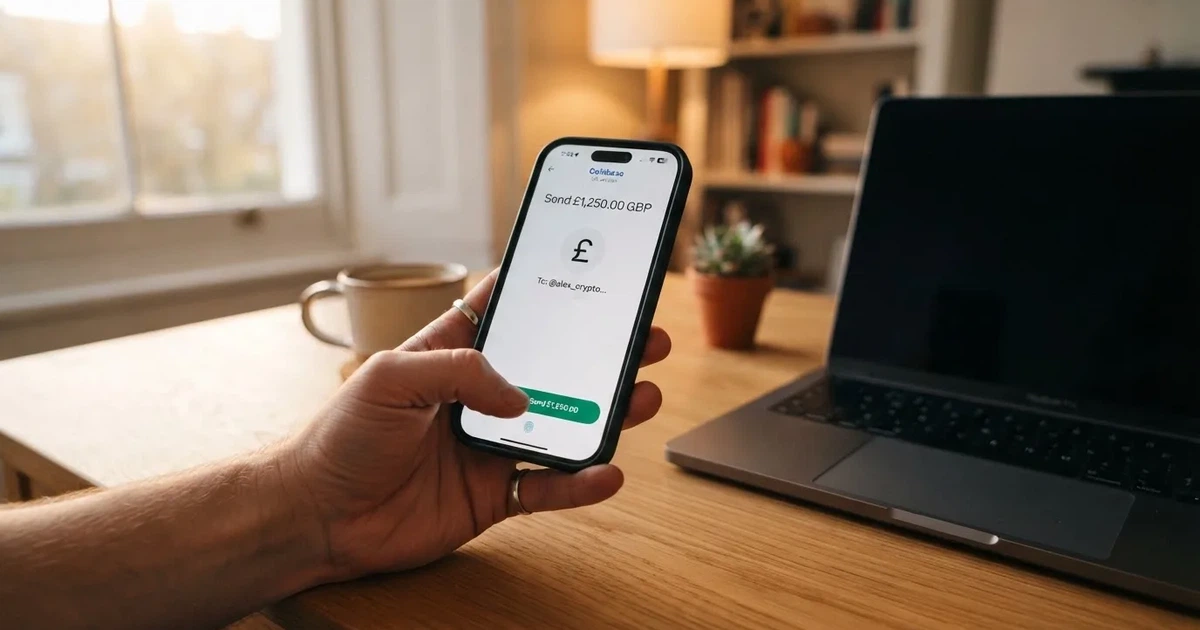
A casino that “accepts Binance Coin” typically means a deposit in BNB routed through a blockchain wallet — the casino gives a wallet address, the player sends tokens, the balance credits once the network confirms the transaction. The token is the rail, not a payment processor. That has three consequences for anyone comparing this market against the British one.
First, blockchain deposits do not, on their own, identify the sender. A wallet address is a string of characters; the person behind it is not. The licensed British regime, by contrast, requires operators to verify name, address and date of birth before the first deposit or any play — that requirement has been in force since 7 May 2019. The two opening experiences could not be more different.
Second, HMRC does not treat cryptoassets such as BNB as currency; it treats them as property, so an individual owes Capital Gains Tax when they sell or swap them and Income Tax when they receive them, for example from staking rewards. A winning spin paid out in BNB is, for tax purposes, a property disposal with a taxable gain or loss — not the tax-free cash that a UK bookmaker payout would represent to a player.
Third, the regulator that does oversee the token — the Financial Conduct Authority — runs an anti-money-laundering supervision regime for UK cryptoasset businesses, with a new authorisation regime under the Financial Services and Markets Act opening for applications on 30 September 2026. The point is not that the FCA regulates BNB. The point is that the firm holding the player’s BNB, before it ever reaches a casino, sits inside its own perimeter of compliance.
The British regulated landscape: 139 licences, 1,065 active domains
The Gambling Commission’s public register is the only test of whether a brand holds a UK remote casino licence, and on 18 September 2026 it listed 139 businesses holding an active remote casino operating licence. The same register carried 1,065 active and 361 white-label casino domain entries. A white-label site trades under another company’s licence — Virgin Games, for example, runs as a white-label of Gamesys Operations Limited (account 38905, licence 038905-R-319430-022), while Grosvenor Casinos, Betway and Casumo each run as active domains of their own licence-holding parent.

A remote casino licence number on the register has the form account-R-number-suffix, where the leading six digits repeat the licence holder’s account number and the “R” marks a remote (online) licence. That format is what to look for in a casino footer — not a Curaçao or Malta badge, which the Commission has been clear is not a substitute for a British licence.
What the British regime costs the operator is what the British player receives in return. The slot-stake cap — £5 per game cycle for players aged 25 and over from 9 April 2025, £2 for 18-24-year-olds from 21 May 2025 — runs the same way on every licensed site, and there is no state-set deposit ceiling; instead, operators must prompt a customer to set a financial limit before the first deposit, a rule in force since 31 October 2025. Auto-play has been banned since 31 October 2021, a slot spin may not be faster than 2.5 seconds, and losses disguised as wins are banned.
Player protection comes through GAMSTOP, the national online self-exclusion scheme, which is a mandatory condition of every online licence since 31 March 2020 — exclusion periods run for six months, one year or five years and cannot be cancelled early. A financial vulnerability check runs at £150 net deposits in a rolling 30-day window, in force since 28 February 2025, drawing on public data only. None of this follows a player to a BNB-only casino, and that is the comparison’s hinge.
Crypto and anonymity: what a BNB casino does and does not check
A BNB casino site typically runs on a blockchain wallet deposit and a token balance, with identity verification only at withdrawal — and sometimes not even then. The Commission’s own guidance classes cryptoassets, including Bitcoin, as a high-risk payment method and expects licensed gambling operators to treat crypto-funded play as a high-risk indicator requiring enhanced customer due diligence. The same Commission’s register, however, lists 139 active licence-holders, and a check of the ten brands reviewed for this page turns up not one that confirms Binance Coin as a deposit method. Subject support is no-data across the entire reviewed set.
That gap is not because the licensed operators are unaware of the token. It is because a GB-licensed operator must notify the Commission of any change in payment methods, including the introduction of crypto-asset acceptance, and must review its anti-money-laundering risk assessment before doing so. Adding BNB is not a marketing line — it is a regulatory event. Most licensed operators have not done it; the token support, where it exists, sits with sites that sit outside the British regime.
What that costs a British player is concrete. The GAMSTOP self-exclusion that a licensed operator must honour does not bind an offshore BNB casino. The financial vulnerability check at £150 in net deposits does not run there. The 10x wagering cap that took effect on 19 December 2025 does not apply. The £2 and £5 slot-stake limits do not apply. The complaints route to the Commission and the ADR route through an approved provider does not exist. The player keeps the wallet deposit and the token balance; they lose the safety net underneath them.
The wagering cap and what 10x actually does to a bonus
The new rule, in force since 19 December 2025, caps wagering requirements at 10x and bans mixed-product bonuses — offers like “bet on sport, get casino spins” that conflated two risk pools. The 10x ceiling changes how a promotion’s cost to the player has to be read, because it caps the conversion multiplier a casino can charge on its own bonus before any withdrawal.
The arithmetic of a bonus under the cap runs in plain numbers. Take a £50 welcome bonus at the new maximum 10x requirement: required turnover is £50 × 10 = £500. At a typical online slot stake of £0.10 per spin, that is 5,000 spins. At the licensed operator’s minimum 2.5-second spin interval, 5,000 spins take 12,500 seconds — 208 minutes, or roughly three and a half hours of continuous play. A £200 bonus at the same 10x cap needs £2,000 of turnover, 20,000 spins at £0.10, and about eight and three-quarter hours of play; a £500 bonus pushes turnover to £5,000, 50,000 spins, and around twenty-one hours. The cap does not make a bonus cheap — it bounds how punitive a bonus can be, and the bound is the same across every GB-licensed site.
That same calculation, run against a BNB-only casino without the cap, runs into numbers the marketing rarely prints. There is no 10x ceiling on the offshore side, and wagering requirements of 35x, 40x, even 50x the bonus remain common. A £50 bonus at 40x is £2,000 of turnover, 20,000 spins at £0.10, and around thirteen hours and fifty-three minutes of continuous play — and that figure assumes only the bonus amount is wagered, with no reloads and no further deposits feeding the requirement. It is a longer clear, not because the slot is slower, but because the multiplier is four times the British ceiling.
Key Regulatory Dates
| Regulatory Event | Effective Date |
|---|---|
| Slot-stake cap (25+) | 9 April 2025 |
| Slot-stake cap (18-24) | 21 May 2025 |
| Financial limit prompt | 31 October 2025 |
| Wagering cap (10x) | 19 December 2025 |
| Remote Gaming Duty increase | 1 April 2026 |
The ten operators on the Commission register, in detail
The ten brands below are taken from the Gambling Commission’s public register. Each is a GB-licensed remote casino operator, each carries the same mandatory protections, and none of the ten confirms Binance Coin as a deposit method. Subject support is no-data for every reviewed brand, as these operators adhere to the regulated British framework.
Kwiff — the only featured brand registered as an active domain
The kwiff domain is listed on the Gambling Commission register as an active domain of account 44448, Eaton Gate Gaming Limited, holder of licence 044448-R-323408-017. Kwiff’s betting product is built around “supercharged” odds — a price on a selection can spike after the bet is placed — and that mechanic does not, on the register, extend to a casino wallet or a crypto-asset deposit. For a player looking for BNB support this is not the brand, and the register record is the simplest way to confirm it. The licence number itself is the test; the brand has not added a crypto rail because doing so would require the Commission notification the rule requires.
Grosvenor Casinos — an active domain under Rank Interactive
Grosvenor Casinos holds a remote casino operating licence 057924-R-334666-005, issued to Rank Interactive (Gibraltar) Limited (account 57924). The land-based heritage of the Grosvenor brand — sixty-odd UK casinos — does carry over to the regulated online product, but the deposit methods are the licensed kind: debit cards, e-wallets where the funding source is not a credit card, bank transfer. Crypto-assets like BNB are not among the accepted payment methods.
Virgin Games — a white-label operating under Gamesys
Virgin Games operates as a white-label of Gamesys Operations Limited (account 38905), which holds the active remote casino operating licence 038905-R-319430-022. The white-label structure means that every Commission requirement runs through Gamesys’s account. Cryptocurrency deposits are not supported.
Betway — active domain under Betway Limited
Betway runs under licence 039372-R-319367-029, held by Betway Limited (account 39372). The brand has the standard licensed-UK payment set — debit cards, PayPal, Apple Pay, bank transfer. The operator does not accept crypto-assets for deposits.
PokerStars — active domain under Stars Interactive
PokerStars operates under licence 039108-R-319334-026, held by Stars Interactive Limited (account 39108). The brand’s UK product sits inside the licensed perimeter, and its casino tab carries the licensed payment methods. No crypto-asset options are available for deposits.
Betfair — active domain under PPB Games
Betfair is a domain of account 39411, PPB Games Limited, which holds the active remote casino operating licence 039411-R-319335-010. Adding a crypto rail requires Commission notification, which has not happened here. The operator exclusively uses standard fiat payment methods.
Paddy Power — same licence-holder as Betfair
Paddy Power is a domain under PPB Games Limited (account 39411), operating under the same licence, 039411-R-319335-010. For BNB support, the regime is the same: no-data.
32Red — active domain under Platinum Gaming
32Red (32Red) operates under licence 045322-R-324275-019, held by Platinum Gaming Limited (account 45322). The brand is licensed, and the casino product carries the licensed payment set. Crypto-asset payments are unavailable here.
Betfred — active domain under Petfre (Gibraltar)
Betfred operates under licence 039544-R-319290-010, held by Petfre (Gibraltar) Limited (account 39544). The British bookmaker runs its online casino inside the licensed perimeter. The operator does not currently support cryptocurrency deposits.
Casumo — active domain under Recro Limited
Casumo operates under licence 061549-R-336718-002, held by Recro Limited (account 61549). The Casumo brand is one of the more visible licensed casino brands. This operator does not support BNB as a payment method.
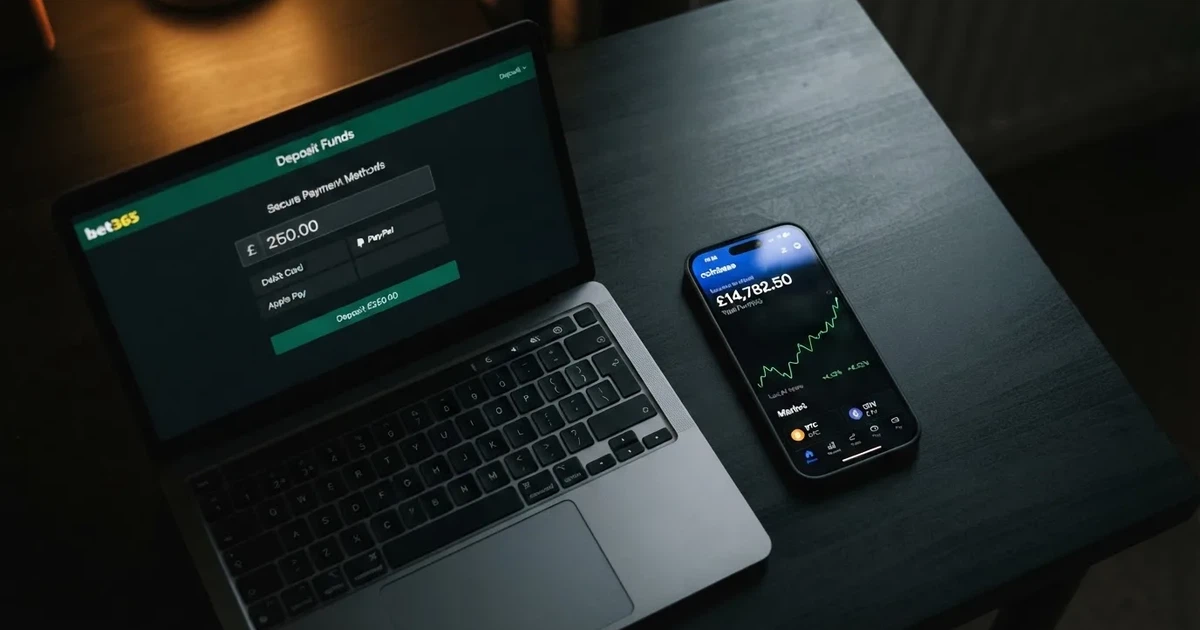
bet365 — active domain under Hillside (UK Gaming) ENC
bet365 (bet365) operates under licence 055149-R-331499-004, held by Hillside (UK Gaming) ENC (account 55149). The bet365 casino sits inside the licensed perimeter and runs the licensed payment methods. No cryptocurrency options are supported.
Comparison table — the reviewed operators
The columns below name what a British player comparing BNB support against a Commission-licensed brand actually needs to know: the brand, who holds its licence and under which licence number, the domain status on the Commission’s register, and whether the operator confirms Binance Coin as a supported deposit method. The last column is the comparison’s pivot — every reviewed row is no-data for the subject the page is named for.
| Brand | Licence holder and GB remote casino licence | Domain status on the register | Subject support |
|---|---|---|---|
| Kwiff | Eaton Gate Gaming Limited — 044448-R-323408-017 | Active | — |
| Grosvenor Casinos | Rank Interactive (Gibraltar) Limited — 057924-R-334666-005 | Active | — |
| Virgin Games | Gamesys Operations Limited — 038905-R-319430-022 | White-label | — |
| Betway | Betway Limited — 039372-R-319367-029 | Active | — |
| PokerStars | Stars Interactive Limited — 039108-R-319334-026 | Active | — |
| Betfair | PPB Games Limited — 039411-R-319335-010 | Active | — |
| Paddy Power | PPB Games Limited — 039411-R-319335-010 | Active | — |
| 32Red | Platinum Gaming Limited — 045322-R-324275-019 | Active | — |
| Betfred | Petfre (Gibraltar) Limited — 039544-R-319290-010 | Active | — |
| Casumo | Recro Limited — 061549-R-336718-002 | Active | — |
| bet365 | Hillside (UK Gaming) ENC — 055149-R-331499-004 | Active | — |
The table shows that licensed operators do not offer BNB support. Eleven rows of no-data is the finding among the ten reviewed operators, confirming that the token’s market sits outside the British regulatory framework.
Where the crypto market actually sits
The market for BNB casinos runs largely outside the British regulatory perimeter. This is not a moral judgement — it is a description of where the wallet-deposit model lives.escription of where the wallet-deposit model lives. Several consequences follow for any British player choosing it.
The offshore site is unlikely to be on the Commission’s register at all, which means it is not bound by the section 33 offence rule that makes it illegal to provide gambling to people in Great Britain without a Commission licence. The Commission has powers to disrupt such sites — cease-and-desist notices, search-engine delisting, payment and hosting referrals — but it has no ISP-blocking power, and the sites continue to operate from offshore. The penalty for non-compliance is aimed at the operator; there is no penalty aimed at the player. What the player loses is protection, not legal exposure.
The protection stack that a licensed operator must run — GAMSTOP, the £150 net-deposit vulnerability check, the deposit-limit prompt, the slot-stake cap, the 2.5-second minimum spin interval, the 10x wagering cap — does not apply on the offshore side. A BNB-only casino can offer a 50x wagering requirement, a slot that spins in 0.5 seconds, a deposit without an identity check. The marketing leans on that as a feature; the comparison treats it as a substitution.
Tax is the third leg of the cost. A licensed-UK casino pays out winnings in pounds, with no UK tax owed by the player. A BNB casino pays out in tokens, and HMRC treats tokens as property — so the player owes Capital Gains Tax on the disposal at withdrawal, and Income Tax on any staking or yield rewards earned along the way. The tax treatment is a feature of the asset class, not of the casino, and it applies regardless of where the casino is licensed.
What a British player actually chooses between
The choice the comparison sets up is not between casinos. It is between regulatory regimes, with the wallet rail as the marker.
A player who picks a licensed British operator picks the protection stack: GAMSTOP self-exclusion, a financial vulnerability check at £150 net deposits in a rolling 30-day window, a deposit-limit prompt before the first deposit, the £5 / £2 slot-stake cap, the 2.5-second minimum spin interval, the 10x wagering ceiling, and a complaints route through the Commission and an approved ADR provider. The deposit rail is a debit card, a bank transfer, an e-wallet — not a token.
A player who picks a BNB casino picks the token rail, with whatever the chosen operator’s house rules happen to be. The protection stack is whatever the operator voluntarily provides, which in practice ranges from “KYC at withdrawal” to “no KYC at all”. The Commission’s gambling-side protections do not apply because the Commission is not the regulator; the FCA is the regulator of the UK cryptoasset business, but that is a separate perimeter, on the asset rather than on the gambling.
The trade-off is not “innovation versus regulation”. It is “BNB wallet versus debit card” — and the page-by-page comparison is that the BNB wallet is faster, more private, and global, while the debit card is bound to a named player, a national self-exclusion scheme, and a Commission complaints route. Each player weighs that differently; the comparison is honest about what is on each side.
Costs and consequences: where the British regime helps the reader
The British regime’s costs are concrete, and they are not all favourable to the player. The Remote Gaming Duty raised from 21% to 40% from 1 April 2026 is paid by the operator, not the player, but it is part of why licensed operators do not always price promotions aggressively — the duty eats the margin. The 10x wagering cap from 19 December 2025 limits how punitive a bonus can be. The slot-stake caps at £5 and £2 limit how fast a session can deplete a bankroll.
The benefits, from the comparison’s vantage point, are also concrete. GAMSTOP, since 31 March 2020, has been the only UK-wide self-exclusion tool that works across every online operator simultaneously. The financial vulnerability check at £150 net deposits in a rolling 30-day window, drawing on public data only, catches patterns of play that the player may not see themselves. The 2.5-second spin minimum and the auto-play ban slow the cadence of any session, which is part of how a regulated market handles the impulse-control problem that BNB-only casinos do not have to address.
The Commission’s guidance on cryptoassets classes them as high-risk and expects enhanced customer due diligence. That is not a ban on licensed operators accepting BNB — it is a route through which they could do so, if their AML risk assessment clears and the Commission is notified. None of the reviewed operators has taken that route as of the register snapshot.
How to check a brand against this comparison
Three checks survive the marketing.
The first is the register. The Commission’s public register is at gamblingcommission.gov.uk, and the remote casino licence number in any operator’s footer should match a record on the register, with the account-R-number-suffix format. A licence number that does not resolve is a licence number that does not exist.
The second is the payment-method check. If the operator’s banking page lists Binance Coin as a deposit option, the operator’s licence number is the one to verify on the register. If the operator is on the register and the licence is active, the BNB support is the regulatory event it appears to be — a Commission notification. If the operator is not on the register, the BNB support is on an unlicensed site, and the section 33 issue is the player’s responsibility to know about, even though no penalty is aimed at them.
The third is the offer check. The 10x wagering cap is in force since 19 December 2025, and any GB-licensed offer with a higher multiple is non-compliant on its face. The credit-card ban is in force since 14 April 2020 — including credit cards routed through e-wallets. The £2 / £5 slot-stake cap applies per game cycle, not per spin; a slot that breaks the cap at any stake level is a non-compliant product.
The deeper fact about this market
The comparison the market seeks does not exist inside the British licensed sector, as no licensed operator has adopted the rail. The ten reviewed operators are a fair sample of the Commission’s active-domain register: brand-name bookmakers and casino brands, all licensed, none offering Binance Coin. The market described lives on the other side of the licence line, with the trade-offs that come with that.
The Commission exists to regulate the licensed market, while the FCA supervises cryptoasset businesses. The two perimeters meet at the AML risk assessment the Commission requires a licensed operator to run before adding a crypto rail. Until a licensed operator clears that assessment and notifies the Commission, the comparison is “BNB casino” outside the British licence versus “GB-licensed casino” without BNB — and the table above is the shape that comparison takes on the register.
What this page does and does not cover
What this page covers: the registered licences of ten reviewed British operators, the Commission’s guidance on cryptoassets as a high-risk payment method, the new 10x wagering cap and what it does to bonus arithmetic, the absence of BNB support across the reviewed set, the protection stack a player trades away by moving offshore, and the tax treatment of a token payout under HMRC rules.
What this page does not cover: any specific offshore BNB casino brand, because the register does not list them. Where this page recommends nothing. Where it describes the comparison and lets the reader weigh the trade-off.
The reader’s question, summarised
A reader comparing Binance Coin casinos for UK play in 2026 is comparing two regimes, and the comparison’s output is not which casino is best but which regime fits their priorities. The licensed British market has the protection stack and the debit-card rail. The BNB casino market has the wallet rail and the protection stack that operator’s house rules provide. The review of ten operators above is the licensed side of that comparison; the offshore side sits elsewhere, with its own standards and its own absence of standards.
That is the page’s finding, and it is not the marketing line. It is what the Commission’s register, the FCA’s cryptoasset perimeter, and HMRC’s property treatment of tokens, taken together, mean for a British player choosing where to play.
Frequently asked questions
Can a licensed British casino accept Binance Coin as a deposit method?
In principle yes, in practice none of the reviewed operators has. Adding a crypto-asset rail requires a Commission notification and an updated anti-money-laundering risk assessment, and the register snapshot of 18 September 2026 shows no BNB support across the ten reviewed brands.
What identity checks apply to a BNB casino operating outside UK licensing?
It varies. Some offshore BNB casinos run a wallet deposit with no identity check at all; others run a soft KYC at withdrawal. The Commission’s licensed-UK regime requires name, address and date of birth verification before the first deposit or any play, a rule in force since 7 May 2019 — and that rule is what an offshore site does not have to apply.
Is a casino that accepts Binance Coin automatically unlicensed in Britain?
Not automatically — but in practice, yes. A GB-licensed operator is on the Commission’s register, and the reviewed set shows no BNB support on that register. The casino accepting BNB is therefore almost always running on a Curaçao, Malta or other offshore licence, which is not a substitute for a Commission licence under the Gambling Act 2005.
What self-exclusion protection does a player lose by using a BNB-only casino?
GAMSTOP, the UK-wide online self-exclusion scheme that is a mandatory condition of every online Commission licence since 31 March 2020, does not bind an offshore BNB casino. A six-month, one-year or five-year GAMSTOP exclusion cannot be enforced against a site the player can still reach. The Commission’s complaints route and any approved ADR route are also unavailable.
How does a Binance Coin deposit differ from a standard bank transfer at a UK casino?
The BNB deposit is a blockchain transaction from a wallet address that does not, on its own, identify the sender; the bank transfer comes from a named account and is logged against the player’s verified identity. A BNB payout is a token disposal for Capital Gains Tax purposes under HMRC rules; a UK pounds payout is not a taxable event for the player. The two rails carry different tax treatment, different identity verification, and different protection coverage.
Why do most Gambling Commission-licensed casinos not accept cryptocurrency such as BNB?
Because doing so requires a Commission notification and a refreshed AML risk assessment, with the Commission expecting licensed operators to treat crypto-funded play as a high-risk indicator requiring enhanced customer due diligence. The 10x wagering cap from 19 December 2025, the credit-card ban in force since 14 April 2020, and the GAMSTOP self-exclusion since 31 March 2020 are all conditions the operator must continue to meet on the crypto rail, and few have built the compliance stack to do so.
Published by the trustedcasinocheck team.