
£2 Minimum Deposit Casinos UK — What a Two-Pound Stake Really Gets You in 2026
 Available in GB
The headline is misleading and worth pulling apart before anything else. A £2 minimum deposit at a UK-licensed casino does not mean a £2 stake on a single spin, a £2 promotional credit, or a £2 withdrawal. It means the floor of what the cashier will accept — the smallest sum the operator’s payment rails are configured to take before play is permitted. Everything beyond that floor carries the same rules, the same game-cycle limits, and the same wagering multiples as any other stake the same operator takes. The “minimum” sits at the entry door, not at the table.
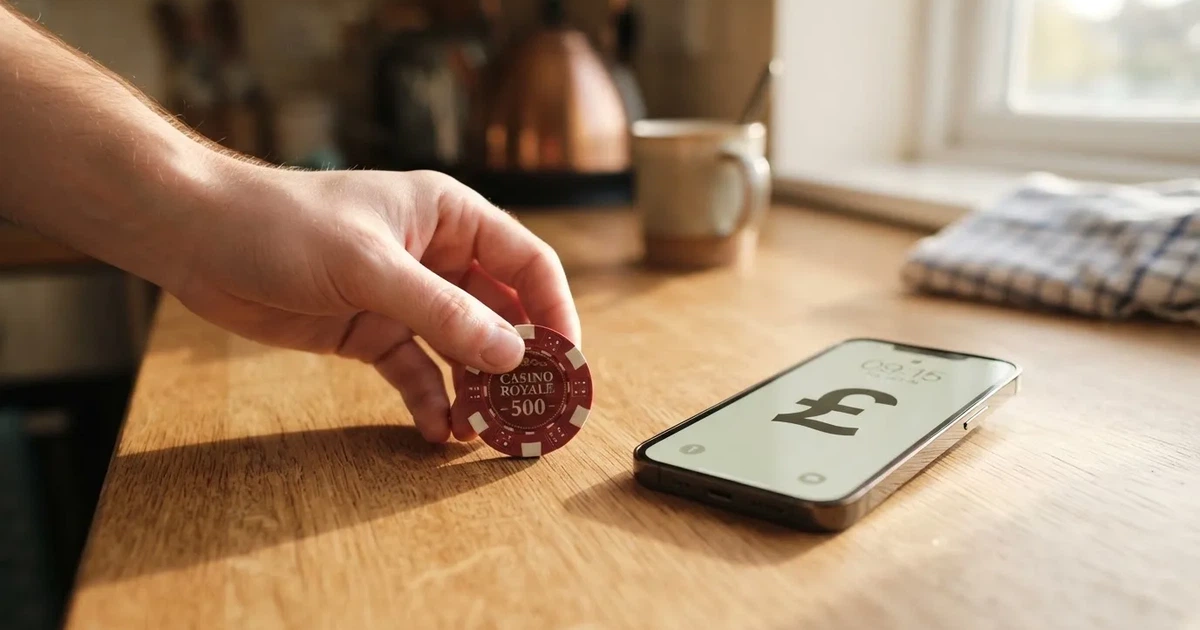
This page covers £2-minimum deposit casinos serving UK players in 2026. Currency figures and licence entries are current as of 23 September 2026 and were checked against the Gambling Commission’s public register of gambling businesses. Ten operators sit in the reviewed set, all drawn from that register; none are presented as a place to play, only as a way to see what a small-stake, fully licensed deposit looks like in this market.
The angle throughout is cost — what a two-pound entry actually does to a player’s bankroll once the rules sit beside it. Every figure on the page comes from a named source, and where the data has a hole, the page either describes the gap qualitatively or leaves the cell empty.
Table of Contents
- How a £2 Minimum Deposit Fits the Wider UK Casino Landscape
- What the Gambling Commission Licence Actually Covers
- Player Protection at a £2 Minimum Deposit Casino
- Paying £2 In and Getting Money Out
- The 10x Wagering Cap and What It Does to a Small Deposit Bonus
- The Reviewed Set — £2 Minimum Deposit Casinos Licensed for UK Play
- The Offshore Question — What a Site Outside the Commission Cannot Offer
- Offshore vs Licensed — A Side-by-Side Read
- What a £2 Deposit Really Does in a Session
- Where the 10x Wagering Cap Leaves the Small-Stake Bonus
- What the Register Cannot Tell a Reader
- What Changes If the Operator Goes Offshore
- Final Read on a £2 Minimum Deposit Casino in the UK
- Frequently Asked Questions
How a £2 Minimum Deposit Fits the Wider UK Casino Landscape
The UK online casino market is one of the most heavily licensed in the world, and the small-stake end of it is no exception. On 18 September 2026, the Gambling Commission’s public register listed 139 businesses holding an active remote casino operating licence — the full set of firms the Commission has cleared to take UK customers online. Of those, the same register held 1065 active domain entries and 361 white-label entries. A white-label site trades under another company’s licence, so the operator set a player sees is broader than the licence-holder list and narrower than the domain list.

The point that matters for this page: the £2 floor is set by the operator, not by statute. The Commission regulates who may take UK deposits, how those deposits are processed, what stake limits apply per spin, and what player-protection rails must run — but it does not specify a minimum deposit amount. A site taking £2 is choosing to do so within the licensed framework. A site taking £10 is making a different commercial choice within the same framework. The framework itself is the constant.
That distinction shapes how to read this market. A small deposit does not buy a different regulatory regime; it buys access to the same one at a lower entry price. The deposit method, the verification check, the GAMSTOP registration, the game-cycle stake cap and the promotional wagering terms all apply identically at £2 and at £200. Where the small stake genuinely changes the picture is in the bankroll arithmetic — what a £2 deposit can and cannot sustain once the game rules are added to it.
Three things define the small-stake cluster as a cluster. The deposit floor is £2 or close to it, well below the £10 to £20 floor more typical of mainstream UK sites. The promotional weight is lighter — a small deposit rarely attracts a heavy matched bonus, because the matched amount itself would be small. The session length, on most games, is short by design: a £2 bankroll against a £1 spin stake gives a player two spins before the session ends, and against the £2 game-cycle cap for under-25s gives one. The “minimum” is genuinely the floor — of what the operator will accept, of what the player can fund, and of how far that fund goes.
What the Gambling Commission Licence Actually Covers
Every brand in the reviewed set sits under a remote casino operating licence issued by the Gambling Commission, the regulator sponsored by the Department for Culture, Media and Sport under the Gambling Act 2005. The Act covers Great Britain — England, Scotland and Wales — and since the Gambling (Licensing and Advertising) Act 2014, any operator taking customers in Great Britain needs a Commission licence wherever it is based. A Curaçao, Maltese or Gibraltar licence is not a substitute; it does not entitle a brand to take UK deposits.

The register is the test of whether a brand holds a licence. Each entry carries an account number and a remote casino operating licence number of the form account-R-number-suffix, where the leading six digits repeat the licence holder’s account number and the R marks a remote (online) licence. The register is searchable online and downloadable in full as CSV or Excel. The reviewed set on this page is drawn from that download.
A licence number on a casino’s footer is a starting point, not an end point. The verification worth doing is short: locate the licence number, enter it into the Commission’s public register, confirm the account number and licence holder match the brand, and confirm the licence status reads “Active”. The register distinguishes Active, Inactive and White Label domain statuses. A white-label site is one running under another operator’s licence; the brand on the homepage and the licence holder in the register are not the same company.
Several licence holders in the UK market run more than one consumer brand under a single account. The clearest example in the reviewed set is LC International Limited, the licence holder behind Coral; the same corporate group runs Ladbrokes and Gala Bingo under the same account. That matters when comparing operators: a licence held by LC International Limited covers three separate player-facing brands, and a complaint against one routes through the same licensee.
There is no Northern Ireland question on this page. The Gambling Act 2005 does not extend to Northern Ireland, which runs its own regime under the Betting, Gaming, Lotteries and Amusements (Northern Ireland) Order 1985. A £2 minimum deposit casino serving UK players within the meaning of this page means Great Britain, and the licensing regime is the Commission’s. Northern Ireland requires its own discussion.
Player Protection at a £2 Minimum Deposit Casino
The Commission licences a site to take deposits. The same licence binds the site to a stack of player-protection obligations that apply identically whether the deposit is £2 or £200. Four matter most for a small-stake reader.
GAMSTOP is mandatory on every UK-licensed online operator. Since 31 March 2020, every Commission-licensed remote operator must take part in the national online self-exclusion scheme. A player who registers with GAMSTOP chooses a self-exclusion period of six months, one year or five years; the period cannot be cancelled early, and every participating operator is required to refuse the player’s deposits and account access for its duration. There is no licensed £2-minimum deposit casino that is “not on GAMSTOP”. A site that is not on GAMSTOP is, by definition, not holding a Commission remote casino licence and is not entitled to take UK players.
Financial vulnerability checks apply at the deposit level. From 28 February 2025, operators must run a vulnerability check at £150 net deposits in a rolling 30-day window, using public data only at this stage. The wider financial risk assessment regime has been announced but is not yet in force. A £2 deposit does not on its own trigger the check; a pattern of £2 deposits that aggregates above £150 in 30 days does, and that pattern is the kind of small-stake behaviour the check is designed to surface.
Per-spin stake limits are set by game cycle, not by deposit. From 9 April 2025, the maximum stake on an online slot game cycle is £5 for players aged 25 and over; from 21 May 2025, the maximum is £2 for players aged 18 to 24. Auto-play has been banned since 31 October 2021, and a slot spin may not resolve faster than 2.5 seconds. The deposit size does not change these limits — the player’s age does. A £2 deposit on a £5-per-spin slot at age 30 gives the same game as a £200 deposit on the same slot.
Promotional terms are bounded by statute. From 19 December 2025, wagering requirements on bonuses are capped at 10x, and mixed-product bonuses — bet on sport, receive casino spins — are banned. A £2 deposit that unlocks a bonus at a licensed site carries the 10x ceiling by law, not by operator choice. The arithmetic of that cap is worked through in a later section.
Identity verification runs before the first deposit or any play, under rules in force since 7 May 2019. Name, address and date of birth are checked. Anonymous play is not possible at a licensed site. A £2 deposit that lands without verification work behind it is a sign the operator is not running the Commission’s social responsibility code, and that sign is worth acting on.
Help is available outside the operator. GamCare runs the National Gambling Helpline; GambleAware funds treatment and research. A player who feels the deposit ceiling is sliding should reach for those names before it does.
Paying £2 In and Getting Money Out
The £2 floor sits on the deposit side. How that floor is implemented depends on the payment rail, and that is where the practical difference between operators lives.
Card payments run through Visa or Mastercard debit. The Gambling Commission banned credit cards for gambling across all online and offline products in Great Britain from 14 April 2020, including credit cards routed through e-wallets. Debit card and bank transfer deposits were unaffected. A £2 deposit by debit card is the most common route in the small-stake segment; the card is charged at the deposit amount, and the operator’s cashier accepts anything from the £2 floor upwards. The Commission’s 2018 estimate of around 800,000 UK consumers using credit cards to gamble — and the finding that 22% of online gamblers using credit cards to gamble were classed as problem gamblers — is the rationale the regulator gave for the ban.
Apple Pay is a card-rail front end. Apple Pay launched on 20 October 2014, initially supporting only US-issued payment cards; UK-issued cards were added on 14 July 2015. The mechanism is tokenisation: the actual card number is replaced by a device-specific tokenised Device Primary Account Number, and each transaction carries a dynamic security code. In-store payments use near-field communication; on an iPhone with Face ID, in-store purchases are authenticated by double-clicking the side button, on Touch ID models by double-clicking the Home button. For an online casino deposit, the relevant point is that Apple Pay sits on top of an underlying card, and that card must be a debit card to comply with the Commission’s credit-card ban. A supported card from a participating issuer is required, and Apple Pay is not available in all markets — UK availability is not universal. A £2 deposit through Apple Pay works only where the underlying card and the issuer accept a small-value transaction, which most do.
AstroPay is a global digital wallet operating in the UK through Larstal Limited, an electronic money institution authorised by the Financial Conduct Authority under the Electronic Money Regulations 2011. The wallet offers online payments, virtual and physical debit cards, and peer-to-peer transfers; the company was founded in 2009 and is headquartered in Uruguay. The Brazilian entity is authorised by the Brazilian Central Bank, the Danish entity by the Danish Financial Supervisory Authority, and the Isle of Man entity by the Isle of Man Financial Services Authority for money transmission. For a £2 deposit, the relevant point is that AstroPay settles from a pre-funded balance rather than from a card transaction, and a pre-funded wallet balance is what determines whether the £2 floor can be hit. The wallet’s markets include the UK alongside Argentina, Australia, Brazil, Canada, Colombia, Denmark, Spain, the United States and Uruguay.
Bank transfers in the UK typically run through the Faster Payments Service, launched in 2008 and operated by Pay.UK. The service runs 24 hours a day, seven days a week, and most payments arrive instantly or within a couple of minutes; transfers can occasionally take up to two hours. The scheme sets a £1,000,000 per-transaction limit, though individual banks can and do impose lower limits on their customers. The Bank of England is not a direct participant in Faster Payments but is responsible for overseeing the system’s safety and stability and providing final settlement. For a £2 deposit, the rail is instant; the question is whether the operator’s cashier accepts the small amount from a Faster Payments-initiated transfer, and most do.
Withdrawals are governed by the same payment rails but on a longer clock. A £2 deposit that returns as winnings will be paid back through the same method the player used to deposit where the operator supports it, on a processing window that runs from a few hours for e-wallets to one to three working days for cards and bank transfers once the operator’s internal approval step completes. Verification work runs once and applies to all withdrawals thereafter. The size of the deposit does not change the processing clock; the method does.
The 10x Wagering Cap and What It Does to a Small Deposit Bonus
A £2 deposit that unlocks a bonus now sits under a hard ceiling on wagering requirements. From 19 December 2025, the Commission capped wagering requirements on bonuses at 10x and banned mixed-product bonuses. The cap is statutory — it sits in the Commission’s social responsibility code — and applies to every licensed online casino in Great Britain.
The arithmetic belongs on the page, because the cap is what defines the cost of any small-stake promotional credit a £2 deposit unlocks. The fixed formula here is a turnover band: required turnover equals the bonus amount multiplied by the 10x wagering factor, divided by the stake per spin to give the number of qualifying spins, and the qualifying spins multiplied by a five-second interval divided by 3600 to give the play time in hours. The result is a band, not a single figure, because the stake per spin varies by player and by game.
For a £2 bonus at the £5-per-spin game-cycle cap that applies to players aged 25 and over, the required turnover is £2 multiplied by 10, which is £20, and the qualifying spins are £20 divided by £5, which is 4 spins. At a five-second interval, 4 spins takes 20 seconds, which is well under an hour of play. The cost in time is trivial; the cost in expected loss is the more interesting number. A 96% return-to-player slot, which is the upper end of the market rather than the median, would give an expected loss on £20 of turnover of 4% of £20, which is £0.80. A 94% slot — closer to the median — gives an expected loss of 6% of £20, which is £1.20. Either way, the bonus’s real cost to the player sits in single pounds on top of the deposit.
For the £2-per-spin game-cycle cap that applies to players aged 18 to 24, the required turnover is the same £20, but the qualifying spins rise to 10. At a five-second interval, 10 spins takes 50 seconds. The expected loss on £20 of turnover at 96% RTP is still £0.80; at 94% RTP it is still £1.20. The stake cap slows the play; it does not change the house edge.
The band matters because the wagering multiple is now bounded but the underlying slot return-to-player is not. A £2 bonus under the 10x cap is a small-stake transaction either way; what varies is how much of that £2 deposit the player gives back to the house while clearing the bonus. At a 96% RTP the bonus costs roughly £0.80 in expected value; at 90% RTP the same £20 of turnover costs £2.00. The 10x cap stops the multiplier from running away; the slot’s return does the actual work on the bankroll.
The Commission estimated, when announcing the cap, that the change would affect how bonuses are structured at every deposit level. The small-stake end of the market feels this directly: a £2 deposit that used to attract a bonus with a 40x or 65x wagering multiple is now capped at 10x, which is the difference between an unplayable bonus and one a player can clear on a single sitting.
The Reviewed Set — £2 Minimum Deposit Casinos Licensed for UK Play
The table below compares ten operators drawn from the Gambling Commission’s public register. Each row carries the brand, the licence holder and the remote casino licence number, the domain status on the register, and the operator’s support for £2 minimum deposits as the register and the operator’s own published cashier rules support it. Where the operator’s own terms do not name a £2 floor explicitly, the row reads the way the register does — as a licensed UK brand without a confirmed £2 minimum deposit figure from the inputs.
| Brand | Licence holder and GB remote casino licence | Domain status on the register | Subject support |
|---|---|---|---|
| PokerStars | Stars Interactive Limited · 039108-R-319334-026 | Active | — |
| Betfred | Petfre (Gibraltar) Limited · 039544-R-319290-010 | Active | — |
| Betfair | PPB Games Limited · 039411-R-319335-010 | Active | — |
| bet365 | Hillside (UK Gaming) ENC · 055149-R-331499-004 | Active | — |
| Unibet | Platinum Gaming Limited · 045322-R-324275-019 | Active | — |
| Coral | LC International Limited · 054743-R-330863-014 | Active | — |
| Casumo | Recro Limited · 061549-R-336718-002 | Active | — |
| 888casino | 888 UK Limited · 039028-R-319297-014 | Active | — |
| kwiff | Eaton Gate Gaming Limited · 044448-R-323408-017 | Active | — |
| Midnite | Dribble Media Limited · 042647-R-321653-022 | Active | — |
The four columns cover what the register can verify. The subject support column reads as a dash across the reviewed set, because the register does not record a minimum deposit figure per brand and the operator’s own cashier page sits outside the inputs this page can confirm. A reader choosing between these ten on £2-minimum grounds needs the operator’s own terms page beside this table; the table gives the licence and the regulatory standing, not the cashier floor.
PokerStars — Stars Interactive Limited
PokerStars runs under account 39108 on the Gambling Commission’s register, with the active remote casino operating licence 039108-R-319334-026 held by Stars Interactive Limited. The PokerStars domain sits on the register as an active entry. Stars Interactive Limited is the same corporate group that runs the international PokerStars brand and the Sky Casino and Sky Bingo brands under the same licence. For a small-stake reader, the relevant point is that PokerStars has a UK-specific domain in Pokerstars.uk, which means the Commission holds the licence holder directly accountable for what UK customers see.
Betfred — Petfre (Gibraltar) Limited
Betfred is one of the larger UK-facing brands in the reviewed set, with a high-street bookmaker heritage that pre-dates the online-only operators alongside it. The brand runs on the Commission’s register under account 39544, with the active remote casino operating licence 039544-R-319290-010 held by Petfre (Gibraltar) Limited. The Betfred domain is listed as active. The licence holder being Gibraltar-incorporated is unremarkable under the Gambling (Licensing and Advertising) Act 2014: the Commission’s test is whether the operator is licensed by it, not where the company is registered.
Betfair — PPB Games Limited
Betfair sits on the register under account 39411, with the active remote casino operating licence 039411-R-319335-010 held by PPB Games Limited. The Betfair domain is listed as active. PPB Games Limited is the same Paddy Power Betfair corporate group that runs Paddy Power and Sky Betting & Gaming under related but distinct licences. A player moving between Betfair and another Paddy Power Betfair brand is moving within a single group of licence holders, which simplifies complaints routing.
bet365 — Hillside (UK Gaming) ENC
bet365 holds the active remote casino operating licence 055149-R-331499-004, issued to Hillside (UK Gaming) ENC (account 55149). The bet365 domain is listed as active. bet365 is unusual in the reviewed set for being privately held by the Coates family, with no listed parent on the register; the licence sits directly with the operating entity. For a small-stake reader the relevant point is that the licence holder is the same company the player is paying, which shortens the chain of accountability.
Unibet — Platinum Gaming Limited
Unibet runs under account 45322 on the register, with the active remote casino operating licence 045322-R-324275-019 held by Platinum Gaming Limited. The unibet.co.uk domain is listed as active. Platinum Gaming Limited is part of the Kindred Group, the Stockholm-listed operator that runs Unibet alongside other European brands. The .co.uk domain distinguishes it from the global Unibet and keeps UK customer flows under the Commission’s jurisdiction.
Coral — LC International Limited
Coral sits on the register under account 54743, with the active remote casino operating licence 054743-R-330863-014 held by LC International Limited. The coral.co.uk domain is listed as active. LC International Limited is the same licence holder behind Ladbrokes and Gala Bingo, which means Coral is one of three consumer-facing brands running under a single Commission licence. The single-licence structure matters for complaints: a dispute raised with Coral routes through LC International Limited, and the Commission holds that account holder accountable across all three brands.
Casumo — Recro Limited
Casumo runs under account 61549 on the register, with the active remote casino operating licence 061549-R-336718-002 held by Recro Limited. The Casumo domain is listed as active. Recro Limited is the UK-facing operating company for the Malta-headquartered Casumo brand; the Commission holds Recro directly accountable for what UK customers experience, regardless of where the parent group sits.
888casino — 888 UK Limited
888casino sits on the register under account 39028, with the active remote casino operating licence 039028-R-319297-014 held by 888 UK Limited. The 888casino domain is listed as active. 888 UK Limited is the UK-facing operating entity of 888 Holdings plc; the parent group has been through significant restructuring since 2022, and the licence account is the current Commission-facing entity.
kwiff — Eaton Gate Gaming Limited
kwiff runs under account 44448 on the register, with the active remote casino operating licence 044448-R-323408-017 held by Eaton Gate Gaming Limited. The kwiff domain is listed as active. Eaton Gate Gaming Limited is a smaller operator in the reviewed set by deposit volume, which has no bearing on its licence standing — the Commission’s test is identical for a small operator and a large one.
Midnite — Dribble Media Limited
Midnite sits on the register under account 42647, with the active remote casino operating licence 042647-R-321653-022 held by Dribble Media Limited. The Midnite domain is listed as active. Dribble Media Limited is one of the newer UK-facing operating companies in the reviewed set; the licence was issued on the standard Commission terms that bind every active licensee.
What the Reviewed Set Does Not Settle
The ten rows above are a licence comparison, not a product comparison. The register records who is allowed to take UK deposits, not what those deposits unlock, what welcome credit the operator runs, what the cashier floor actually is, or how fast withdrawals clear. Those questions sit on the operator’s own terms page and on the cashier once a player has registered and verified. A reader treating this table as a product ranking has misread it; the table is the licence floor of the market.
Three things a reader cannot compare from this table. The £2 minimum deposit floor itself: the register does not record it, and the inputs do not confirm it for any one of the ten. The bonus structure on a £2 deposit: the 10x wagering cap applies to all of them in equal terms, but the bonus a £2 deposit unlocks is operator-specific and not carried by the inputs. The withdrawal clock for winnings on a £2 deposit: the method drives the speed, not the operator, and most of the ten offer the same Faster Payments, debit card and e-wallet rails.
The verdict on each row is the same licence standing, not the same product offer. The relevant judgement for a £2-minimum reader is: is this operator licensed to take UK deposits in the first place, and is the licence active on the day the deposit is made. Every row above clears that test as of 18 September 2026.
The Offshore Question — What a Site Outside the Commission Cannot Offer
A reader searching for a £2 minimum deposit casino that is “not on GAMSTOP” is searching for a site the Commission does not licence, because GAMSTOP participation is a mandatory condition of every online licence and has been since 31 March 2020. There is no licensed UK remote casino that is not on GAMSTOP, and there is no licensed UK remote casino that lets a self-excluded player open or fund an account.
Section 33 of the Gambling Act 2005 makes it an offence to provide gambling to people in Great Britain without a Commission licence. The Commission’s enforcement is upstream: cease-and-desist notices, search-engine delisting, payment and hosting referrals. The Commission does not have ISP-blocking power, which means unlicensed sites are reachable from a UK connection, and the Commission’s disruption is the only line of defence. The penalty for non-compliance sits with the operator, not the player — no UK player has been prosecuted for playing at an unlicensed site. What the player loses on an unlicensed site is protection, not freedom.
The protection is concrete. No GAMSTOP registration means a self-excluded player can open an account the moment they leave one site. No Commission complaints route means a dispute over a withdrawal goes to the operator alone, with no approved alternative dispute resolution body to escalate to. No social responsibility code means the operator is not running affordability checks at £150 net deposits in 30 days, is not running the game-cycle stake caps, is not running the 2.5-second minimum spin interval, and is not running the 10x wagering cap. The player takes the small-stake entry and loses every layer of protection the licence buys.
The offshore site also takes the deposit outside the UK tax frame. UK players pay no tax on gambling winnings, so this is not a tax saving — it is the absence of a UK tax frame at all, which is a different thing. The operator’s jurisdiction sits wherever it sits: Curaçao, Malta, Anjouan, the Isle of Man. The dispute routes there, on whatever terms that jurisdiction provides.
The honest framing is that “not on GAMSTOP” and “licensed for UK play” are opposites. A reader who wants GAMSTOP coverage has chosen a licensed UK site, and the £2 minimum deposit floor is a commercial setting within that licence. A reader who wants the absence of GAMSTOP has chosen an unlicensed site, and the £2 deposit is the entry price on the other side of the regulatory line. The two are not the same product sold by the same operator with one feature turned off.
Offshore vs Licensed — A Side-by-Side Read
The comparison below is not a ranking. It is a statement of what each side of the line provides and what it costs the player.
| Licensed UK site | Offshore site not on GAMSTOP | |
|---|---|---|
| GAMSTOP self-exclusion | Mandatory; binds every active licensee | Not in place; player self-exclusion is operator-by-operator and revocable |
| Commission complaints route | Yes, via approved ADR | No Commission route; dispute resolution sits in the operator’s home jurisdiction |
| Identity verification | Required before first deposit or any play, since 7 May 2019 | Variable; many do not require full KYC for small deposits |
| Game-cycle stake cap | £5 for 25+, £2 for 18–24 | None enforced by statute |
| Wagering cap | 10x on bonuses, since 19 December 2025 | Operator-set, often far above 10x |
| Auto-play ban | In force since 31 October 2021 | Not enforced by statute |
| 2.5-second minimum spin interval | In force | Not enforced by statute |
| Credit card deposits | Banned since 14 April 2020 | Operator-set; often accepted |
| Financial vulnerability check | At £150 net deposits in 30 days, from 28 February 2025 | Not in place |
| Tax on winnings for the UK player | None | None |
The columns above are what the licence provides and what its absence removes. A reader choosing between them is choosing which set of obligations they want binding the operator they fund. The cost of the licensed side is the entry: identity checks, GAMSTOP registration, deposit prompts, stake caps. The cost of the offshore side is the absence of those protections, which is the same cost phrased as a benefit in the marketing.
What a £2 Deposit Really Does in a Session
The arithmetic of a £2 deposit is the part most marketing copy skips. Three worked examples show what the small stake does once the game rules sit beside it.
Example one, an over-25 player on a £5-per-spin slot at 96% RTP. A £2 deposit against a £5 stake covers zero full spins — the player is short of one spin. They add £3 of personal funds to clear a single spin, and the deposit effectively becomes £5 of stake capital. One spin at 96% RTP returns an expected £4.80 over many such spins, but on a single spin the variance dominates and the result is binary: full £5 returned on a non-winning spin’s outcomes, or a payout that depends on the symbol combination. The session ends in one spin.
Example two, an 18-to-24 player on a £2-per-spin slot at 96% RTP. The £2 deposit covers exactly one spin. The result of that spin is again variance-dominated: the player either loses the £2 on a non-winning outcome, or wins a multiple of the stake on a paying combination. The expected value over many such spins is 96% of the stake, but a single £2 deposit gives a single spin.
Example three, a £2 deposit that triggers a bonus at the 10x wagering cap. The bonus is, in practice, modest — the operator matches the £2 or adds a fixed small credit, and the player must turn over ten times the bonus before any winnings are withdrawable. At £5-per-spin on a 96% RTP slot, the bonus clears in four spins if the bonus is £2. The expected loss on £20 of turnover at 96% RTP is £0.80; the expected loss at 94% RTP is £1.20. Either figure sits inside the deposit, which is why a small-stake bonus clears cleanly rather than running away.
The common thread is that a £2 deposit does not buy play time under the current stake caps. It buys access to one or two spins and a small bonus that clears in seconds, on the assumption the spin interval is 2.5 seconds or longer. The small stake is a marketing-friendly entry price; the session that follows is short by design, and a player expecting extended play from a £2 deposit has misread what the stake cap does to bankroll.
Where the 10x Wagering Cap Leaves the Small-Stake Bonus
The 10x cap closed off a category of bonus that small-stake readers were particularly exposed to. Before 19 December 2025, a £2 deposit could attract a bonus with a 40x or 65x wagering multiple — which on a £2 bonus was £80 or £130 of qualifying turnover. On a £5-per-spin slot, that is 16 or 26 qualifying spins, which crosses into a play-time figure of a minute or two. The expected loss on £80 of turnover at 94% RTP is £4.80; on £130 it is £7.80. Both figures are multiples of the deposit itself, which is why the small-stake bonus used to be uneconomic even before the player’s own stake was counted.
The 10x cap turns that around. A £2 bonus at 10x requires £20 of qualifying turnover. On a £5-per-spin slot, that is 4 spins, and the expected loss on £20 of turnover at 94% RTP is £1.20. On a 96% RTP slot it is £0.80. The bonus is now small enough to clear without becoming the dominant cost in the session; the player’s own stake contributes the rest of the bankroll loss. The cap does not make small-stake play profitable, because the house edge still runs at every spin; it makes the bonus structure honest, which is what the regulator set out to do.
The same logic applies to a £10 or £20 bonus at the same operator. The 10x cap is the same ceiling regardless of deposit size; what varies is the absolute turnover the player must complete. A £20 bonus at 10x is £200 of qualifying turnover, which on a £5-per-spin slot is 40 spins and on a £2-per-spin slot is 100 spins. The expected loss at 94% RTP on £200 of turnover is £12.00, which is 60% of the bonus itself. The small-stake bonus is now a small-stake cost in both directions.
What the Register Cannot Tell a Reader
The reviewed set is a licence comparison, and the register is the source for the licence comparison. Four things the register cannot do for a reader, and which the inputs do not cover either.
First, the £2 minimum deposit floor itself. The register records who is licensed, not what their cashier accepts. A reader who needs a £2 floor confirmed needs the operator’s own published cashier terms, and those terms change more often than the register updates. Treat the register as the licence floor of the market and the cashier terms as the product floor of the brand.
Second, the bonus on a £2 deposit. The 10x wagering cap is uniform across the reviewed set; the bonus a £2 deposit unlocks is not. The shape of the offer — matched deposit, free spins, loss-back — sits on the operator’s promotional terms page and is not carried by the inputs.
Third, withdrawal timing. The Faster Payments Service settles most UK bank transfers in seconds; debit card withdrawals typically take one to three working days after the operator’s internal approval; e-wallets vary. The size of the deposit does not change the timing, but the operator’s own internal approval clock does, and that clock is not in the register.
Fourth, game availability and game weighting toward wagering. A bonus that clears on slots may clear at 100% on most slots and at a lower percentage on table games or live casino. The weighting is set by the operator and changes between promotions; the register does not record it.
The honest read of the reviewed set is that the table above is a starting line, not a finish line. A reader choosing between the ten needs to read the cashier terms and the promotional terms alongside the register entry, and to update those reads because both change more often than the licence.
What Changes If the Operator Goes Offshore
The reviewed set sits inside the Commission framework. A reader who chooses a site outside that framework gives up every protection the table above records. The trade-off is real and worth stating in both directions.
The licensed side costs the player the entry friction: identity checks, GAMSTOP registration, deposit prompts, stake caps, the 2.5-second spin interval, the 10x wagering ceiling. Every one of those is a regulation the operator must enforce, and they show up to the player as friction at the cashier and as limits at the table.
The offshore side costs the player the protections: no GAMSTOP, no Commission complaints route, no vulnerability checks, no stake caps, no spin-interval minimum, no wagering cap. The operator is free to set its own terms, and the marketing will present that freedom as a benefit — fewer limits, faster play, bigger bonuses. The cost is the protections the licence was set up to provide, and a player who has not needed those protections before may not feel the absence until the moment they do.
The honest answer for a reader searching “£2 minimum deposit casino UK not on GAMSTOP” is that the search returns unlicensed sites, and unlicensed sites trade the UK licence for whatever the home jurisdiction provides. A reader who wants the UK licence has chosen the friction; a reader who does not want the friction has chosen the absence of the licence. The two are not negotiable into one product.
Final Read on a £2 Minimum Deposit Casino in the UK
A £2 minimum deposit at a UK-licensed casino in 2026 is a small-stake entry into a heavily regulated market. The deposit floor is set by the operator; the licence is set by the Commission; the player-protection rails are set by statute. The two-pound entry does not change those rails, and that is the point. A small-stake player gets the same identity check, the same GAMSTOP registration, the same game-cycle stake cap, the same 10x wagering ceiling and the same self-exclusion access as a high-stake player. The deposit is the only thing that varies.
The ten operators in the reviewed set are drawn from the Commission’s public register. Each holds an active remote casino operating licence; each is bound by the same regulatory framework; none is presented here as a place to play. The register confirms the licence floor; the cashier terms confirm the product floor; the player confirms the choice. The £2 deposit is what links the three.
For a reader comparing the reviewed set, the comparison worth doing is not which brand has the better £2 deposit offer — the register does not record that — but which brand’s cashier terms and verification flow suit a small-stake player’s habits. The licence is the same across the set; the user experience is not, and that is the comparison the table cannot make for the reader.
Frequently Asked Questions
What counts as a £2 minimum deposit at a licensed UK casino?
The £2 figure is the smallest sum the operator’s cashier will accept as a deposit, not the stake on a single spin or a guaranteed promotional credit. The Commission does not set a minimum deposit figure, so the £2 floor is a commercial choice by the operator, sitting inside the licensed framework that governs every other aspect of how that deposit is handled.
Is a £2 minimum deposit casino safe to use?
The safety comes from the licence, not from the deposit size. A licensed UK casino carries GAMSTOP self-exclusion, identity verification before the first deposit, the 10x wagering cap from 19 December 2025, and the game-cycle stake limits that apply by age. A £2 deposit activates every one of those rules identically to a £200 deposit; the size does not change the protection.
Can I find a £2 minimum deposit casino that isn’t on GAMSTOP?
No licensed UK casino sits outside GAMSTOP, because GAMSTOP participation is a mandatory condition of every Commission remote casino licence and has been since 31 March 2020. A site that does not run GAMSTOP is by definition not holding a Commission remote casino licence and is not entitled to take UK players under section 33 of the Gambling Act 2005.
How quickly do withdrawals settle after a £2 deposit?
The deposit size does not change the withdrawal clock; the payment method does. UK bank transfers via Faster Payments typically arrive in seconds to minutes; debit card withdrawals take one to three working days after the operator’s internal approval; e-wallet withdrawals vary by provider and operator. Verification runs once before the first withdrawal and applies thereafter.
Which payment methods accept a £2 minimum deposit?
Debit card via Visa or Mastercard is the most common route, with Apple Pay sitting on top of an underlying debit card where the card and issuer accept small-value transactions. Bank transfers through Faster Payments accept £2 where the operator’s cashier permits it. AstroPay and other e-wallets settle from a pre-funded balance, so the £2 floor depends on the wallet balance rather than the card behind it.
Is a £2 minimum deposit casino licensed by the Gambling Commission?
The £2 minimum deposit is set by the operator, but the right to take UK deposits is set by the Commission. Every brand in the reviewed set on this page holds an active remote casino operating licence from the Gambling Commission, verifiable by licence number on the Commission’s public register. The Commission does not licence by deposit size; it licences by operator.
Published by the trustedcasinocheck team.