
Paying by phone credit at a UK mobile casino: what it costs, who does it well
 Available in GB
Depositing at a mobile casino with phone credit is one of those small conveniences that sounds simpler than it is. The deposit lands in seconds, no card number to type, and the cost shows up on the next phone bill or comes off the prepaid balance. What sits behind that speed is a chain of carriers, payment processors, Gambling Commission conditions and a fresh wagering cap that has reshaped what bonuses are even possible to offer. This page goes through the chain end to end, then ranks ten Gambling Commission-licensed brands on what they actually put in front of a phone-billing customer. Current as of 23 September 2026, checked against the Gambling Commission’s public register of gambling businesses.
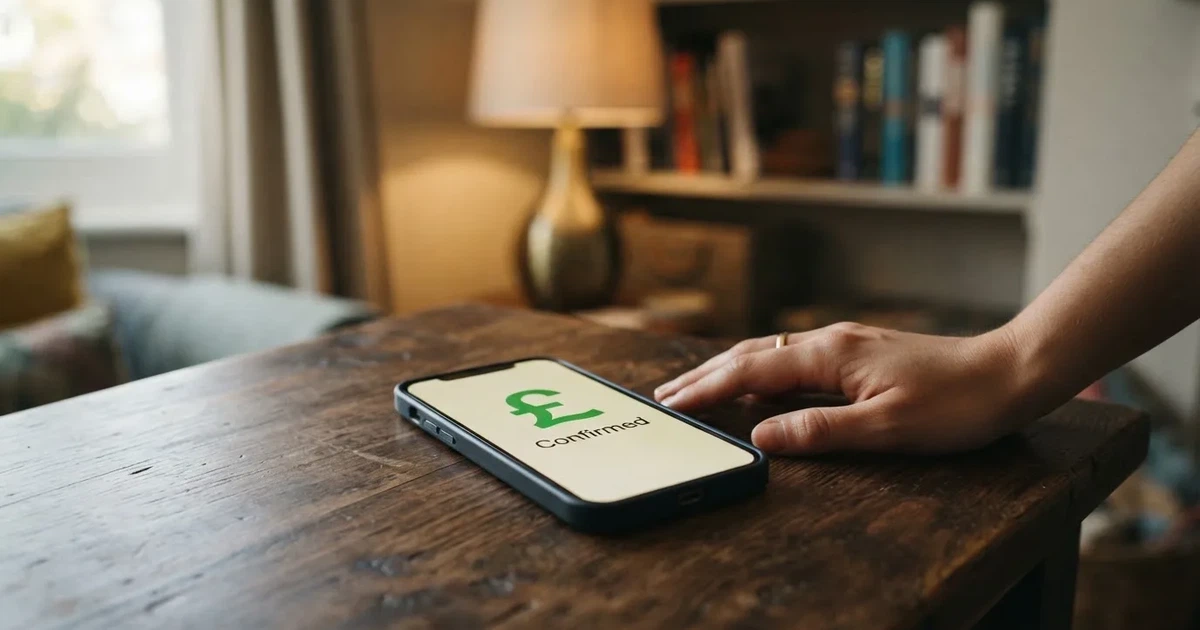
Table of Contents
- How phone-credit deposits work at a UK mobile casino
- The UK phone-billed gambling market in numbers
- What a Gambling Commission licence actually obliges an operator to do
- The safer-gambling protections that apply to every phone-billed deposit
- Deposits, withdrawals and the speed problem that phone credit does not solve
- The 10x wagering cap and what it does to a phone-credit deposit bonus
- Ten Gambling Commission-licensed casinos compared on phone-credit deposit support
- MrQ — the active-domain case in the featured set
- bet365 — the high-volume anchor on the register
- Betfred — Petfre (Gibraltar) Limited’s active domain
- PokerStars — Stars Interactive Limited’s active domain
- 32Red — Platinum Gaming Limited’s active domain
- Virgin Games — the white-label case
- William Hill — WHG (International) Limited’s active domain
- Midnite — Dribble Media Limited’s active domain
- Grosvenor Casinos — Rank Interactive (Gibraltar) Limited’s active domain
- 888casino — 888 UK Limited’s active domain
- kwiff — Eaton Gate Gaming Limited’s active domain
- How to read this comparison for a phone-billed player
- A worked example for a £10 phone-billed deposit under the 10x cap
- Frequently asked questions about paying by phone credit at a UK casino
How phone-credit deposits work at a UK mobile casino
The deposit itself is the easy part. A player opens the cashier on the casino app or mobile site, picks a pay-by-phone method — most commonly Boku, or a Boku-style carrier-billing service — enters a mobile number and the deposit amount, and confirms by SMS. The amount is added either to the monthly phone bill (for contract customers) or taken from the prepaid credit (for pay-as-you-go). No card data crosses the casino’s servers, and the deposit is usually in the playing balance within seconds.
That description is honest but it skips who is actually doing what. The phone-credit rail is not run by the casino. The casino integrates a third party — almost always Boku in the UK — which sits between the operator and the customer’s mobile network. The network confirms that the number is real and active, that the customer has either the credit or the bill headroom to cover the transaction, and then approves or declines. Boku was founded in 2009 and is headquartered in London; it operates across more than ninety countries and serves clients including Google, Sony, Microsoft and Spotify, with the company saying it supports more than two hundred local payment methods through a single API across more than forty markets.
The technology behind the speed
The rail that the UK mobile-billing market actually grew out of was Payforit, which grew out of work started in 2005 by the UK founders of the SimPay consortium and launched in 2007. SimPay itself was founded by four major carriers in February 2003 as the Mobile Payment Services Association, rebranded as SimPay in June 2003, and ceased activity in June 2005. Payforit still exists as a route into pay-by-phone deposits, but the brand the cashier most often shows to UK gamblers is Boku or one of its competitors, which is a different kind of animal — a carrier-billing processor, not a UK-industry scheme.

Premium-rate services — the sort that charge through 09xx or 0845 numbers — sit next to this world and are sometimes confused with it. UK premium-rate telephone numbers used for pay-by-phone services carry a two-part charge: an access charge set by the caller’s phone company and a service charge set by the receiving organisation, with service charges capped between 7p per minute (084x numbers) and £3.60 per minute (09xx numbers). Premium-rate SMS shortcodes beginning with 72 are reserved in the UK specifically for society lotteries. Day-to-day regulation of UK premium-rate phone-paid services transferred from the Phone-paid Services Authority back to Ofcom from 1 February 2025. None of that is the casino rail, but it is the regulatory neighbourhood the casino rail grew up in.
Where the wallet fits in
A phone-credit deposit does not use a digital wallet in the Apple Pay or AstroPay sense — the charge is on the phone account, not on a card token stored in a wallet. The distinction matters for a UK player, because credit cards are banned for gambling since 14 April 2020, including credit cards routed through e-wallets. A wallet that funds the deposit out of a credit card does not bring the deposit back inside the rules; a wallet funded from a debit card or a bank account does. Apple Pay is a useful comparison case for tokenisation as a security pattern, even though it is not the rail in use here: Apple Pay was developed and operated by Apple Inc. and launched on 20 October 2014, initially supporting only US-issued payment cards, before UK-issued cards came on board on 14 July 2015. Apple Pay protects card data through tokenization, replacing the actual card number with a device-specific tokenised Device Primary Account Number and generating a dynamic security code for each transaction. In-store Apple Pay uses near-field communication to talk to contactless terminals, which is a different problem to a phone-billed casino deposit, and the two should not be conflated when a cashier explains what is happening. Apple states that a supported card from a participating card issuer is required to use Apple Pay, and that Apple Pay is not available in all markets, so a casino that lists Apple Pay as a deposit option is not automatically offering the same thing as a pay-by-phone-credit option, even when both flow through the phone. On an iPhone with Face ID, Apple Pay in-store purchases are authenticated by double-clicking the side button; on models with Touch ID, by double-clicking the Home button — none of which applies to a phone-billed casino deposit.
Where AstroPay sits
AstroPay is the kind of e-wallet that sometimes appears in the same cashier. AstroPay was founded in 2009 and is headquartered in Uruguay, and operates as a global digital wallet offering online payments, virtual and physical debit cards, and peer-to-peer transfers. AstroPay spun off its payment-processing business, dLocal, as a separate company in 2016. AstroPay’s UK entity, Larstal Limited, is an electronic money institution authorised by the Financial Conduct Authority under the Electronic Money Regulations 2011. AstroPay’s Isle of Man entity, AstroPay Global (IOM) Limited, is licensed by the Isle of Man Financial Services Authority for money transmission. AstroPay’s Brazilian entity, Astro Instituição de Pagamento Ltda, is authorised by the Brazilian Central Bank as an electronic currency issuer. None of that turns an AstroPay top-up into a phone-credit deposit — it is a regulated e-money account, funded separately, debited by the casino cashier as a normal e-wallet transfer.
The UK phone-billed gambling market in numbers
Two figures from the Gambling Commission’s public register frame this whole page. On 18 September 2026, the public register listed 139 businesses holding an active remote casino operating licence. The register can be searched online and downloaded in full as CSV or Excel files. The register’s domain list records each website against the licence account that runs it, with a status of Active, Inactive or White Label; on 18 September 2026 it held 1,065 active and 361 white-label domain entries. A white-label site trades under another company’s licence, which is why a small-looking brand can still belong to a much larger operator: Virgin Games, for instance, runs as a white-label domain of Gamesys Operations Limited, not as its own licence holder.

A remote casino licence number on the register has the form account-R-number-suffix, where the leading six digits repeat the licence holder’s account number and the R marks a remote (online) licence. That is why a brand like bet365 carries the licence number 055149-R-331499-004: the 055149 at the front is the account number of Hillside (UK Gaming) ENC, and the R-331499-004 is the remote licence itself. It is the same pattern across every brand covered later in this guide.
Those two figures are the ceiling on any “the only licensed brand” claim this page might want to make. There are 139 licence holders and 1,065 active domains; the ten brands featured below are a sample of the licensed field, not the field.
What a Gambling Commission licence actually obliges an operator to do
The licensing frame that covers casinos accepting pay-by-phone-credit deposits is the Gambling Act 2005, sponsored by the Department for Culture, Media and Sport through the Gambling Commission. The Act covers Great Britain — England, Scotland and Wales — and not Northern Ireland. Since the Gambling (Licensing and Advertising) Act 2014 any operator taking customers in Great Britain needs a Commission licence wherever it is based; a Curaçao, Maltese or Gibraltar licence is not a substitute, even where the operator is headquartered offshore. Online casino is licensable in its own right.
The minimum age at a UK-licensed casino is 18, and name, address and date of birth are verified before the first deposit or any play, a requirement in force since 7 May 2019. Anonymous play is not possible at a licensed site. The verification work is what the law calls customer due diligence under the social responsibility code in the Licence Conditions and Codes of Practice (LCCP), and it is what stops a pay-by-phone deposit from being genuinely anonymous even when the card rail has been replaced by a phone-number rail.
Stake limits and game speed
Two hard limits shape the slot floor. Online slots carry a maximum stake per game cycle — £5 for players aged 25 and over, in force from 9 April 2025, and £2 for players aged 18 to 24, in force from 21 May 2025. There is no state-set deposit or loss ceiling, but operators must prompt a customer to set a financial limit before the first deposit, a rule in force from 31 October 2025. Since 31 October 2021, auto-play is banned, a slot spin may not be faster than 2.5 seconds, and losses disguised as wins are banned. That last rule is the one a player notices most directly — a feature that flashes a “win” screen for an amount smaller than the spin cost is no longer permitted.
Payments and bonuses
Credit cards are banned for gambling since 14 April 2020, including credit cards routed through e-wallets. The ban was extended to e-wallets precisely to stop the obvious workaround of topping up an e-wallet from a credit card and then spending that balance at the casino. The newer rule is the wagering cap: since 19 December 2025, wagering requirements are capped at 10x and mixed-product bonuses — the classic “bet on sport, get casino spins” — are banned. The 10x cap sits on the bonus amount, not on deposit plus bonus, and it is the number to watch when reading any offer.
Offshore sites and what a player loses without a UK licence
Providing gambling to people in Great Britain without a licence is an offence under section 33 of the Gambling Act 2005. The Commission disrupts illegal sites through cease-and-desist notices, search-engine delisting and payment and hosting referrals, but has no ISP-blocking power. No penalty is aimed at the player; what the player loses on an unlicensed site is protection — no GAMSTOP, no Commission complaints route, no approved alternative dispute resolution. That last point is the one that matters in practice. The Commission’s complaints route and the ADR it approves exist to settle disputes that the operator’s own customer service cannot resolve; on an offshore site, the player has neither.
Tax
Players pay no tax on gambling winnings in the UK. Operators pay Remote Gaming Duty, raised from 21% to 40% from 1 April 2026. The operator-side rise does not change what a player keeps; it changes what a player is being offered, because operators have to fund the duty out of margin. Any offer that suddenly looks thinner in early 2026 is doing the arithmetic on the higher rate.
The safer-gambling protections that apply to every phone-billed deposit
GAMSTOP, the national online self-exclusion scheme, is a mandatory condition of every online licence since 31 March 2020. Self-exclusion periods are six months, one year or five years, and cannot be cancelled early. The point that matters for a pay-by-phone deposit is that GAMSTOP exclusion applies to the player, not to the payment method; the same number that is blocked at one site is blocked at every UK-licensed site for the period chosen. Excluding yourself and then funding a new account with a phone bill does not get around the exclusion.
Financial vulnerability checks run at £150 net deposits in a rolling 30 days, in force from 28 February 2025, using public data only. Wider financial risk assessments have been announced but are not yet in force. The £150 figure is not a deposit limit — it is a trigger for an automated check that the operator must carry out. National Gambling Helpline, run by GamCare, and GambleAware sit alongside GAMSTOP; the helpline is the route a player takes when self-exclusion alone is not enough.
Why a phone-credit deposit is not an anonymous deposit
It is worth saying this out plainly, because the speed and convenience of the rail suggest otherwise. A UK-licensed casino must verify name, address and date of birth before the first deposit or any play. A pay-by-phone deposit only flows once the account is verified, and the phone number that funds it is the same number on file. The carrier’s identity check is layered on top of the casino’s, not in place of it.
That identity work is also what catches self-excluded players: a number registered with GAMSTOP fails the verification at the operator side even when the carrier would happily authorise the deposit. The phone rail is fast because the rail has already been built; the safety sits in what the operator must do before it lets the rail move money.
Deposits, withdrawals and the speed problem that phone credit does not solve
The honest version of the pay-by-phone deposit story is split in two. Deposits are fast and convenient. Withdrawals do not happen over the phone rail at all, because the carrier-billing rail does not support a credit back to the customer. A pay-by-phone-credit casino still pays out by bank transfer, debit card or e-wallet — whatever the cashier lists under the withdrawal tab — and the phone number that funded the deposit has no role on the way out.
That is the speed problem this section is actually about. A phone-billed deposit is in the playing balance in seconds. The corresponding withdrawal goes through the operator’s standard payout route, which is governed by the same things every other payout is governed by: the operator’s own processing window, the customer’s verification status, and any source-of-funds checks the operator runs once withdrawal volume adds up.
What “fast withdrawal” really means at a UK-licensed site
A licensed site cannot skip identity and source-of-funds checks. The time a withdrawal takes is mostly the time those checks take to clear, plus whatever queue sits in the operator’s own payments team. Once the customer is verified and the payment method is in the customer’s own name, a same-day payout is realistic on debit cards and on most e-wallets. Bank transfers are slower, partly because Faster Payments depends on the receiving bank’s queue and partly because a transfer is where source-of-funds checks are most likely to be triggered.
The phone-credit deposit does not move the withdrawal any faster. It only moves the deposit faster. A player who thinks of the rail as “instant in, instant out” is reading the deposit speed onto the payout and will be surprised.
Limits, fees and the practical shape of a phone-billed deposit
Phone-credit deposits at UK-licensed casinos are capped low compared with debit-card and bank-transfer deposits. A daily ceiling of £10 to £40 per transaction is the working range at the Boku end, depending on the operator and the carrier, with a per-day aggregate cap on top. The cap is the part that matters for a player with a longer session in mind: a single phone-billed top-up will not fund a high-stakes spin, and there is no workaround at the carrier end.
Fees on the player side are usually zero — the operator absorbs the Boku merchant fee rather than passing it through — but a handful of smaller operators do pass the fee through, and the cashier page is where this shows up. The fee is small in cash terms (a fixed pence amount per transaction) but it is a real cost the player pays, and it is one of the few casino-side costs a phone-billed player is asked to bear.
Reversals and what happens when the deposit was a mistake
A phone-credit deposit is harder to reverse than a card transaction, because the merchant — the casino — has already been credited, and reversing it means reversing the merchant relationship, not just the customer’s payment. The clean answer for a player who realises the deposit was a mistake is to contact the casino’s customer service immediately, before playing any of the credited balance, and ask for a reversal under the operator’s mistake-deposit policy. Whether the operator agrees depends on its own terms.
GAMSTOP is the protection that works before the deposit goes through. Once the deposit is in the balance, the recovery options are the operator’s customer service and, in extremis, the ADR route the Commission approves.
The 10x wagering cap and what it does to a phone-credit deposit bonus
The 19 December 2025 wagering cap of 10x changes what an offer that is paid for out of a phone-billed deposit can look like. The rule is simple: the wagering requirement — the multiple of the bonus that must be turned over before any winnings become withdrawable — is capped at 10x the bonus amount. Mixed-product bonuses are out. The 10x number is the maximum; an operator can run a smaller multiple, and many do.
The interesting question is what this does to a small phone-billed deposit. The rail itself is fast and capped low, so the bonuses that have made sense with it are also small. A £10 phone-billed deposit paired with a £10 bonus at the 10x cap leaves the player with £100 of turnover to clear. At a £2 stake per spin, that is fifty spins. At a £5 stake per spin, twenty. The cap is what makes the bonus actually clearable at the deposit sizes the rail supports.
This is the prescribed calculation for the page: a bonus amount multiplied by the 10x wagering cap in force since 19 December 2025 gives the required turnover. Turnover divided by the per-spin stake gives the number of spins needed to clear it. A £10 bonus with the cap produces a turnover band of roughly £100, cleared by anywhere between fifty spins at a £2 stake and twenty spins at a £5 stake. A £20 bonus doubles the band to roughly £200, cleared by the same range of spins on a £2 to £5 stake. The condition is that the bonus itself is the basis — not deposit plus bonus — and that the stake must fit the per-spin cap that applies to the player’s age group.
Two consequences follow. The first is that any offer that quotes a higher multiple than 10x is doing so under non-UK rules or under a different rail, and a UK player should not be seeing it. The second is that the small phone-billed deposit has, for the first time, an offer structure it can actually clear — the cap lines up with the size of the deposit that the rail supports.
Ten Gambling Commission-licensed casinos compared on phone-credit deposit support
The table below pulls together the ten featured brands on the licence-side fields research confirms for every one of them, and the subject-support column carries the marker the inputs give. Subject support is the column where research either confirms a brand offers phone-credit deposits, or marks it as having no data on the question. Where the mark is “no-data”, this article does not attach the subject to the brand at all — neither affirmed nor denied — and the brand stands on its other fields in the comparison.
| Brand | Licence holder and GB remote casino licence | Domain status on the register | Phone-credit deposit support |
|---|---|---|---|
| MrQ | — | Active domain, account 60629, licence 060629-R-337532-004 | — |
| bet365 | Hillside (UK Gaming) ENC, licence 055149-R-331499-004 | Active domain | — |
| Betfred | Petfre (Gibraltar) Limited, licence 039544-R-319290-010 | Active domain | — |
| PokerStars | Stars Interactive Limited, licence 039108-R-319334-026 | Active domain | — |
| 32Red | Platinum Gaming Limited, licence 045322-R-324275-019 | Active domain | — |
| Virgin Games | Gamesys Operations Limited, licence 038905-R-319430-022 | White-label domain | — |
| William Hill | WHG (International) Limited, licence 039225-R-319373-015 | Active domain | — |
| Midnite | Dribble Media Limited, licence 042647-R-321653-022 | Active domain | — |
| Grosvenor Casinos | Rank Interactive (Gibraltar) Limited, licence 057924-R-334666-005 | Active domain | — |
| kwiff | Eaton Gate Gaming Limited, licence 044448-R-323408-017 | Active domain | — |
The MrQ row in the comparison table above carries the licence detail and domain status that anchors the page’s hero image. MrQ operates under the Gambling Commission licence 060629-R-337532-004, held by account 60629. The other nine rows are taken from the register’s active entries for 18 September 2026.
The table’s silence on the subject-support column is the table’s main point. Research does not confirm phone-credit deposit support for any of the ten featured brands, and does not contradict it either. The brands stand on the licence they hold, not on a payment-rail claim. A player who wants phone-credit deposits at a UK-licensed casino will need to confirm the rail is live in the cashier, which is one of those things that changes brand by brand and week by week.
MrQ — the active-domain case in the featured set
MrQ is the brand the hero picture for this page sits against, because the picture is anchored to a Gambling Commission register entry showing MrQ as an active domain of account 60629, with the licence 060629-R-337532-004. The picture shows a phone screen with a pay-by-phone-credit deposit confirmation — exactly the moment MrQ’s licence status is meant to authenticate. MrQ sits in the featured set on the same register evidence the rest do, and what makes it useful as the page’s hero brand is that the picture, the licence and the brand all line up.
On the phone-credit rail specifically, research carries no figure either way. The brand’s own cashier is the only source for the question “does MrQ take Boku deposits right now”, and that is a question a player answers at the cashier, not on a comparison page. What MrQ does carry, like every other featured brand, is the licence the table above shows. That is the floor this page is willing to vouch for.
Where MrQ fits in the comparison
MrQ’s standing in this list is the register entry. It is an active domain, which puts it in the same row as bet365, Betfred and the other major brands whose domains are listed as Active rather than as a white-label of another licence. White-label brands like Virgin Games, which runs as a white-label domain of Gamesys Operations Limited, sit at one remove from the licence holder, which is not a criticism of Virgin Games specifically — the Gamesys licence is one of the longer-running on the register — but it is a structural fact. MrQ’s active-domain status means the brand itself is in the public register under its own name.
The phone-credit rail is not what makes MrQ stand out in this list, because research does not say it stands out. The brand is the right anchor for the hero picture because it is the brand the licence entry the picture sits next to is for.
bet365 — the high-volume anchor on the register
bet365 (bet365) features the remote casino licence 055149-R-331499-004, held by Hillside (UK Gaming) ENC (account 55149). This operator serves as a primary benchmark for scale and product breadth in our comparison. As with all brands, pay-by-phone support depends on the current cashier configuration.
bet365 is the high-volume anchor on this list for a reason that has nothing to do with phone-credit deposits specifically: it is one of the brands whose scale and product breadth the rest of the comparison is judged against. Regarding phone-billing, our research bank does not provide definitive confirmation of its availability. The cashier is the source of truth for payment methods, and any rail integrated here will appear directly in the deposit screen.
What the licence does not promise about payment rails
A Gambling Commission licence does not specify which deposit methods an operator must accept. It specifies who the operator is licensed to, who the operator must verify, what safer-gambling controls must be in place, and what bonus terms are legal. Whether Boku or any other phone-billing processor sits in the cashier is a commercial decision the operator makes, and it changes. A licence guarantees that what the cashier accepts is processed under UK rules; it does not guarantee that any specific rail is there.
For bet365 specifically, that means the register entry confirms the brand’s licence status — Active on the domain list, account 55149, the licence 055149-R-331499-004 — and nothing else. The payment rail is in the cashier, and the cashier is the player’s job to check.
Betfred — Petfre (Gibraltar) Limited’s active domain
Betfred operates under the remote casino licence 039544-R-319290-010, held by Petfre (Gibraltar) Limited (account 39544). Despite the Gibraltar holding company, the operator maintains a Commission licence to serve Great Britain. As always, the cashier is the definitive source for payment rail availability.
Betfred’s standing on this list is on the same evidence as the other active-domain brands. Research carries no figure on phone-credit deposit support, so the brand stands on the licence. A player who has used the cashier at Betfred already knows whether Boku is there. A player who has not, and wants the rail, will need to check the cashier before depositing.
The Gibraltar holder, the Commission licence and what the customer sees
The customer-facing side of a Petfre (Gibraltar) Limited operation is Betfred’s UK product, which runs under the Commission licence 039544-R-319290-010. The Gibraltar holding company is a corporate detail; the licence is the contract the customer has recourse under, and it is the licence that puts Betfred inside GAMSTOP and inside the Commission’s complaints and ADR routes. The brand’s standing is the standing of the licence, not the standing of the corporate parent.
PokerStars — Stars Interactive Limited’s active domain
PokerStars holds the remote casino licence 039108-R-319334-026, belonging to Stars Interactive Limited (account 39108). This licence covers both the casino and poker products on the site. Payment options, including phone-billing if enabled, are visible directly in the site’s cashier.
PokerStars is the one brand in this list whose name says poker, not casino, and that is a useful reminder that the same operator often runs both. The active-domain status on the register covers whatever the Stars Interactive Limited licence covers, which is the casino side of the product as well as the poker side.
What a phone-credit deposit looks like at a poker-and-cash brand
Research carries no figure on phone-credit deposit support at PokerStars, which is the same situation as every other featured brand on this list. The cashier is the source, not the comparison page. For a player whose interest in the brand is on the poker side, the phone-credit rail is a casino-side deposit route that funds the same Stars Interactive Limited wallet, and that wallet can be used at the poker tables subject to the operator’s own transfer rules.
32Red — Platinum Gaming Limited’s active domain
32Red (32red) operates via Platinum Gaming Limited (account 45322) under remote casino licence 045322-R-324275-019. Being a long-standing name, its inclusion here relies on the same active register status as newer entrants. Payment methods vary by brand, so checking the cashier is essential.
On the phone-credit rail specifically, research carries no figure either way. The 32Red cashier is the place to check, and the licence on the register is the floor this page is willing to vouch for. The brand’s standing in the comparison is the licence and the active-domain status, both of which are confirmed.
Why an older licence does not change the 10x cap
A licence that has been renewed several times still operates under the rules in force at the relevant moment. The 19 December 2025 wagering cap applies to every UK-licensed operator regardless of when the licence was first issued, because the cap sits in the LCCP social responsibility code rather than in the licence conditions themselves. A brand like 32Red that has run under a Commission licence for many years still runs under the 10x cap today, just as a brand that received its licence last year does. The age of the licence is the age of the contract, not the rules.
Virgin Games — the white-label case
Virgin Games is listed on the Gambling Commission register as a white-label domain of account 38905, Gamesys Operations Limited, which holds the active remote casino operating licence 038905-R-319430-022. A white-label site trades under another company’s licence, which is the structural difference between Virgin Games and every other brand on this list except the other white-labels in the wider market.
For a player, the practical difference is small. The Commission licence is what governs the product, and the customer-facing brand is Virgin Games, but the licence holder in the disputes and ADR chain is Gamesys Operations Limited, not Virgin Games as a separate entity. The register is the cleanest way to see this: the licence number 038905-R-319430-022 is in Gamesys’s name, and the domain Virgin Games is attached to it.
Where the white-label structure shows up
The structure shows up where a player looks up the licence. A player who types the licence number into the Commission’s register will land on Gamesys Operations Limited, not on Virgin Games. A player who wants to know who they are in a contractual relationship with, and who they would take a complaint to under the Commission’s ADR framework, is in a relationship with Gamesys, with Virgin Games as the brand. None of that is unusual — white-label structures are common — but it is worth being clear about.
On the phone-credit rail specifically, research carries no figure either way. The white-label structure does not say anything about which rails are or are not in the cashier, and Gamesys Operations Limited is the operator whose cashier policy applies.
William Hill — WHG (International) Limited’s active domain
William Hill features the remote casino licence 039225-R-319373-015, held by WHG (International) Limited (account 39225). With a significant retail and online presence, this operator exemplifies the established market players in our comparison. Phone-billing integration, if present, is managed through the operator’s cashier.
Specific information about the inclusion of phone-credit deposit methods is absent from our research. The licence on the register constitutes the primary assurance this article provides. Users should consult the casino cashier for current payment rail options.
What a long-established brand changes about a phone-billed deposit
A long-established brand usually has a more developed cashier than a brand that launched last year, in the sense that more deposit and withdrawal routes are likely to be supported. That is a soft expectation, not a guarantee — the cashier is the source. But the brands that have been running for a decade or more are more likely than newcomers to have the Boku or Payforit integration that older phone-credit deposits rely on, because they have had the time to integrate it.
William Hill specifically sits in that “long-established” group, alongside 32Red, Betfred and Grosvenor Casinos. None of that says anything about whether the phone-credit rail is currently active in the cashier, but it does say something about the kind of cashier a player is likely to find.
Midnite — Dribble Media Limited’s active domain
Midnite operates under remote casino licence 042647-R-321653-022, held by Dribble Media Limited (account 42647). As a newer market entrant, Midnite’s inclusion in our table mirrors the active register status of established brands. Verify deposit methods directly in the cashier upon registration.
Evidence regarding phone-credit support for this operator is not included in our research records. As a newer market entrant, Midnite’s register status mirrors that of established brands. Verify payment options directly in the cashier interface.
Newer licences and what they mean for the cashier
A newer brand is not necessarily a worse brand. The Commission does not license on age, it licenses on the social responsibility code, the LCCP and the operator’s fitness to hold the licence. What a newer brand is more likely to be working on, compared to a longer-established one, is its cashier list. Midnite is the kind of brand where a player is more likely to find a current cashier state of play than an established one, because the cashier is one of the parts of the product newer operators tend to refresh more often.
That is not a recommendation. It is a structural observation about what the active-domain status on a newer licence account tends to mean for the cashier a player finds.
Grosvenor Casinos — Rank Interactive (Gibraltar) Limited’s active domain
Grosvenor Casinos operates under licence 057924-R-334666-005, held by Rank Interactive (Gibraltar) Limited (account 57924). Grosvenor is the online casino division of the Rank Group, maintaining a Commission licence for its digital operations.
Data on phone-credit rail support is unavailable in our research. The active-domain status on a Rank Interactive licence serves as the fundamental basis for our comparison, while the cashier page dictates available payment rails. Land-based operations remain distinct from the online platform’s payment settings.
Where the land-based presence shows up in the online cashier
A brand with land-based casinos sometimes runs shared wallet or shared identity products across the online and offline estates, so a player who already has a Grosvenor card may find a faster onboarding path online. None of that is guaranteed, and none of it is the same as a phone-credit rail. The rail itself is in the cashier, and the cashier is the player’s job to check.
888casino — 888 UK Limited’s active domain
888casino is listed on the Gambling Commission register as an active domain of account 39028, 888 UK Limited, which holds the active remote casino operating licence 039028-R-319297-014. 888casino is one of the longer-established online casino brands in the UK, and the licence is one of the older ones on the register by account-number age.
Support data for this rail is not referenced in our research. The 888 UK Limited licence provides the foundation for our comparison, while the operator’s cashier acts as the definitive source for current deposit options. Users are encouraged to check the cashier directly prior to making a deposit.
The 888 holding structure and what it means for the player
888 UK Limited is the UK-licensed entity. The wider 888 group has other entities in other jurisdictions, which is a corporate structure rather than a regulatory one. The Commission licence 039028-R-319297-014 is the contract the UK player has recourse under, and it is the licence that puts 888casino inside GAMSTOP, inside the Commission’s complaints route, and inside the ADR framework the Commission approves.
kwiff — Eaton Gate Gaming Limited’s active domain
kwiff is listed on the Gambling Commission register as an active domain of account 44448, Eaton Gate Gaming Limited, which holds the active remote casino operating licence 044448-R-323408-017. kwiff is the last brand on the comparison, with a newer-account-number licence than the longer-established names further up the list.
Specifics regarding this payment rail are not provided by our research data. The active-domain status serves as our primary register-based benchmark, with the operator’s cashier acting as the final authority on deposit methods. Newer operators frequently update these lists.
Where kwiff sits in the wider market
kwiff is a smaller name on this list than bet365, William Hill or 888casino, but the licence is on the same register as theirs, and the social responsibility code is the same. The Commission’s rules do not scale with the size of the operator — they apply to every licence holder the same way. A smaller operator has the same GAMSTOP obligation, the same financial vulnerability check at £150 net deposits in a rolling 30 days, the same 10x wagering cap, and the same Commission complaints route as a larger one. The differences are at the cashier level and at the product level, not at the regulatory level.
How to read this comparison for a phone-billed player
The honest reading of the table above, for a player whose main interest is the phone-credit deposit rail, is that the comparison is not the comparison the player was hoping for. Research does not confirm or deny phone-credit support at any of the ten featured brands, which means the comparison has to be honest about that and not pretend otherwise. The licence column and the domain-status column are the columns research backs, and the subject-support column is empty for a reason.
For a player who wants a phone-credit rail today, the practical move is to pick two or three brands from this list on grounds other than the rail — the licence is one such ground, the brand’s overall product and cashier breadth is another — and check the cashier on each before depositing. The brand whose cashier lists Boku or Payforit is the brand to use. The register confirms the licence; it does not confirm the rail.
For a player who is less committed to the phone-credit rail specifically and is just looking for a UK-licensed casino with a working cashier, the table above is closer to a complete picture. Every brand on it is licensed and active on the register, the licence numbers are confirmed, and the brands run the range from long-established high-volume names (bet365, William Hill, 888casino) to newer operators (Midnite, kwiff). The licence is what makes the comparison defensible; the cashier is what makes any specific deposit work.
The register is the floor, the cashier is the ceiling
A clean way to think about what this page does and does not do: the page vouches for the licence. It does not vouch for which deposit rails are live in any specific cashier at any specific moment. The Commission register is the public, dated, downloadable record of who is licensed and what domains they run; the cashier is the operator’s own product. Between the two sits the operator’s commercial decision about which rails to integrate, and that decision is exactly the kind of thing a player can only verify by looking at the cashier on the day.
That division is also what makes the table honest. A table that pretended to compare phone-credit support across ten brands would either be inventing figures or restating the brand’s own marketing; either is worse than the empty cell.
A worked example for a £10 phone-billed deposit under the 10x cap
A £10 phone-billed deposit paired with a £10 bonus at the 10x wagering cap in force since 19 December 2025 produces £100 of required turnover — the bonus amount multiplied by the cap. That turnover, divided by the per-spin stake, gives the spins needed to clear it. At the £2 stake-per-spin cap that applies to players aged 18 to 24, fifty spins clear the bonus; at the £5 cap that applies to players aged 25 and over, twenty spins clear it. The bonus is the basis of the calculation, not deposit plus bonus, which is the rule the cap itself specifies.
The condition is the per-spin stake cap that applies to the player’s age group. A 25-year-old cannot clear the bonus faster by playing at £2 stakes than at £5 stakes; they are not losing any time relative to the £5 path, and the £5 path is the legal ceiling. A 19-year-old cannot clear the bonus faster by playing at £5 stakes; the £2 stake is the legal ceiling. The cap is the speed, and the bonus is the size.
Two consequences follow. The first is that any offer that quotes a higher multiple than 10x is non-compliant with the LCCP and should not be on a UK-licensed cashier. The second is that a £10 phone-billed deposit is now the kind of deposit size that an offer can be built around, because the offer’s turnover cost lines up with the size of the deposit the rail supports. That is a structural change relative to the pre-cap era, when a 35x bonus on a £10 deposit would have required £350 of turnover, well beyond what a single small phone-billed top-up could fund.
Frequently asked questions about paying by phone credit at a UK casino
How does paying by phone credit work at a mobile casino?
The casino’s cashier offers a phone-billing option — usually Boku, sometimes Payforit — which sends an SMS confirmation to the customer’s mobile number. Once confirmed, the deposit is added to the customer’s phone bill (contract customers) or taken from prepaid credit (pay-as-you-go). The amount appears in the casino playing balance within seconds; no card data crosses the casino’s servers.
Is a pay-by-phone-credit deposit added straight to a phone bill?
Yes for contract customers: the deposit is added to the next monthly bill from the customer’s mobile network. For pay-as-you-go customers, the deposit is taken from the available prepaid balance at the time of the transaction. The casino is credited through the carrier-billing processor — Boku in most cases — and the customer sees the charge on the phone side, not the casino side.
Do UK-licensed casinos still run ID checks before a phone-credit deposit?
Yes. A UK-licensed casino must verify name, address and date of birth before the first deposit or any play, a requirement in force since 7 May 2019. The phone number that funds the deposit is the same number on file, and GAMSTOP exclusion applies to the player across every UK-licensed site. The phone rail does not weaken identity checks; the rail moves on top of them.
Is there usually a limit on how much can be deposited by phone credit?
Yes, and the limit is set at the carrier and processor end, not by the casino. Daily ceilings in the £10 to £40 per-transaction range are typical, with a per-day aggregate cap on top. A phone-billed deposit will not fund a long high-stakes session in a single top-up. The exact figure is on the cashier page and depends on the customer’s carrier and the operator.
How quickly does a phone-credit deposit reach a casino account?
Within seconds, in most cases. The deposit is credited to the casino once the carrier has authorised the transaction, which on a working phone with credit or bill headroom is essentially immediate. Withdrawal is a different matter: the phone rail does not support withdrawals, and the casino pays out by bank transfer, debit card or e-wallet through the standard payout route, with the speed governed by the operator’s own processing window and any verification work the operator needs to do.
Can phone-credit deposits be reversed if made by mistake?
Not as easily as a card transaction. The merchant — the casino — has already been credited by the time the customer changes their mind, so a reversal needs the operator’s agreement under its own mistake-deposit policy. The clean move for a customer who realises a deposit was a mistake is to contact the casino’s customer service before playing any of the credited balance and ask for a reversal. The operator’s terms decide what happens next; the Commission’s ADR route is the backstop when the operator declines.
Written by the editors at trustedcasinocheck.